hanip.me
Gamja-jorim
감자조림
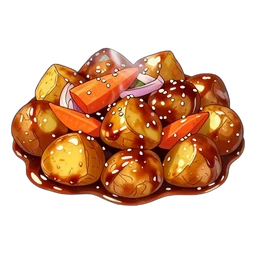
Gamja-jorim is a Korean side dish of potatoes simmered in a soy sauce-based liquid until it reduces into them.
Before the first bite
- Spice
- Not spicy
- Texture
- Soft · Tender
- Serving
- Usually shared
Varies by restaurantJorim is usually soy sauce-based, but gochujang or gochugaru is sometimes added, so the seasoning differs from place to place. For dietary restrictions or allergies, ask the restaurant whether the food contains your trigger ingredients.
Hanip treats gamja-jorim as a challenge food. Reading this guide does not make it appear in ordinary recommendations.
Taste and texture
Gamja-jorim is a side dish of potatoes cooked in a seasoned liquid, often soy-based, and reduced. It can use bite-sized potato pieces or whole baby potatoes. Its usual form keeps pieces or whole potatoes rather than mashing them. A mild sweet-soy version is familiar, but spicy versions use chili flakes or gochujang.
Preparation affects the finished pieces. Sempio’s recipe rinses diced potatoes to remove surface starch, explaining that this helps prevent sticking and gives a cleaner texture. Thus, cutting may be followed by rinsing and draining before seasoning, rather than immediately adding sauce. Piece size also varies by recipe.
One method sautés the potatoes first, adds the sauce and cooks them, then uncovers the pan to reduce the remaining liquid. Another example puts potatoes, vegetables and seasonings into a pot together from the start. Both involve cooking the potatoes through while reducing the sauce. The initial sauté and amount of liquid left are not identical in every gamja-jorim.
The dish can contain potatoes alone or add carrots, onions and peppers. Korean Bapsang’s example adds peppers and onions when the potatoes are almost cooked. Vegetable choice and timing are not one fixed rule. A potato-centered plate differs from one braised with several vegetables or additional ingredients such as fish cake.
Spicy versions can add chili flakes, gochujang or fresh peppers to soy sauce. Maangchi’s spicy potato recipe includes onions, garlic and dried anchovies; Sempio’s example also uses an anchovy-and-dipori stock ingredient. Potatoes as the main ingredient therefore do not guarantee a plant-only dish. Broth and additions matter as well as the distinction between mild soy and spicy versions.
Algamja-jorim uses small, round potatoes cooked in their skins, visibly different from diced potato braises. Maangchi’s method cooks the baby potatoes in a pan before reducing them with soy sauce, rice syrup and garlic. Sweetening ingredients add a sheen, and the skins may wrinkle. The name identifies the small, whole form, not one fixed sweetness or heat level.
Soy-based versions combine savory saltiness with sweetness from sugar or syrup. The interior cooks soft while retaining its shape, unlike mashed potato. A bite brings together the sauce on the surface and potato flesh. Depending on the method, sautéed or braised aromas and a finish of sesame oil or seeds also contribute.
Potato variety and doneness affect the result. Lower-starch potatoes generally hold their shape more readily, while excessive cooking can make potatoes collapse or become dry and crumbly. Longer braising is therefore not automatically better. Tender pieces that still hold together and their coating of sauce shape the experience.
Baby-potato braises offer a contrast between skin and flesh. Some preparations leave a chewy skin around a moist, fluffy interior, different from the exposed flesh of cut potatoes. Even if you enjoy diced gamja-jorim, the skin is an additional texture, so the two forms are not identical eating experiences.
When it may suit the table
- It suits a tender potato side with rice. A mild soy version pairs soft potato with a slightly sweet sauce. Choose between potatoes alone and a version with other vegetables.
- A soy version can be an option without chili. Not all gamja-jorim is mild, however, so check fresh peppers as well as chili powder.
When another path may fit better
- For heat, look for spicy gamja-jorim or gochujang gamja-jorim rather than a mild soy version. Different seasoning changes the effect and how it fits with the rest of your meal.
- It may differ from a large potato main or a bowl of soup you have in mind. Gamja-jorim is a table or lunchbox side, so check the portion and what accompanies it.
How to order it in Korea
- When choosing gamja-jorim, distinguish a soy-forward version from one with chili flakes and Cheongyang pepper. Korean recipes include spicy versions, so the name of this potato side alone does not establish mildness. Ask about the seasoning if you avoid heat.
- Distinguish gamja-jorim from algamja-jorim made with small skin-on potatoes. Galchi-jorim and godeungeo-jorim center on fish instead. For a plant-only meal, ask about anchovies, fish cake and the stock as well as the potatoes.
At the restaurant
- The potatoes are already cooked in seasoning; try one piece before deciding how much to pair with rice. Baby potatoes are eaten skin-on, and a large one is easier to eat when divided with a spoon. With a chili-seasoned version, taste the potato and its coating before deciding whether to add sauce.
Show the Korean nameName and a short phrase
Use this to point out the food or say its name. Check the food-specific ordering tips above first.
감자조림