hanip.me
Dak-bokkeum-tang
닭볶음탕
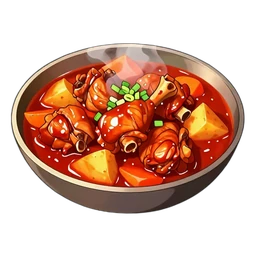
Chicken pieces braised with potato, carrot and onion in a hot chili and gochujang sauce.
Before the first bite
- Spice
- Hot
- Texture
- Tender · Brothy
- Bones
- Usually bone-in
- Serving
- Usually shared
Varies by restaurantVegetable mix and heat level vary by restaurant. The chicken pieces contain bones, so eat carefully, and if you have allergies, ask the restaurant whether the dish contains your trigger ingredients.
Taste and texture
Dakbokkeumtang is chicken pieces braised in spicy seasoning with potatoes, carrots and onions. It can be shared from a pot.
Chicken pieces cook among vegetables rather than retaining the shape of a whole bird. A cut-up chicken brings breast, legs and wings with different shapes and fibres; some versions instead centre on drumsticks or thighs. Meat taken from a large bone and small wing portions offer different eating experiences within the same pot.
Red seasoning can combine gochugaru and gochujang with soy sauce, garlic and ginger; sugar and sesame oil appear in some recipes. Changing the balance of paste and flakes alters the sauce. Chicken and vegetable juices join those seasonings, making the braising liquid an important part of the dish rather than just a surface coating.
One method briefly parboils the chicken, then cooks it with seasoning and fresh water before adding potato, carrot and onion. Gentle repositioning helps keep the pieces intact. The process cooks through substantial chunks rather than quickly stir-frying finely chopped ingredients, and potatoes need not enter at the same time as the chicken.
The liquid may start with water or kelp stock. Skin-on chicken contributes skin and meat flavour, while removing skin changes the fatty feel. Some methods finish uncovered to reduce liquid. Broth quantity, skin and reduction influence richness alongside the spicy seasoning.
A boneless-breast variation scores the meat, marinates it in milk and salt, and inserts apple slices before cooking with spicy seasoning. Apple replaces sugar in that recipe. This is a specific adaptation to the cut, not evidence that every dakbokkeumtang contains milk or apple, and it differs from a whole cut-up bone-in chicken.
Despite its name meaning stir-fry, the chicken cooks with spicy seasoning and some broth. Bone-in chicken absorbs the sauce, while the potatoes soften and soak it up. The dish combines meat you pick from the bone with soft, crumbly potato.
Potatoes gain red seasoning outside while their interiors become crumbly. That differs from chicken separating along its fibres. Slightly broken potato surfaces can change the liquid's feel compared with intact pieces. Potato is a substantial sauce-bearing component that can also affect broth texture.
Radish or sweet potato may replace potato, and mushrooms or whole garlic are other additions. They bring different moisture, sweetness and softness. Glass noodles or rice cakes add strand-like elasticity or chew and may require extra water, so both solids and liquid can vary. These additions are not universal.
Perilla added near the end contributes a distinct leafy aroma. Final scallion or toasted sesame differs in role from long-cooked chicken and onion. Added chili pieces also provide a direct pepper bite alongside flakes dispersed in the liquid. Heat level alone does not describe these aromatic and textural layers.
Seasoning tastes concentrated on a piece of chicken and spreads across potato or rice when combined. Mashed potato and broth over rice offer a different texture from meat taken off a bone. Chicken, potato and liquid cook together and exchange flavour, bringing both pieces to pick from bones and soft components to spoon up.
When it may suit the table
- You want a hot, richly seasoned dish
- You want to share one pot with a group
When another path may fit better
- You need a broth-based dish without heat
- You'd rather skip picking meat off the bone
How to order it in Korea
- Look for “dak-bokkeum-tang,” then ask the restaurant how spicy it is.
- You can mash the remaining potato and mix it with broth over rice. If you want fried rice to finish, ask whether the restaurant offers that extra preparation. Mixing rice with the sauce and ordering cooked fried rice are different options.
At the restaurant
- The menu may also call it “dakdoritang.”
Show the Korean nameName and a short phrase
Use this to point out the food or say its name. Check the food-specific ordering tips above first.
닭볶음탕
Save, share or print an image
More guides in this category
Checked sources
Reviewed 2026-09-13 · Next check 2027-02-24