hanip.me
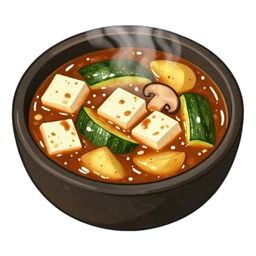
Doenjang jjigae
된장찌개
A staple Korean stew made by dissolving soybean paste with tofu and vegetables for a savory broth.
Before the first bite
- Spice
- Mild
- Texture
- Brothy · Soft
- Serving
- Individual or shared
Varies by restaurantSome versions use meat or seafood to enrich the broth. If you have a soy allergy, ask the restaurant whether the dish contains your trigger ingredients.
Taste and texture
Doenjang jjigae is a stew of soybean-paste broth, tofu and vegetables. Some versions also include mushrooms or clams.
Fermented soybean paste supplies the broth's defining taste. Although tofu also comes from soybeans, tofu simmered in water does not have the same aroma. Paste disperses in the liquid while tofu remains a solid component. Homemade and commercial pastes both appear in recipes, and the paste affects aroma and saltiness.
Rice-rinsing water contributes starch that helps paste and liquid come together. Potato can add further body, while radish contributes its own flavour and moisture. Plain water, stock or rice water, together with the choice of potato and radish, can therefore produce different broth textures with the same paste.
Anchovies may simmer in a pouch with vegetables and be removed, leaving flavour without visible fish. Another method dissolves paste in separately prepared anchovy stock before cooking radish and onion. The final solids do not necessarily reveal everything used in the broth beneath the fermented-paste aroma.
A beef version first cooks thin slices in the pot, then adds vegetables and liquid. Marbled cuts such as chadolbagi bring beef flavour and richness into the soybean broth. Thin pieces become stew-sized solids rather than large chunks simmered for a clear soup; their role starts before the final garnish stage.
Seafood variations may use clams, mussels, shrimp, squid or oysters singly or together; chopped shrimp can also cook with vegetables. Open shells and springy flesh remain among the tofu while seafood flavour joins the paste in the broth. These textures form a distinct branch from meat-based versions.
Fermented soybean paste gives this stew its earthy aroma and savory saltiness. Tofu, mushrooms and zucchini cook in the broth, which is eaten alongside rice. Clams or different seasonal vegetables change both the broth and the texture.
Cubed or thickly sliced tofu carries broth outside and milder soybean flavour within. Medium-firm tofu can retain its shape, unlike loose sundubu curds. Some recipes add it after the vegetables, so the solids do not all cook for the same length of time.
Zucchini softens with green skin visible, and onion layers loosen while adding sweetness. Broad shiitake slices and fine enoki stems provide different shapes of bite. Small cuts combine on one spoon, larger ones show their textures separately. Vegetable shape and doneness distinguish stews with similar broth colour.
Seasonal examples include spring shepherd's purse or wild chives and winter dried radish greens. The spring greens bring leafy-stem aromas, while parboiled radish greens add longer fibres. These variations change the solids and fragrance within a soybean-paste base rather than replacing the paste itself.
Some versions add chili flakes or fresh chili, while others include gochujang or ssamjang. Flakes add heat; gochujang can also add sweetness and saltiness. A soybean-paste-led flavour therefore does not imply an absence of chili. Heat may sit beneath the earthy aroma or become clearer in a bite of fresh pepper.
When it may suit the table
- You want a savory, familiar home-style broth
- You want a comfortable, everyday broth to eat with rice
When another path may fit better
- You need a hotter, more intense broth instead of a savory soybean-paste one
- You would rather have a broth centered on meat instead of tofu and vegetables
How to order it in Korea
- Ask whether seafood such as clams or meat is used alongside the tofu and vegetables. Spring greens or winter radish leaves can also change the ingredients. A vegetable-filled bowl does not establish that the broth is vegetarian, so ask about the ingredients you avoid.
Show the Korean nameName and a short phrase
Use this to point out the food or say its name. Check the food-specific ordering tips above first.
된장찌개
Save, share or print an image
More guides in this category
Checked sources
Reviewed 2026-09-13 · Next check 2027-03-03