hanip.me
Bibimbap
비빔밥
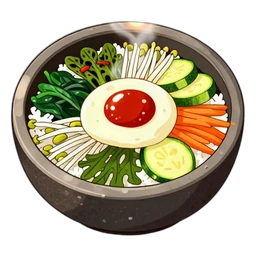
A bowl of rice topped with assorted vegetables and garnishes, then mixed with gochujang and sesame oil.
Before the first bite
- Spice
- Varies with sauce
- Texture
- Mixed textures
- Serving
- Usually individual
Varies by restaurantVegetables, meat, egg and sauce vary by restaurant. For dietary restrictions or allergies, ask the restaurant whether the food contains your trigger ingredients.
Taste and texture
Bibimbap is rice topped with seasoned vegetables and garnishes, then mixed with sauce. Bean sprouts, spinach and bracken may be accompanied by beef or egg. Unlike rice fried with all its ingredients, separately prepared components are combined at the table. Even if the toppings arrive in neat, colorful sections, they are intended to be mixed. A vegetable-filled bowl is not necessarily meat-free or fully cooked: some versions include raw beef or a raw egg yolk.
The vegetables are not all cooked the same way. Spinach and sprouts may be blanched or boiled and seasoned, while carrots, mushrooms and zucchini may be stir-fried. Preparing and seasoning them separately leaves distinct shapes and textures after mixing. Think of several small vegetable side dishes combined with rice, rather than only raw salad vegetables placed on top.
Jeonju bibimbap is one style whose ingredients are worth distinguishing. It is known for rice cooked in ox-bone or bean-sprout broth and for hwangpomuk, mung-bean jelly colored yellow with gardenia. A yellow topping is therefore not always egg. These are features of Jeonju-style preparations, not ingredients required in every bowl of bibimbap.
Menus may highlight toppings in names such as wild-green, young-radish-kimchi or spicy-pork bibimbap. These names point respectively to the greens, the kimchi ingredient or seasoned pork. Bowls with already seasoned meat or kimchi respond differently to extra sauce from bowls relying mainly on gochujang. Taste the toppings’ seasoning first so that added sauce does not overwhelm them.
Vegetables and small toppings sit between the rice grains, bringing several textures into a bite: bean sprout stems, soft spinach leaves and thicker pieces of cooked mushroom. Spicy, salty gochujang sauce is joined by the nutty aroma of sesame oil, and some recipes add sweetness or vinegar to the sauce. Even with the same toppings, the balance of seasoning can bring either the vegetables or the chili paste to the foreground.
Rice fills the spaces between toppings and carries the sauce. Short-grain white rice is a common choice, and rice that is not overly wet keeps its grains more distinct after mixing. Drained or stir-fried vegetables combine with rice differently from a broth soaking the whole bowl. Loosening the rice with a spoon and moving it through the toppings helps avoid pockets of plain rice beside concentrated sauce.
The final gochujang is not the bowl’s only seasoning. Beef may be seasoned with soy sauce, garlic and sesame oil before cooking, and vegetables may already contain salt and sesame oil. Fried egg adds soft pieces among the vegetables, while shredded seaweed contributes its own aroma in versions that use it. Ingredients can therefore already be seasoned even when little gochujang is added, which is a reason to taste before adding more.
When it may suit the table
- It suits a day when you want rice and several vegetables together. If the vegetables are unfamiliar, taste a little before mixing to recognize their aromas and textures.
- Choose it when you want to adjust the sauce. When gochujang comes separately, add it gradually to balance vegetable and sauce flavors.
When another path may fit better
- If raw egg is unappealing, check its preparation first. Jeonju-style bowls may combine sliced cooked egg white with a raw yolk. Ask whether a fried egg is available instead.
- Look at another dish for hot broth or a single texture. A small soup such as bean sprout soup may accompany it, but bibimbap centers on rice mixed with varied toppings.
How to order it in Korea
- For rice that stays hot longer, look at dolsot bibimbap in a heat-retaining stone bowl. Yukhoe bibimbap uses raw beef, so check the meat preparation if you want it cooked. Dolsot names the vessel; yukhoe names the topping.
- Mix a little gochujang through the rice and toppings, then taste. Use a spoon to mix or chopsticks to separate long vegetables. Adding what is missing after a first bite makes heat and seasoning easier to adjust than using all the sauce at once.
At the restaurant
- With a stone bowl, you can compare rice at the bottom with rice in the center. Heating rice in an oiled bowl can create a golden, crisp bottom layer, unlike the softer rice of an ordinary bowl. Whether you enjoy that toasted crust or want the rice to remain soft is a useful reason to choose between dolsot and regular bibimbap.
Show the Korean nameName and a short phrase
Use this to point out the food or say its name. Check the food-specific ordering tips above first.
비빔밥
Save, share or print an image
More guides in this category
Checked sources
Reviewed 2026-09-13 · Next check 2027-05-12