hanip.me
Thistle rice
곤드레밥
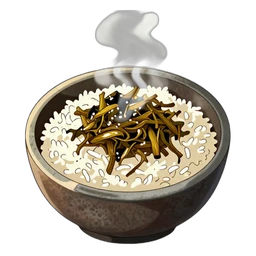
Rice cooked with gondeure, a mountain green from Gangwon-do, and mixed with a soy sauce dressing.
Before the first bite
- Spice
- Not spicy
- Texture
- Soft · Mixed textures
- Serving
- Usually individual
Varies by restaurantWhether the greens are dried and rehydrated and how strongly the soy sauce dressing is seasoned vary by restaurant. For dietary restrictions or allergies, ask the restaurant whether the food contains your trigger ingredients.
Hanip treats gondeure bap as a challenge food. Reading this guide does not make it appear in ordinary recommendations.
Taste and texture
Gondeure-bap cooks mountain thistle greens together with rice. Unlike simply topping already cooked white rice with greens, the cooking allows their aroma to enter the rice. Leaves and stems mingle among the grains, sometimes with perilla oil. A soy-based dressing is mixed in at the table, adding saltiness to the rice and greens.
Gondeure is a mountain green, and dried greens may be rehydrated for the dish. They are not simply sprinkled dry over rice. The greens are softened through soaking and boiling, drained, and cut into manageable lengths. Some recipes begin with already boiled greens, so their appearance on the plate does not reveal the preparation time.
One method seasons the greens with perilla oil and soup soy sauce before laying them over the rice. This seasons the greens themselves. That initial seasoning and the dressing added to cooked rice are separate stages. Before adding dressing, the bowl may already contain the aroma of oil and saltiness carried by the greens.
The grains need not be white rice alone. W Table presents a mixture of brown and white rice, while an RDA chicken-breast version uses sprouted brown and white rice. The dish's name identifies the greens cooked with the rice, so a grain mixture can still be gondeure-bap. Different rice blends change the chew of the grains alongside the soft greens.
Recipes use ordinary pots, stone pots or electric rice cookers. Prepared greens and rice cook together and are mixed afterward. Boiled greens hold moisture, so draining them and measuring the rice water are connected considerations. Beyond the pile of greens on top, the resulting dish brings rice grains and greens together in a spoonful.
The accompanying soy dressing may contain chives or wild chives, garlic, sesame seeds and sesame oil. Chives and plum syrup contribute allium aroma and sweetness; chopped wild chives bring their own distinctive scent. Some versions contain chili powder or chopped chilies, so the dressing is not always free of heat. The mild rice and the dressing's aromas are distinct components.
Meat variations exist too. Yongjubu's recipe fries ground beef separately and places it on the finished rice. An RDA version cooks chicken breast and shiitake with the greens and grains. One adds fried meat as a topping; the other cooks meat and mushrooms into the rice. The name alone does not guarantee that greens and rice are the only ingredients.
The central texture is soft cooked greens eaten with rice grains. Rather than sitting as a separate clump of side dish, leaves and stems appear among the rice in each spoonful. They are not vegetables fried until crisp; the cooked greens blend softly with the rice. Their proportion changes how prominently they are felt against the grains.
Perilla oil brings a nutty aroma alongside the mountain greens. Unlike placing a strongly reduced side dish over white rice, flavor added while cooking is incorporated into the rice itself. The greens are enjoyed with soy dressing rather than being covered in gochujang. Dressing quantity determines whether rice and greens remain foremost or the salty sauce becomes more pronounced.
Brown-rice blends do not have the same grain texture as white rice alone. Even with soft greens, mixed grains can offer more to chew. Shiitake or meat variations add further textures distinct from the stems. The dish is therefore a greens-and-rice composition that changes with the grain blend and additions, rather than one uniformly mushy bowl.
Finely cut chives or wild chives in the dressing add little pieces to chew as well as aroma. Sesame seeds contribute particles, while sesame or perilla oil adds nuttiness. Chili-containing sauce may taste hotter than the rice itself. Since excess sauce cannot easily be removed, a separately served dressing is convenient to mix in gradually according to the bowl's existing seasoning.
When it may suit the table
- A day you want a plain bowl of rice with no heat
- When you're curious about mountain greens and perilla oil
When another path may fit better
- When you want something spicy and bold
- When you need a meat-centered, filling meal
How to order it in Korea
- Look for “gondeure bap” or “gondeure namul bap” on the menu; it's a common name at restaurants around Jeongseon in Gangwon-do.
- If the sauce is separate, try a bite of rice and greens before mixing in a little. This lets you taste the rice and perilla oil before deciding on the seasoning. Adding all the sauce at once can make saltiness dominate the greens, so build up to the amount you want.
Show the Korean nameName and a short phrase
Use this to point out the food or say its name. Check the food-specific ordering tips above first.
곤드레밥
Save, share or print an image
More guides in this category
Checked sources
Reviewed 2026-09-13 · Next check 2027-03-24