hanip.me
Jeyuk deopbap
제육덮밥
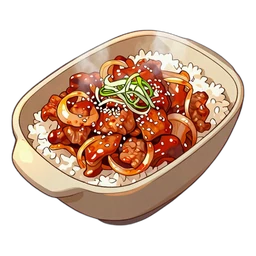
A Korean rice bowl topped with jeyukbokkeum, pork stir-fried in a spicy gochujang marinade.
Before the first bite
- Spice
- Medium
- Texture
- Tender
- Serving
- Usually individual
Varies by restaurantThe amount of gochujang and ginger in the marinade, and which vegetables are stir-fried with it, vary by restaurant. For dietary restrictions or allergies, ask the restaurant whether the food contains your trigger ingredients.
Taste and texture
Jeyuk deopbap is a rice bowl topped with thinly sliced pork stir-fried in spicy seasoning.
Deopbap describes serving the cooked pork over rice. The same stir-fry can be served separately as a side dish or placed over rice as jeyuk deopbap. Unlike fried rice, the rice is not necessarily cooked together with the pork in the pan. It begins as plain steamed rice and meets the sauce from above, retaining a texture distinct from the meat.
Descriptions commonly use thinly sliced shoulder or neck, while belly is another option. The lean-to-fat ratio affects texture even within a cut. Thin slices offer a broad surface for seasoning and cook in folds, unlike a thick piece of grilled meat cut at the table. Belly versions have distinct fatty layers and differ from leaner jeyuk.
The red seasoning is more than gochujang alone. Chili flakes add chili aroma and heat, soy sauce and sweeteners balance salt and sweetness, and minced garlic and ginger season the meat. Recipes using sesame oil also bring a nutty aroma. Red sauces can differ in sweetness and aromatic balance according to the proportions of paste and flakes.
Some recipes sweeten the marinade with grated apple or pear and onion as well as sugar or honey. These ingredients blend into the sauce rather than necessarily appearing as visible fruit pieces. They contribute to the sweetness that reaches the rice. This is a recipe variation, not a promise that every jeyuk bowl contains apple or pear.
Recipes include both marinating before frying and mixing meat with seasonings directly in the pan. The name jeyuk bokkeum therefore does not imply a long marination. Their common feature is cooking the pork with the red seasoning, which coats the meat differently from dipping already cooked meat into a separate spicy sauce.
Chili paste and chili powder bring heat alongside sugar's sweetness and garlic aroma. Thin pork slices are tender, with stir-fried vegetables adding bite. The sauce coats the rice, letting you balance spicy pork with plain rice in each mouthful.
Meat touching the hot pan develops differently from meat surrounded by vegetable juices. Cooking in manageable batches can lightly brown its surface, while a wetter preparation leaves more sauce to soak into rice. Jeyuk is not defined by crispness alone: browned edges can coexist with moist, sauce-coated lean meat.
Onion and scallions soften and release moisture during cooking. Onion sweetness joins the red sauce, and the vegetable quantity and doneness distinguish meat-heavy from vegetable-rich versions. Perilla leaves add their own aroma above the chili seasoning. Describing the dish only as hot misses these contributions.
One bowl preparation places shredded cucumber, lettuce and perilla beside the rice and pork. These raw vegetables contrast with cooked onion: soft vegetables cling to hot meat while cucumber provides crunch alongside it. That makes a different bite from a bowl topped only with stir-fry. This serving variation does not mean raw salad is automatically included with jeyuk deopbap.
Rice receives the pork sauce, whereas wrapping jeyuk in lettuce or perilla adds a raw leafy layer around it. Some serving examples also use ssamjang, adding another fermented sauce to already seasoned meat. The pork preparation and its accompaniments are distinct choices; deopbap centres on the over-rice arrangement.
When it may suit the table
- You want a spicy, filling rice bowl
- You want an easy meal to eat solo
When another path may fit better
- You need a dish without spicy seasoning
- You would prefer pork in a broth to a stir-fry
How to order it in Korea
- Look for “jeyuk deopbap” on the menu, then ask if the spice level can be adjusted.
- Cuts such as shoulder or neck may be used, so ask before ordering if you prefer less fat. Perilla leaves or extra chili may also be added. The cut and accompanying vegetables both affect the aroma and texture.
Show the Korean nameName and a short phrase
Use this to point out the food or say its name. Check the food-specific ordering tips above first.
제육덮밥
Save, share or print an image
More guides in this category
Checked sources
Reviewed 2026-09-13 · Next check 2027-02-24