hanip.me
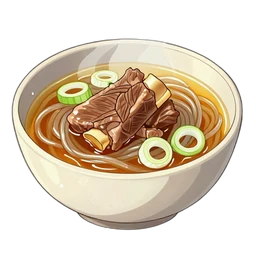
Galbitang
갈비탕
A Korean soup made by simmering beef short ribs and bones for a long time into a clear, deep broth served with rice and meat.
Before the first bite
- Spice
- Not spicy
- Texture
- Brothy · Tender
- Bones
- Usually bone-in
- Serving
- Usually individual
Varies by restaurantSome restaurants sell it only at lunch or run out early. If you have allergies, ask the restaurant whether the dish contains your trigger ingredients.
Taste and texture
Galbitang is a clear soup made by simmering beef short ribs. The rib meat and broth are eaten with rice.
Ribs provide both the solid meat and the developing broth. Cut pieces retain bone with surrounding flesh. Assembled with clear liquid, they offer broth to sip and meat to remove from the bone. Unlike soup with finely shredded beef, visible rib portions remain a centrepiece with discernible fibres.
One method parboils ribs, discards that water and cleans both ribs and pot, removing bone-cut residue and foam before simmering in fresh water with aromatics. Clarity depends on this preparation and later straining, not simply on a long cooking time.
Radish, onion, scallion and garlic can simmer with the ribs. Large aromatics may be removed after flavouring the liquid, while radish is cut and returned as an edible component. The same vegetable can have separate stock-making and serving roles, creating flavour beyond beef boiled alone.
Straining and skimming affect the broth's weight on the palate. Fat may be removed while floating warm or after solidifying on cooling. Clear-looking liquid can still differ in richness according to how much remains. Transparency does not mean no fat; solids and excess fat are managed after extracting rib flavour.
Some recipes use soup soy sauce alongside salt. Soy sauces differ in colour and flavour, so equal additions do not give identical results. Another method seasons cooked ribs with garlic and soy before returning them to the liquid. A delicate flavour need not mean unseasoned soup; it leaves beef and aromatics perceptible.
Beef ribs and bones simmer with aromatics such as radish, green onion and garlic. The clear broth carries the meat's flavor, and you pick the cooked meat from the bones. It suits a preference for broth and meat flavors rather than a heavily sauced bowl.
Tender ribs separate from the bone but are not texturally uniform like mince. Fibrous meat and softer fatty areas coexist. Cooked radish absorbs broth and yields differently from beef. Bone, flesh and radish remain distinct components with different edible portions and bites within the clear soup.
Sweet-potato-starch noodles add long, elastic strands between the ribs. They slip with the broth rather than crumbling like radish. Adding pre-soaked noodles near the end separates their brief cooking from the ribs' long simmer, allowing meat, liquid and noodles to reach their own textures.
Thin yellow egg strips, or separately cooked yolk and white, can garnish the soup. They provide a lighter bite than beef, while chopped scallion adds a fresh finishing aroma distinct from larger pieces simmered in the stock. These garnishes contribute colour, fine texture and aroma rather than forming the broth base.
Variations include chili flakes, soy sauce and sesame oil for heat, or additions such as abalone, ginseng, jujubes and chestnuts. These are optional rather than universal. Seafood texture or chili aroma changes the same beef-rib foundation. This guide centres on the clear version; named additions signal further flavours.
When it may suit the table
- You want a clear, hearty broth poured over rice
- You want a meat broth with a clean aftertaste
When another path may fit better
- You need a spicy, hot broth
- Working around bones while eating feels unappealing
How to order it in Korea
- Check the rib and rice portions in the serving. Because the meat comes on the bone, consider the amount of edible meat as well as how large the ribs look.
Show the Korean nameName and a short phrase
Use this to point out the food or say its name. Check the food-specific ordering tips above first.
갈비탕
Save, share or print an image
More guides in this category
Checked sources
Reviewed 2026-09-13 · Next check 2027-03-03