hanip.me
Samgyetang
삼계탕
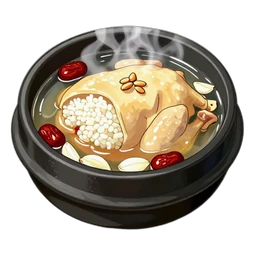
A clear, mild Korean soup made by simmering a young chicken stuffed with glutinous rice, garlic, jujube and ginseng.
Before the first bite
- Spice
- Not spicy
- Texture
- Brothy · Tender
- Serving
- Usually individual
Varies by restaurantVariants like ogolgyetang (black chicken) or abalone samgyetang add extra ingredients. If you have allergies, ask the restaurant whether the dish contains your trigger ingredients.
Taste and texture
Samgyetang is a soup of a young chicken filled with glutinous rice, ginseng, garlic and jujube. A serving commonly contains one whole chicken.
Cooking a whole bird means bringing both its outer meat and rice filling to doneness. The cavity is cleaned and excess fat trimmed before stuffing. A small young chicken fits a bowl and cooks tenderly. Overseas recipes sometimes use Cornish hens to approximate that size and texture, without implying that they are the same breed as Korean young chickens.
Glutinous rice is soaked before stuffing. Recipes leave room for the grains to absorb liquid and expand. Cooking the rice inside the bird lets it take on broth aromas, unlike inserting cooked rice afterward. Opening the cooked chicken reveals moist rice gathered in the cavity, distinct from loose grains dispersed in the surrounding soup.
Crossing or tying the legs helps retain rice and small fillings such as garlic, jujubes and chestnuts. The stuffed bird is surrounded by water or prepared stock, then simmered more gently after the liquid boils. Its tucked-leg presentation reflects the preparation used to keep the filling together during cooking.
Ginseng, garlic and jujubes may go inside the bird or partly into the surrounding broth. Fresh ginseng and soaked dried roots are both used; ginger can add another aroma. Jujubes contribute sweetness, which becomes more prominent in larger amounts. Chestnuts or ginkgo nuts add small distinct solids alongside the meat and rice.
The cooking liquid can be prepared separately. A Korea Tourism Organization recipe infuses water with milk vetch root, garlic, ginger and radish before adding the bird. These ingredients contribute culinary aroma and flavour. Some flavour the stock without remaining as visible solids in the finished bowl, alongside the chicken and rice that are eaten.
A small chicken is stuffed with glutinous rice, garlic, jujube and ginseng, then simmered. You eat the meat from the bones and the rice inside, with a mild, ginseng-scented broth. Consider the rice filling as part of the meal when judging the portion.
Broth ranges from clear and flowing to pale and slightly thick. Loose glutinous rice, blended soaked rice or glutinous rice flour can provide that body; omitting flour can leave a clearer result with the same chicken. In thicker versions, soft rice texture accompanies small pieces of chicken on the spoon.
Simmered meat separates along its fibres, while broth-moistened skin has a different softness. Boned meat dipped in soup contrasts with rice-coated pieces from the cavity. Garlic or jujube adds aroma or sweetness beside ginseng-scented chicken. As the bird is eaten, its whole form gradually separates into meat, bones and rice.
One meat dip combines salt, pepper, toasted sesame and sesame oil, adding a nutty aroma over the ginseng-scented broth. Another recipe dip uses soy sauce and vinegar with onion and chili for tangy heat. These are optional accompaniments to the meat; they do not make the basic soup itself sour or spicy.
Sliced scallions add a fresh aroma over the long-simmered chicken and aromatics; pepper adds a separate sharpness beside ginseng. With ample broth, bites of solids alternate with spoonfuls of soup. Releasing the stuffed rice disperses grains through the liquid and gives it a softer feel, changing the amount of rice in the broth as the bird is opened.
When it may suit the table
- When you want a bowl entirely to yourself — one bird per person is the standard serving
- You want a hearty, mild, clear soup without any heat
When another path may fit better
- You need a spicy, intense broth
- You would rather have a rich, braised dish than a clear soup
How to order it in Korea
- Look for “samgyetang,” then check whether variants like ogolgyetang or abalone samgyetang are offered.
- Taste the broth before adding salt gradually. You can also dip pieces of chicken lightly in salt. Adjusting bite by bite makes it easier to find your preferred seasoning than salting the whole bowl heavily at once.
At the restaurant
- For a smaller portion, ask whether half-chicken “bangyetang” is available.
Show the Korean nameName and a short phrase
Use this to point out the food or say its name. Check the food-specific ordering tips above first.
삼계탕
Save, share or print an image
More guides in this category
Checked sources
Reviewed 2026-09-13 · Next check 2027-03-03