hanip.me
Yukgaejang
육개장
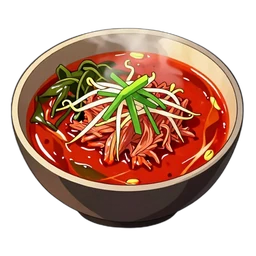
A spicy Korean soup made by simmering beef brisket with fernbrake, bean sprouts and green onion in red pepper powder and chili oil.
Before the first bite
- Spice
- Hot
- Texture
- Brothy · Tender
- Serving
- Usually individual
Varies by restaurantThe heat level and mix of ingredients can vary by restaurant. If you have allergies, ask the restaurant whether the dish contains your trigger ingredients.
Taste and texture
Yukgaejang is a spicy soup of shredded beef with vegetables such as scallions, bracken and bean sprouts, seasoned with chili powder.
Brisket starts relatively tough but becomes tender enough to pull apart after simmering. The meat supplies stock, then is removed, cooled, shredded and returned. Shank or flank can also be used. Long fibres remain rather than finely minced pieces, joining scallions and fernbrake as elongated solids visible in the soup.
Stock can simmer beef with onion and dried shiitake, or with radish and whole garlic. Spent aromatics may be removed, while shiitake is sliced and returned with the meat. This separates stock vegetables from those kept as edible solids, leaving both extracted flavours and later-added ingredients in the finished soup.
Scallions contribute substantial sweetness and aroma as cooked solids. Long pieces soften and separate into layers among the beef, unlike a small final garnish of minced onion. Radish can add further sweetness. Beneath the visible red chili, cooked scallion and radish flavours form part of the broth's foundation.
Fernbrake is rehydrated and cooked until tender, then cut into manageable lengths. Dried stems absorb liquid and change in size and texture. Some recipes add similarly prepared taro stems, which have a sponge-like feel that holds broth. Fernbrake supplies earthy aroma and soft fibres, distinct from the meat despite its similarly long shape.
One method gently warms chili flakes in oil and sesame oil, then coats shredded meat and vegetables before adding stock. Another seasons the vegetables first and adds them to boiling broth. Both combine chili with solids and liquid, while the oil contributes nuttiness beside the heat.
Brisket or shank is simmered until tender and shredded, leaving strands of beef to chew. Green onion and radish add sweetness to the broth, while assorted greens contrast with the meat. Chili oil and chili powder bring heat alongside the beef and vegetable flavors.
Mung sprouts add slender, lightly crisp stems among the beef. They wilt but can retain a lighter bite than tender meat. Shiitake or oyster mushrooms provide broth-filled flesh and fibres distinct from fernbrake. More sprouts also release more water, affecting concentration as well as texture. Meat, greens and mushrooms determine each spoonful's composition.
Soup soy sauce or salt sets seasoning, with fish sauce in some recipes. Small amounts of gochujang or doenjang can add body, but neither is universally required. Chili paste adds thicker paste components to a chili-flake broth. Pepper supplies a separate sharp aroma; oil, flakes and fermented pastes all shape the taste beyond its red colour.
Drizzled beaten egg forms soft pieces in the soup; sliced omelette garnish retains cooked ribbons. Soaked glass noodles absorb broth and become smooth, resilient solids. Egg softness and slippery noodles contrast with beef fibres and fernbrake, adding further tender textures to the bowl.
Beef bones cooked with the meat or added milky bone broth can give a richer base. Anchovy or kelp stock can supply other aromas. Replacing beef with chicken produces dakgaejang, changing the meat flavour and shredded texture while retaining a red soup and vegetable combination. Meat and stock choices shape variations alongside garnishes.
When it may suit the table
- You crave a hot, spicy broth
When another path may fit better
- You need a broth without spice
- You want a clear, mild meat broth
How to order it in Korea
- Look for “yukgaejang” on the menu.
- Yukgaejang is seasoned with chili oil and chili powder in the soup itself. If heat is a concern, ask how spicy the broth is and whether it can be adjusted, rather than relying on removing a garnish.
Show the Korean nameName and a short phrase
Use this to point out the food or say its name. Check the food-specific ordering tips above first.
육개장