hanip.me
Jjamppong
짬뽕
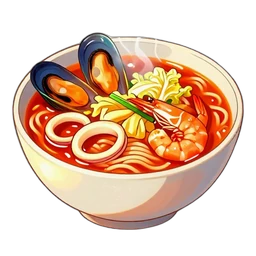
A Korean-Chinese noodle soup made by stir-frying pork, vegetables and seafood, then simmering them in a spicy broth.
Before the first bite
- Spice
- Hot
- Texture
- Brothy · Chewy
- Serving
- Usually individual
Varies by restaurantSeafood mix, such as squid and mussels, and the level of spiciness vary by restaurant. If you have a shellfish or crustacean allergy, ask the restaurant whether the food contains your trigger ingredients.
Taste and texture
Jjamppong is a spicy noodle soup made by stir-frying meat, vegetables and seafood, then adding broth.
The broth starts with a stir-fried base. Scallion, garlic and ginger flavour oil, followed by meat, vegetables and chilli flakes, then stock loosens their flavour into soup. Recipes differ on adding the flakes before or after the meat. Frying followed by simmering carries aromatic vegetables and meat into the broth alongside chilli heat.
Chicken stock and anchovy-kelp broth provide different foundations: meat flavour in one, fish and seaweed in the other. Some recipes instead build soup from water, fried ingredients and seafood. Seasoning may use soy sauce and salt, or fish sauce, soup soy sauce or oyster sauce. Visible seafood therefore may sit in a broth made with additional chicken or anchovy ingredients.
Mussels, clams, shrimp and squid have different shapes and cooking times. Shrimp may be peeled and deveined, while squid is cut into rings or bite-size pieces. One method adds clams before shrimp and squid to account for cooking order. Shell-on molluscs require removing the meat, whereas prepared shrimp and squid are easier to lift with noodles.
Cabbage, onion, carrot and squash are common vegetables, with napa cabbage or bok choy as alternatives. Onion and cabbage soften and add sweetness; thin carrot stays in strips among noodles. Shiitake, bamboo shoots or baby corn add distinct pieces. Tender spinach or bok choy may go in last, accounting for differences between firm stems and delicate leaves.
Meat, vegetables and seafood are stir-fried before chicken or pork-bone broth is added, so seafood need not be the soup's only animal ingredient. Vegetable sweetness combines with savory meat and seafood, while chili powder and chili oil add heat. The meat and seafood served with the chewy noodles vary by restaurant.
Recipes use sliced pork, beef, or seafood without meat. In a mixed version, fried meat first flavours the oil and shellfish and squid later flavour the broth. Meat has a grain, squid is springy and shrimp offers a plump bite. Seafood-only versions centre those marine textures; combinations layer both broth flavour and different solid bites.
The red oil reflects chilli flakes or chilli oil. Frying flakes colours the vegetables, but overheating can make them bitter, so heat and timing matter. Garlic and ginger add pungency; fresh chilli slices can add a green-pepper aroma at the end. Flake type, quantity and fresh chillies each influence heat, while their mixture with oil colours the surface.
Wheat noodles also used for jajangmyeon may be cooked separately, rinsed and drained before the finished soup is poured over them. The fluid broth runs between strands, unlike thick jajang sauce. Springy noodles alternate with soft vegetable strips and chewy seafood. With rice as jjamppongbap, grains replace long strands and mingle with broth for spoonfuls.
Seonkyoung Longest offers a home adaptation for smoky flavour: smoked paprika joins the frying meat and vegetables, soy and oyster sauces meet the hot pan edge, then chicken stock and cooking wine form the broth. The smoky powder and hot chilli powder serve different roles. This is a particular recipe adaptation; it illustrates one cook’s approach to fried aroma rather than a standard ingredient list.
When it may suit the table
- You crave a hot, spicy broth
- You want seafood mixed into your noodle soup
When another path may fit better
- You need a broth without spice
- You'd rather have noodles without broth
How to order it in Korea
- Look for “jjamppong” on the menu and make sure not to confuse it with jjajangmyeon.
- Chili powder or chili oil seasons the broth, so check before ordering if you are concerned about heat. Ask both how spicy the base broth is and whether a less spicy version can be made. Removing a topping alone may not reduce the soup's heat enough.
At the restaurant
- Add rice to the broth instead of noodles and it becomes jjamppong-bap — an option when you want the same broth as a rice meal.
Show the Korean nameName and a short phrase
Use this to point out the food or say its name. Check the food-specific ordering tips above first.
짬뽕
Save, share or print an image
More guides in this category
Checked sources
Reviewed 2026-09-13 · Next check 2027-03-10
- Namu.wiki Opens in a new tab.
- VISITKOREA Opens in a new tab.
- Food Safety Korea Opens in a new tab.
- Korean Bapsang Opens in a new tab.
- Maangchi Opens in a new tab.
- Sue Pressey / My Korean Kitchen Opens in a new tab.
- Hyegyoung K. Ford / Beyond Kimchee Opens in a new tab.
- Seonkyoung Longest Opens in a new tab.