hanip.me
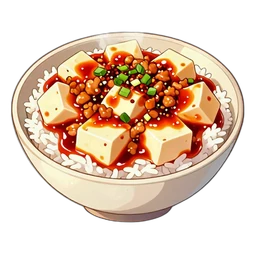
Mapo tofu rice bowl
마파두부덮밥
A single-bowl dish of tofu in a numbing, spicy fermented bean sauce, spooned over rice.
Before the first bite
- Spice
- Medium
- Texture
- Soft · Mixed textures
- Serving
- Usually individual
Varies by restaurantThe kind of minced meat and the level of heat vary by restaurant. The version considered traditional is made with minced beef, while today it is commonly made with pork or vegetarian substitutes. For dietary restrictions or allergies, ask the restaurant whether the food contains your trigger ingredients.
Taste and texture
Mapo tofu rice bowl is rice topped with soft tofu in a spicy sauce flavored with chili-bean paste and minced meat.
Doubanjiang, based on fermented broad beans and chillies, brings both salt and heat. Some recipes add chopped douchi, fermented black soybeans. Frying the paste colours the oil red, while douchi adds small fermented-bean pieces. Their existing saltiness affects additional seasoning. This layers fermented flavour beneath chilli heat and surrounds pale tofu with a darker red sauce.
Tofu is cubed, using soft regular tofu or smooth silken tofu in different recipes. Regular cubes retain clearer edges; silken tofu parts more easily under a spoon. Brief blanching in salted water or draining without pressing prepares it for the sauce. Gentle pushing with a spatula, rather than vigorous stirring, coats the tofu while keeping distinct pieces.
Minced pork or beef is broken into small pieces and fried before the tofu. Garlic and ginger accompany the meat as it disperses through the sauce. One beef method reserves some crisp-fried mince for the finish: simmered meat absorbs sauce, while the late addition retains more fried texture. Particle size and browning shape the contrast with smooth tofu.
Water or stock turns the fried seasonings into a simmering sauce around the tofu. Potato or corn starch mixed with liquid thickens it; some methods add the slurry in stages to control the coating. The sauce carries tofu and meat together onto rice, remaining moist enough to move between grains while leaving a glossy film on the tofu.
Soft tofu contrasts with minced meat, while fermented bean seasonings such as doubanjiang make the sauce salty and spicy. Chili oil's heat and Sichuan pepper's numbing sensation are distinct. Rice helps distribute the sauce, but the tofu's soft texture does not mean the seasoning is mild.
Sichuan pepper contributes fragrance and tongue-tingling distinct from chilli heat. It may be ground into the sauce or sprinkled at the end, alongside scallions or young garlic greens. Scallions can soften or retain a raw aroma; garlic greens add a gentle garlic note. Fermented paste, chilli, Sichuan pepper and finishing greens provide separate flavour layers.
Maangchi’s Korean home adaptation uses gochujang and gochugaru. Small diced pork, rather than mince, is fried with onion, green chilli and scallions; gochujang, soy sauce and stock follow, then tofu and finishing sesame oil. The visible meat and onion pieces give larger bites. Gochujang and chilli flakes replace the doubanjiang-and-Sichuan-pepper focus in this particular version.
A Japanese adaptation in Just One Cookbook combines doubanjiang with miso, mirin and oyster sauce, soft tofu and minced pork. Mixing spicy and non-spicy bean pastes adjusts heat. Miso adds fermented-soy flavour and mirin adds sweetness; Japanese sansho is an optional finish. It keeps the tofu-and-meat structure while changing the balance from Sichuan spices toward a sweetened miso sauce.
Diced mushrooms offer an alternative to meat, adding spring beside soft tofu. Recipes use fresh or rehydrated dried shiitake, and may also replace stock and oyster sauce with vegetable stock and a plant-based stir-fry sauce. Over rice, tofu remains in larger pieces while minced ingredients and sauce enter the grains. A spoonful combines soft tofu, small solids and distinct rice grains.
When it may suit the table
- You want a meal that finishes in one bowl
- You crave a numbing, spicy dish over rice
When another path may fit better
- You need a rice dish without chili heat
- The soft texture of tofu doesn't appeal to you
How to order it in Korea
- On the menu, check whether it says “mapo tofu rice bowl,” where rice comes underneath, or plain mapo tofu served on its own.
- Sichuan pepper affects the numbing sensation, while chili seasonings affect heat. When ordering, explain whether chili heat, Sichuan pepper's numbness, or both are what you want reduced. Recipes differ, so check which adjustments the restaurant can actually make.
Show the Korean nameName and a short phrase
Use this to point out the food or say its name. Check the food-specific ordering tips above first.
마파두부덮밥
Save, share or print an image
More guides in this category
Checked sources
Reviewed 2026-09-13 · Next check 2027-03-10
- South China Morning Post Opens in a new tab.
- Wikipedia Opens in a new tab.
- Namu.wiki Opens in a new tab.
- China Daily Opens in a new tab.
- Food Safety Korea Opens in a new tab.
- Kaitlin Leung / The Woks of Life Opens in a new tab.
- Elaine / China Sichuan Food Opens in a new tab.
- Wei Guo / Red House Spice Opens in a new tab.
- Maangchi Opens in a new tab.
- Namiko Hirasawa Chen / Just One Cookbook Opens in a new tab.