hanip.me
Jjajangmyeon
짜장면
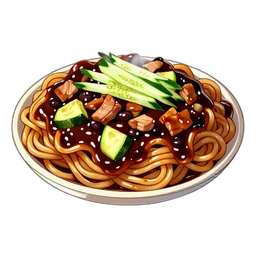
A Korean-Chinese noodle dish made by stir-frying pork and onion in black bean sauce and tossing it with wheat noodles.
Before the first bite
- Spice
- Not spicy
- Texture
- Chewy · Soft
- Serving
- Usually individual
Varies by restaurantVariations include gan-jjajang (freshly stir-fried to order), yuni-jjajang and sichuan-jjajang. For dietary restrictions or allergies, ask the restaurant whether the food contains your trigger ingredients.
Taste and texture
Jjajangmyeon is a Korean Chinese noodle dish mixed with a chunjang sauce cooked with ingredients such as pork and onion.
Chunjang is a dark fermented wheat-and-soy paste at the centre of the sauce. Frying it in oil softens its bitter and sour edges before it joins meat and vegetables; pre-fried products change that preparation step. A little sugar balances saltiness and bitterness. Fermented-paste seasoning and fried richness together shape the dark sauce.
Pork is commonly diced, with recipes ranging from belly to leaner cuts. Cooking vegetables in the same pan carries pork flavour onto onion and squash. A belly version drains excess rendered fat; another seasons pork with ginger, pepper and rice wine. Small meat cubes become sauce ingredients dispersed among noodles and vegetables rather than long shredded toppings.
Onion, cabbage and squash soften and add vegetable sweetness. Potato cubes become fluffy; radish pieces absorb liquid and soften. Sliced button mushrooms leave distinct cap pieces. Firmer potato and radish need to cook through, while vegetable size and addition order account for quicker-cooking cabbage and squash. Similar-looking diced pieces therefore offer different crisp, soft or fluffy textures.
A regular sauce may simmer fried ingredients with water or stock and thicken them at the end with starch slurry. Chicken stock or oyster sauce adds savoury depth in some recipes. Potato or corn starch dispersed in water thickens the hot liquid into a coating that carries meat and vegetables between the noodles. This consistency contributes both gloss and a smooth cling.
Fried chunjang is cooked with ingredients such as pork, onion and squash to make a sweet-salty sauce. It coats soft, chewy wheat noodles, with small pieces of meat and vegetables to bite into. Mix the noodles through the sauce; this is a sauced noodle dish rather than a soup.
Thick, chewy wheat noodles are boiled separately from the sauce; home recipes use fresh jajang or Chinese-style noodles. The pale noodles darken as they are mixed, with thick sauce coating the surface while the inner noodle retains spring. Picking up onion and pork pieces with the strands combines coating flavour with the bite of the solid ingredients.
Yuni-jjajang uses finely minced meat and vegetables, while yuseul-jjajang cuts them into long thin strips. Small particles spread around the noodles; strips can be picked up alongside them and retain their grain. Within the shared chunjang flavour, mincing versus julienning changes ingredient size and how the solids accompany the noodles.
Samseon-jjajang adds seafood such as shrimp and squid, bringing springy bites to onion-and-meat sauce. Jaengban-jjajang is described as noodles stir-fried with sauce on a large platter, sometimes also with seafood. Sauce-topped noodles are mixed in the bowl; platter versions combine them in the pan. Seafood changes the solids, while stir-frying changes when the noodles receive their coating.
Julienned cucumber adds uncooked crunch and aroma above the dark sauce. Boiled egg, peas or corn are optional garnishes with soft yolk or small separate grains. Sweet-tart pickled radish provides another crisp accompaniment. Serving the sauce on rice makes jajangbap, with sauce between rice grains instead of along noodles. Garnishes and the choice of rice or noodles each shape the meal texture.
When it may suit the table
- You want a familiar, filling bowl of noodles
- You want an easy meal to eat solo
When another path may fit better
- You crave a spicy broth
- You want a crispy fried dish instead
How to order it in Korea
- Regular jjajangmyeon commonly has a starch-thickened sauce spooned over the noodles. Gan-jjajang is stir-fried to order with chunjang, onion and meat, keeping more onion crunch, and often comes with the sauce on the side. Choose according to whether you prefer a smooth coating or more distinct stir-fried ingredients.
- Ask the restaurant which ingredients, such as pork or onion, are used in the version you order.
At the restaurant
- Samseon jjajang includes seafood; check which kinds are used.
Show the Korean nameName and a short phrase
Use this to point out the food or say its name. Check the food-specific ordering tips above first.
짜장면
Save, share or print an image
More guides in this category
Checked sources
Reviewed 2026-09-13 · Next check 2027-03-10