hanip.me
Tangsuyuk
탕수육
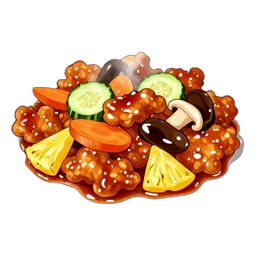
A Korean-Chinese dish of crispy fried pork topped with a sweet and sour sauce.
Before the first bite
- Spice
- Not spicy
- Texture
- Crisp · Tender
- Serving
- Usually shared
Varies by restaurantVariations like nunkkot (snowflake) tangsuyuk and Sichuan tangsuyuk use different coatings or sauces. For dietary restrictions or allergies, ask the restaurant whether the food contains your trigger ingredients.
Taste and texture
Tangsuyuk is a Korean Chinese dish of fried pork with a sweet-and-sour sauce.
Meat and sauce are prepared separately: battered meat is fried, while vegetables or fruit simmer in a separate sauce. Their meeting creates a contrast between a dry crust and a wet coating. The same fried piece changes according to whether sauce covers it early or touches it just before eating.
Pork loin or tenderloin can be cut into bite-size strips. Unlike a broad cutlet fried before slicing, each tangsuyuk piece has its own coating. Meat dimensions affect both the bite and the proportion of crust. An uneven surface can combine thin crisp edges with areas carrying thicker batter.
One method settles starch in water and drains off the upper liquid, then coats the meat with the dense starch below. This differs from a light dusting of dry powder. Egg white or whole egg appears in some batters, so a starch-based coating need not contain only one ingredient.
Double-frying includes a pause to drain the pieces and separate any that have stuck, followed by another fry to crisp the exterior. Sauce preparation and the final fry can be coordinated separately. Crispness depends on batter and finishing technique as well as the presence of sauce.
A sauce can combine vinegar, sugar and soy seasoning, thickened with starch slurry. Heating turns a watery liquid into a glossy coating. Onion or carrot may be cooked earlier, with cucumber and pineapple added near the finish. The vegetables need not all be cooked down from the beginning.
Crisp fried pork with a tender center meets a sweet-and-sour sauce made with vinegar, sugar and soy sauce. Vegetables such as onion and carrot, or fruit, may be added to the sauce. The pork tastes distinctly different on its own and with the sauce.
A crisp starch crust gives way to tender meat fibres, and parts of the coating may also feel chewy. Sauce adds a smooth wet layer over that structure. Crispness and chew can coexist in different parts of the same piece rather than being mutually exclusive.
Wood-ear mushrooms add thin, flexible springiness, while cucumber and carrot retain vegetable bite. Apple or pineapple contributes juicy sweet pieces. A bite of pork coated only in sauce differs from one that includes these solids, which add textures beyond decorative colour.
Pouring coats many pieces broadly, while dipping leaves some areas dry. Contact time changes the surface either way, so the first and last pieces may differ. Pouring and dipping describe how much crust meets sauce rather than establishing one superior taste.
Beef or shiitake versions also exist. Similar starch coating and sweet-sour sauce can enclose very different meat fibres or mushroom springiness. This guide centres on pork, while names such as beef tangsuyuk or mushroom tangsu signal a different filling. Similar sauce does not make the interiors identical.
When it may suit the table
- You want crispy fried food with a sweet and sour sauce
- You want a fried dish to share with others
When another path may fit better
- You need a dish with broth
- You crave something spicy
How to order it in Korea
- The sauce may arrive poured over the pork or separately. If you prefer dipping a few crisp pieces at a time, ask whether it can be served on the side. Pork served with the sauce suits a preference for an evenly coated bite.
- Ask which pork cut, loin or tenderloin, the restaurant uses if you're curious.
Show the Korean nameName and a short phrase
Use this to point out the food or say its name. Check the food-specific ordering tips above first.
탕수육
Save, share or print an image
More guides in this category
Checked sources
Reviewed 2026-09-13 · Next check 2027-02-24