hanip.me
Lamb skewers
양꼬치
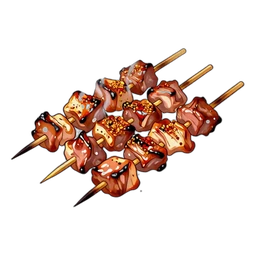
Small pieces of lamb or mutton roasted on skewers over charcoal and dusted with spices such as cumin.
Before the first bite
- Spice
- Varies with sauce
- Texture
- Tender · Chewy
- Bones
- None
- Serving
- Usually shared
Varies by restaurantThe kind of meat and the spice mix sprinkled on top vary from shop to shop. For dietary restrictions or allergies, ask the restaurant whether the food contains your trigger ingredients.
Hanip treats lamb skewers as a challenge food. Reading this guide does not make it appear in ordinary recommendations.
Taste and texture
Lamb skewers are small pieces of lamb or mutton threaded onto skewers and cooked over charcoal or an electric grill.
Recipes use boneless leg or shoulder, cut into cubes or thin strips. Cubes retain a plump centre, while threaded strips form folds and thin edges. Size and thickness change the exposed surface and inner bite. Unlike a large bone-in lamb chop, several small pieces form a row, each offering a short bite through the meat’s grain.
Alternating lean meat with small fat pieces shapes the skewer. Rendered fat coats nearby meat as the fat pieces shrink, sometimes leaving crisp edges. A well-marbled cut can supply fat within the meat instead, changing the need for separate pieces. Lean meat retains its grain, while fat softens or leaves small browned bites.
One marinade uses only onion and salt; another combines oil, soy sauce, starch and spices. Onion lends aroma and may be removed before threading, leaving no vegetable pieces on the skewer. Soy contributes its own flavour, while oil and starch coat the meat. This preparation precedes any finishing dry spices, so similar cumin-coated surfaces may cover differently seasoned meat.
Rotating the meat with the skewer exposes different sides evenly. Flat metal skewers help prevent pieces spinning independently; shaping meat while threading also helps. Wooden or bamboo skewers are other options. Over charcoal, frequent turns and movement between hotter and cooler areas control browning. Tool shape and turning together determine the exterior.
Cumin's aroma and chili powder's heat accompany the distinctive flavor of lamb or mutton. Fat between the lean pieces melts during grilling, keeping the meat juicy while the browned surface adds a savory bite. The amount of fat and the grilling method affect both juiciness and exterior texture.
Cumin may be combined with chilli powder and salt, with crushed garlic adding pungency. Other blends include ground coriander seed, fennel seed or Sichuan pepper. Coriander seed is a separate seasoning from fresh coriander leaves. These additions bring sweet aromatic, fragrant or tingling notes around the central cumin-and-chilli pairing.
Adding cumin and chilli after the surface begins cooking limits prolonged heat that can burn the spices. Whole cumin seeds leave visible grains beside the powder. Rendered fat helps both adhere. The spice-coated exterior gives aroma first, followed by the moist meat and fat beneath it.
Ottolenghi’s Xinjiang-inspired variation marinates with ginger, cumin seed, soy and Shaoxing wine, then adds cumin and Aleppo chilli after grilling. Fresh chilli, scallion, coriander leaves and lemon form an accompanying herb salsa. It adds fresh leaves and acidity, whereas a dry-spice finish leaves a powdery seasoning layer. Both centre grilled lamb but differ in sauce moisture and aroma.
An oven-grill adaptation puts skewers in one layer on a rack over a tray, collecting drips below while heat comes from above; turning exposes the other side. This differs from charcoal smoke surrounding dripping meat. Cucumber or fresh-vegetable salads can accompany either preparation, adding moist crunch alongside rich grilled meat and spices.
When it may suit the table
- You want the smell of meat roasted over charcoal
- You want to share skewers slowly with other people
When another path may fit better
- When you want to avoid cumin — Xinjiang-style lamb skewers are typically finished with cumin and chili flakes, so ask before ordering whether the seasoning can be reduced.
- The distinctive smell of lamb or mutton puts you off
How to order it in Korea
- Look for “yangkkochi” on the menu, and check whether chicken, beef, pork or seafood skewers are also offered.
- Cumin's aroma and chili's heat are separate, so specify which you want reduced. Seasoning may be added before or during grilling, not only as a dip at the table. If you want less spice, ask before cooking whether it can be reduced or served separately.
At the restaurant
- If visiting alone, check the minimum number of portions before going.
Show the Korean nameName and a short phrase
Use this to point out the food or say its name. Check the food-specific ordering tips above first.
양꼬치
Save, share or print an image
More guides in this category
Checked sources
Reviewed 2026-09-13 · Next check 2027-03-10
- Omnivore's Cookbook Opens in a new tab.
- China Daily · Government Opens in a new tab.
- Wikipedia Opens in a new tab.
- Namu.wiki Opens in a new tab.
- Food Safety Korea Opens in a new tab.
- Wei Guo / Red House Spice Opens in a new tab.
- Carolyn Phillips / Saveur Opens in a new tab.
- Ottolenghi Opens in a new tab.
- Bee Yinn Low / Rasa Malaysia Opens in a new tab.