hanip.me
Yuringi
유린기
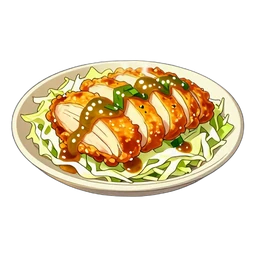
Deep-fried chicken topped with a sweet-and-sour vinegar-and-soy sauce and chopped scallions.
Before the first bite
- Spice
- Varies with sauce
- Texture
- Crisp · Tender
- Serving
- Individual or shared
Varies by restaurantThe sauce blend and the vegetables laid underneath vary by restaurant. For dietary restrictions or allergies, ask the restaurant whether the food contains your trigger ingredients.
Taste and texture
Yurinki is fried chicken topped with a vinegar-and-soy-based sauce and chopped scallions. It may be served with lettuce.
Boneless thighs can be opened into broad pieces for frying. Skin-on meat adds a crisp skin layer; on skinless thighs, starch or batter directly coats the flesh. Flattening thicker areas evens the meat, which may be seasoned with salt and pepper or soy sauce and cooking sake. Cutting after cooking exposes the grain inside while leaving a thin fried exterior around the thick meat.
One coating method lightly dries the chicken, covers it with potato starch and shakes off excess. The dry starch adheres to surface moisture and crisps into a thin layer; corn starch is an alternative. Unlike a breadcrumb cutlet, it follows the meat’s shape without projecting crumbs. Starting skin-side down and turning after the coating sets helps keep the exterior attached.
Another method mixes egg and starch into batter. Maangchi coats chicken this way, fries it, removes it, then fries it again for a firmer crust before draining and slicing. A cooking-class version first mixes seasoned chicken with egg and starch, then adds dry starch before frying. Both use starch, but dry dusting and wet batter build the coating differently.
The sauce balances soy saltiness, vinegar acidity and sugar with scallion, ginger or garlic. Some versions simply mix the chopped aromatics into it; another fries scallion and dried chilli in sesame oil before briefly simmering vinegar, sugar, soy and sake. Raw-mixed sauce retains fresh aromatic pieces, while fried scallion flavours the oil and becomes softer.
Sweet-tangy sauce and scallion aroma accompany crisp coating and tender chicken.
Chilli versions leave thin green and red pepper slices as visible, separately crunchy garnishes. Chilli-infused oil can also flavour the vinegar-and-soy sauce itself. Mild peppers or thin bell-pepper slices are possible adaptations. Fried richness, vinegar acidity and pepper heat come from distinct ingredients; a pepper-heavy bite may foreground pungency over the chicken.
Lettuce beneath the chicken adds uncooked crunch and moisture. Sauce runs onto the lower leaves, bringing cool vegetables together with warm fried meat. An optional chopped-parsley sauce adds another herb aroma. Small aromatics cling to the chicken with sauce, while lettuce remains in larger leaves or shreds beneath it, adding a separate texture.
A Kikkoman home adaptation pan-cooks starch-coated, flattened thighs in a small amount of oil. It browns both sides, then covers the pan to finish cooking, slices the chicken over lettuce and adds scallion-ginger vinegar-soy sauce. It preserves the chicken-and-tangy-sauce pairing while changing the cooking method: pan-contact browning differs from an immersed fried coating.
A Japanese-style Kikkoman cooking-class recipe adds diced tomato, shiso, myoga and powdered bonito to vinegar-soy-sugar sauce. Tomato supplies juicy pieces; shiso and myoga bring aromas beyond scallion. Lettuce or mizuna accompanies the fried sliced chicken. Compared with a fresh-chilli-focused version, this variation centres aromatic herbs and bonito savouriness.
When it may suit the table
- You're in the mood for crisp deep-fried chicken
- You want a tangy sauce to cut through the fried richness
When another path may fit better
- Deep-fried food feels too heavy today
- You need a dish with a hot broth
How to order it in Korea
- Look for “yurinki” on a Korean Chinese menu and check that it isn't kkanpunggi or rajogi, two other fried chicken dishes served there.
- The sauce is poured over the chicken, so if you want the coating to stay crisp, ask whether it can come on the side.
Show the Korean nameName and a short phrase
Use this to point out the food or say its name. Check the food-specific ordering tips above first.
유린기
Save, share or print an image
More guides in this category
Checked sources
Reviewed 2026-08-25 · Next check 2027-03-10