hanip.me
Malatang
마라탕
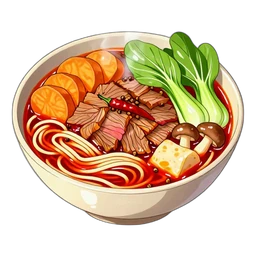
A Sichuan street food in which meats, vegetables and noodles you pick simmer in a numbing, spicy broth.
Before the first bite
- Spice
- Hot
- Texture
- Brothy · Chewy
- Serving
- Usually individual
Varies by restaurantTaste and price change with the ingredients you choose and the condiments added on top. For dietary restrictions or allergies, ask the restaurant whether the food contains your trigger ingredients.
Taste and texture
Malatang is a Chinese soup in which selected ingredients cook in a numbing, spicy broth seasoned with Sichuan pepper and chili. Mala describes both tingling and heat. Meat, vegetables, tofu and noodles can be combined, so the diner helps determine the bowl rather than receiving a fixed set of noodle toppings. A noodle-heavy bowl is quite a different meal from one built mainly around vegetables and tofu.
It shares seasonings and ingredients with hotpot, but the serving method is a useful distinction. Instead of several diners cooking ingredients in a shared pot, malatang is known for vendors cooking a selection and serving it in an individual bowl. Ingredients may be chosen on skewers or collected from a display. The comparison with hotpot for one describes this preparation and serving arrangement as well as the flavor.
Broth bases vary. They may use a concentrated chili-and-spice hotpot base, bone or tomato broth, or added sesame paste. Recipes describing northeastern Chinese variations also include milk. This does not make milk essential to all malatang. Yangguofu’s US menu, for example, labels its beef-bone broth as containing dairy; ask the individual shop what gives a pale broth its color.
Ingredients need different cooking times. Dried wide noodles and tofu skin may be soaked beforehand, while thick noodles or balls may cook before leafy greens and thin meat slices are added. Eating them from one pot does not mean everything is added at once. This preparation and timing help explain chewy noodles and vegetables that have not become excessively soft.
Sichuan pepper produces tingling numbness, while chili gives burning heat. They are different sensations, so someone comfortable with chili may still find Sichuan pepper unfamiliar. Warm broth, spice aromas and lingering tingling overlap. Think about whether you want the numbing seasoning as well as heat when choosing your first bowl.
Noodle width and shape change the bite. Wide sweet-potato starch noodles are thick and springy; thinner glass noodles, instant noodles and rice noodles are other possibilities. Tofu is not limited to soft blocks either. Thin skins, folded or knotted products, fried tofu and frozen tofu offer different forms, so even soy-based ingredients do not all have the same texture.
Vegetables and mushrooms provide contrasts among the meat and balls. Lotus root can remain crunchy when cooked, while cabbage and enoki bring broad leaves and fine stems. A bowl of wide noodles, tofu skin and balls has a different mix of textures from one that also includes leafy vegetables, even in the same broth. Consider the solids together rather than treating numbing heat as the bowl’s only feature.
Finishing seasonings also change the broth. Sesame paste adds nutty flavor and body, while minced garlic, cilantro and chopped peanuts add aromas or texture. Milk makes some preparations creamier. Those soft, nutty qualities can coexist with Sichuan pepper’s tingling, so pale color or thickness alone does not establish that a broth is gentle.
When it may suit the table
- It suits a day when you want Sichuan pepper’s tingling and chili heat along with hot soup. Choose it for spices combined with assorted solids rather than just one kind of heat.
- It works when you want to choose your own noodles, vegetables, meat and tofu. Building around a few favorites gives the bowl a clear focus.
When another path may fit better
- If you want to avoid numbing and spicy sensations, check the broth first. Nutty seasonings or milk do not mean Sichuan pepper and chili have been left out.
- For seasoned ingredients without broth, look at a stir-fried or mixed option such as mala xiangguo. A shop’s soup and dry dishes can produce different meals even from the same chosen ingredients.
How to order it in Korea
- At a shop that charges by weight, check how much noodle, meat and vegetable you have selected. Small portions of many ingredients can add up to a large bowl. Picture the finished meal as you fill the basket, then check its weight and price before paying.
- Some shops add garlic, chili, sesame paste or peanuts to finish the bowl. If you want an aromatic topping such as cilantro left out, say so when handing over your ingredients. Choosing the solids yourself does not mean you have also selected every ingredient in the broth and finishing seasonings.
At the restaurant
- Check the minimum order and price by weight before filling your bowl. Knowing the terms at the start makes it easier to select an amount that fits your appetite and budget.
Show the Korean nameName and a short phrase
Use this to point out the food or say its name. Check the food-specific ordering tips above first.
마라탕
Save, share or print an image
More guides in this category
Checked sources
Reviewed 2026-09-13 · Next check 2027-02-24
- The World of Chinese Opens in a new tab.
- Wikipedia Opens in a new tab.
- Namu.wiki Opens in a new tab.
- Food Safety Korea Opens in a new tab.
- Kathy Yuan · The Mala Market Opens in a new tab.
- Yi · Yi's Sichuan Kitchen Opens in a new tab.
- Elaine · China Sichuan Food Opens in a new tab.
- YANGGUOFU · United States menu Opens in a new tab.