hanip.me
Seolleongtang
설렁탕
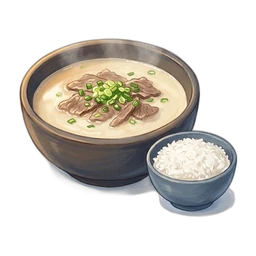
A warm meal of cloudy beef-bone broth, sliced beef and rice.
Before the first bite
- Spice
- Not spicy
- Texture
- Brothy · Tender
- Serving
- Usually individual
Varies by restaurantCuts of beef, broth intensity and noodles vary; salt, pepper and scallions let you adjust the bowl.
How to order it in Korea
- For a complete meal, check rice inclusion and noodles first. Distinguish broth-only products from meals containing meat. Read the listed contents rather than relying only on a soup photograph to decide whether you need rice or whether the toppings suit you.
- If avoiding wheat, check specifically for noodles in the menu description or restaurant ingredient information. Removing noodles from a served bowl differs from having it prepared without them; explain the requirement before ordering.
- On an ordering service such as Bon Order, choose delivery, pickup or dining in before checking the store and meal contents. The ordering view can differ by service type. Before completing the order, review soup and rice quantities together.
When it may suit the table
- It fits a craving for hot broth and rice together. You can taste meat, rice and soup separately or combine them in a spoonful. Choose it when you want to control those proportions rather than immediately mixing an entire rice bowl.
When another path may fit better
- Consider chicken mayo if sauced rice and chicken appeal more than broth. Seolleongtang puts a hot soup at the centre of the meal; chicken mayo focuses on mixing rice with toppings. Even between rice meals, start with the way you want to eat.
- Compare a bossam rice set when you want boiled pork alongside rice. If avoiding beef, consider the stock as well as the visible meat rather than simply requesting that the topping be removed. Both the contents and the base of a soup matter to that choice.
At the restaurant
- Taste one spoonful before seasoning. Add a little salt and taste again, then choose pepper or scallions according to the aroma you want. Changing one element at a time makes it easier to identify what you enjoy than adding every condiment together.
- Alternate a little rice in the broth with broth alone. Eat beef on rice or in a spoonful of soup. Keeping some rice aside gives you a way to change the ratio through the meal rather than fixing the whole bowl at the start.
- When kimchi or kkakdugi accompanies the meal, try a bite separately before adding any to the soup. You can compare it with the broth without changing the whole bowl. Decide how much of its seasoning you want in each combination of rice, beef and soup.
Taste and texture
About the dish
Seolleongtang is a soup made by cooking beef bones and meat for a long time. This guide covers a meal with meat in the soup and rice alongside. A broth-only product is a different purchase, so check the meat and rice as well as the soup’s name when choosing a meal.
Its cloudy colour is distinctive. Cooking beef bones in water for a long time produces white broth. Describing the appearance as milky does not itself mean milk was added. Think of savoury beef broth rather than the sweetness or dairy flavour of cream soup.
The bones used for stock and the meat served in the bowl are separate considerations. Recipes may use several bone cuts and beef such as brisket. Seeing sagol on a menu does not mean you should expect to pick meat from a large bone. The actual serving of meat and its balance with broth are more direct points of comparison.
Stock-making and preparing the meat for serving can be separate stages. Some recipes remove the meat, slice it thinly and add it to hot broth. Long cooking of stock does not mean you should expect tough meat to chew. Consider the cut and serving form as well as the broth.
Taste and texture
Basic seolleongtang focuses on beef broth rather than chilli heat. Oegojip describes its standard soup as non-spicy. With the first spoonful, notice aroma and the feeling left in your mouth rather than judging by whiteness alone; colour cannot decide your preference for you.
Broth and meat play different roles. Broth alone highlights a flowing texture, while beef adds something to chew. Alternating the two helps you decide whether you mainly want a rich soup or a meal focused on meat.
Some restaurants add thin noodles. Oegojip explicitly lists wheat noodles, whereas Maangchi’s recipe does not include them. Read the description to distinguish a soup with some noodles from one focused on rice and beef. Noodles in the bowl can be an accompaniment rather than a replacement for rice.