hanip.me
Japchae
잡채
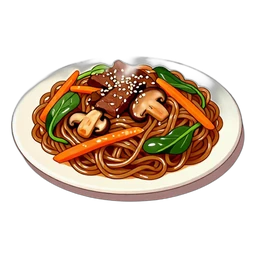
Boiled glass noodles tossed with separately stir-fried vegetables and meat in a soy sauce seasoning.
Before the first bite
- Spice
- Not spicy
- Texture
- Chewy · Mixed textures
- Serving
- Usually shared
Varies by restaurantThere are versions with different ingredients, such as seafood japchae or bean sprout japchae. For dietary restrictions or allergies, ask the restaurant whether the food contains your trigger ingredients.
Taste and texture
Japchae is cooked glass noodles tossed with stir-fried vegetables, meat and soy-based seasoning.
Sweet-potato-starch dangmyeon is typical of japchae recipes. Hard dried strands absorb liquid, soften and bend as they cook, becoming translucent and elastic. Soy seasoning gives them a light brown colour. Carrot, spinach, onion, mushrooms and meat intertwine with the long strands on the chopsticks.
A key method cooks components separately before combining them in a bowl. Delicate greens, firm carrots and meat cook at different speeds. Separate blanching or frying limits over-softening while another ingredient cooks. A single pan can still be reused by transferring each cooked component to the bowl. Colours and textures remain distinct after mixing.
Spinach may be briefly blanched, chilled, squeezed and seasoned. Excess leaf water would otherwise join the sauce. Sesame oil with salt or soy sauce and garlic seasons the greens before mixing. Thin, elongated carrot and onion cuts fit alongside the noodles and give the vegetables a manageable cooking thickness.
Shiitake, wood ear or oyster mushrooms offer different shapes. Dried shiitake is rehydrated before slicing; fresh shiitake is trimmed and cut thinly. Some recipes season mushrooms with part of the soy mixture before frying. Plump shiitake pieces, long oyster-mushroom fibres and thin rippled wood ears remain distinct among the noodles.
Meat can be cut into narrow strips and seasoned with soy, sugar, garlic, pepper and sesame oil. Both beef and pork appear in recipes. Seasoning and frying the strips before combining gives flavour within the meat as well as on the noodles. Fine strips intertwine with vegetables; using less meat leaves a greater share of mushrooms and vegetables.
An alternative to fully boiling dangmyeon soaks it until flexible, then finishes it in a pan with sauce. As it softens, it absorbs seasoning and meat juices. Firmer vegetables can cook first, followed by mushrooms and spinach. This approach judges noodle flexibility and thickness rather than relying only on a fixed soaking time.
Savory soy seasoning coats chewy glass noodles, with vegetables and mushrooms adding different textures.
Soy sauce supplies saltiness, balanced by sugar or honey. Sesame oil and toasted sesame add nuttiness, with garlic and pepper for aroma. Seasoning the noodles before or during pan-frying prevents flavour from residing only in the vegetables. Once separately seasoned noodles, meat and mushrooms are combined, their amounts also affect the overall intensity.
Egg garnish can be made by cooking whites and yolks separately in thin sheets, cooling and slicing them. White and yellow strips stand out against brown noodles, retaining ribbons rather than scrambled fragments. Soft egg contrasts with resilient dangmyeon and crisp carrot or pepper. Toasted sesame can remain as small grains scattered over the finished mixture.
Cooked dangmyeon bends readily while retaining a springy chew. Sauce and oil give it gloss, and recipes often leave some vegetable crunch. Carrot or pepper adds a short, crisp bite to the smooth noodles. If noodles absorb too much moisture and become overly soft or sticky, this contrast can diminish.
Meat-free examples use more mushrooms and vegetables or pan-fried tofu. Tofu adds soft pieces instead of meat fibres, while more mushrooms emphasise their aroma and bite. Serving japchae over rice adds a separate grain texture beneath the smooth, resilient noodles, combining seasoned strands with plain rice on the spoon.
When it may suit the table
- A day you need something without any heat
- When you want one plate several people can share
When another path may fit better
- When you want a hot dish with broth
- When you want a filling rice-based meal
How to order it in Korea
- Look for “japchae” on the menu; it usually arrives as one plate for the table to share.
- Beef and mushrooms are typically included, so check when ordering if there's an ingredient you want to avoid.
Show the Korean nameName and a short phrase
Use this to point out the food or say its name. Check the food-specific ordering tips above first.
잡채