hanip.me
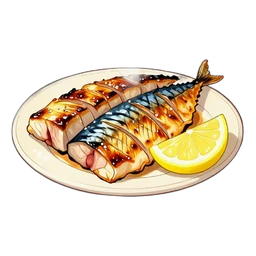
Grilled spotted mackerel
삼치구이
Spanish mackerel, a blue-backed fish, grilled on a gridiron or pan and eaten plain.
Before the first bite
- Spice
- Not spicy
- Texture
- Crisp · Tender
- Bones
- Usually bone-in
- Serving
- Individual or shared
Varies by restaurantSome kitchens grill it on a gridiron and others in a pan, and the thickness of the slices differs by restaurant. For dietary restrictions or allergies, ask the restaurant whether the food contains your trigger ingredients.
Hanip treats Samchigui as a challenge food. Reading this guide does not make it appear in ordinary recommendations.
Taste and texture
Samchigui is Spanish mackerel cut into portions and cooked on a grate or in a pan. Thick fish pieces accompany rice, unlike braised fish eaten with seasoned liquid and vegetables. Although it is a blue-backed fish, its cooked flesh is tender and relatively mild. This dish lets you choose the flesh and grilled flavor of Spanish mackerel rather than an assortment of fish.
The fish may be prepared as thick fillets or shorter portions. A long opened fillet and a small cut piece look different on the plate. Recipes can use deboned portions, but ordinary samchigui can retain bones. Skin-on outer sections and interior flesh let one piece combine a grilled surface with a tender center.
Both grates and pans are used. Some versions cook on a grate; others use oil in a heated pan to brown both sides. Pan recipes drain the prepared fish before cooking. The central operation browns the surface rather than submerging the fish in simmering liquid, leaving grilled portions as the main part of the plate.
Alongside simply seasoned fish, there are soy-seasoned versions. An RDA recipe coats the fish with soy sauce, scallions, garlic, sugar, sesame oil, sesame seeds and pepper, marinates it, then grills it. This adds seasoning to the flesh and aromatic flavor to the surface. The dish's name does not guarantee salt is its only seasoning; soy-flavored forms are also samchigui.
Other variations change when sauce is added. A garlic-sauce version browns the fish first, then adds a mixture of soy sauce, garlic, ginger, rice syrup and plum syrup. Joajoa3's recipe finishes by pouring on the sauce and turning off the heat. Unlike marinating before grilling, this finishes cooked fish with sauce, changing the coating that remains on its surface.
Pan versions may also use flour. Bongteulmam describes both plain grilling and a flour-coated method, browning the coated fish before proceeding. The flour contributes another surface layer. Samchigui does not always have a thick batter, but calling it grilled fish does not mean flour is never used.
A soy-and-lemon-syrup finish adds a sweet citrus aroma. Briefly coating grilled fish with the sauce gives a moister surface than a simple salt-seasoned version. A recipe using already salted fish limits the additional sauce. Initial seasoning and the finishing sauce both shape the final taste, so the visible quantity of sauce alone cannot reveal all its saltiness.
Cooked Spanish mackerel separates softly along its grain and has subtle sweetness. The browned surface is savory, while the thick interior emphasizes tenderness. Skin with flesh feels different from interior flesh alone, even within one portion. Mild describes the flavor impression, not an absence of fat.
The surface varies with seasoning and finishing. Where there is little sauce, the browned exterior is more apparent; a sauced area combines moist seasoning with the flesh. A flour coating adds a thin outer layer of its own. Not every serving remains equally crisp throughout the meal.
Soy dressing adds saltiness and sweetness over the fish's gentle sweetness. Scallions and garlic mingle with its grilled aroma, while a ginger sauce brings another direction. Lemon syrup supplies both citrus scent and syrup sweetness, unlike lemon juice alone. The sauce can shift the dish from mainly mild fish toward a sweet-and-salty rice accompaniment.
Breaking off a little fish to place over rice divides a thick portion into manageable bites. With bone-in pieces, opening the flesh along its grain helps expose areas with bones. A menu labeled boneless need not have the same preparation as an ordinary serving. The tender flesh is the attraction, but the shape and preparation of the portion affect how it is eaten.
When it may suit the table
- You want a mild home-style meal with no chili heat
- You want tender fish to eat alongside rice
When another path may fit better
- Picking bones out of fish feels like too much work
- You're craving a spicy seasoned dish instead
How to order it in Korea
- Look for “samchigui” on the menu and check that it isn't another grilled fish such as galchigui.
- Ask whether it's grilled as thick slices so you can choose the size you want.
Show the Korean nameName and a short phrase
Use this to point out the food or say its name. Check the food-specific ordering tips above first.
삼치구이
Save, share or print an image
More guides in this category
Checked sources
Reviewed 2026-09-13 · Next check 2027-03-24