hanip.me
Bibim makguksu
비빔막국수
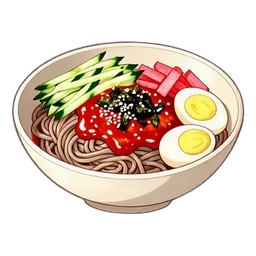
Buckwheat noodles tossed in a sweet, tangy and spicy sauce, a signature noodle dish of Chuncheon in Gangwon.
Before the first bite
- Spice
- Medium
- Texture
- Mixed textures · Crisp
- Serving
- Usually individual
Varies by restaurantThe heat of the sauce and the toppings, such as cucumber and kimchi, differ from restaurant to restaurant. For dietary restrictions or allergies, ask the restaurant whether the food contains your trigger ingredients.
Taste and texture
Bibim makguksu combines buckwheat noodles with spicy seasoning and toppings. Crunchy kimchi, radish or cucumber sits over the noodles and is mixed through before eating. Chilled noodles and fresh vegetables, rather than hot broth, lead the dish. Buckwheat's savory flavor remains part of the combination beneath the red sauce.
The noodles are made from buckwheat dough, sometimes mixed with hot water and pressed through a noodle maker. Starch may be blended in, so buckwheat noodles do not necessarily mean buckwheat alone. Composition and proportion affect elasticity and how readily strands break; a need for pure buckwheat requires ingredient information.
Color and thickness vary. Flour containing outer parts of the grain can look darker than flour made mainly from the inner portion. Darkness alone does not establish the highest buckwheat percentage. Both flour composition and added starch influence appearance and texture.
The noodles are boiled, rinsed cold and drained before arranging them with toppings and seasoning. They are not stir-fried in hot sauce. This preparation matches the cool vegetables. Fresh and dried noodle products can require different cooking methods, so home cooks should follow the product directions.
Sauce can combine gochugaru, soy sauce, vinegar, sugar and garlic. Sesame oil, ground sesame, mustard and sometimes perilla powder add further aromas. Saltiness, sweetness, acidity and fragrance accompany chili heat. Similar red sauces can feel different depending on vinegar, mustard and sweetener levels.
Julienned cucumber, radish and kimchi are example toppings. Pickled radish adds its pickling flavor to the crunch; boiled egg, gim or chopped peanuts appear in some recipes. These are not universal requirements, so eggs or nuts shown in one photograph should not be assumed in every bowl.
Makguksu can use dongchimi liquid or meat broth. Mul makguksu centers on noodles immersed in generous broth, whereas bibim centers on sauce and toppings. A bibim version can still include a little chilled liquid. Dongchimi and meat broth have different ingredients and flavors, which helps explain the particular bowl.
Buckwheat noodles taste rustic and savory and often break relatively softly, although starch blends change their springiness. A bite may break together with its toppings rather than stretch with a tough chew. Even with similar red seasoning, bibim-naengmyeon can feel different; noodle type matters as well as broth.
Cucumber and radish crunch among the strands, while kimchi contributes its own seasoning and fermented flavor. Egg adds firm white and yielding yolk. Gim and sesame scatter over the noodles, while peanuts remain small crunchy pieces. Each garnish keeps a distinct texture when mixed.
Vinegar adds sourness and mustard a nose-tingling aroma, different from chili heat. Sugar and sesame oil add sweetness and nuttiness. A cold dish need not have mild seasoning. Mixing evenly prevents concentrated pockets of sauce from dominating individual bites.
Potato pancakes, buckwheat rolls and sliced cooked pork are examples of accompaniments. Pancakes bring browned surfaces and softer interiors, pork another chewy bite alongside cool noodles. These can be separate menu items rather than toppings, so consider their portions separately when choosing a noodle-centered meal or a broader selection.
When it may suit the table
- You want a cool, refreshing bowl of noodles
- You feel like noodles tossed in a spicy sauce
When another path may fit better
- You need noodles made only from buckwheat; check the ingredients because starches may be mixed in
- You need a warm broth instead
- You want to avoid spicy seasoning
How to order it in Korea
- Look for “bibim makguksu” on the menu and check that you are not ordering “mul makguksu”, the version served in cold broth.
- Makguksu may come with dongchimi liquid or broth. Where noodles and broth are served separately, a little loosens the seasoning while a larger amount creates a soupy serving. Check whether broth accompanies the bibim version and add it to your preferred consistency rather than pouring it all in at once.
Show the Korean nameName and a short phrase
Use this to point out the food or say its name. Check the food-specific ordering tips above first.
비빔막국수
Save, share or print an image
More guides in this category
Checked sources
Reviewed 2026-09-13 · Next check 2027-03-24