hanip.me
Jjolmyeon
쫄면
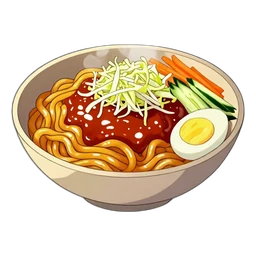
Chewy yellow noodles tossed with crisp vegetables in a tangy, sweet and spicy sauce.
Before the first bite
- Spice
- Medium
- Texture
- Chewy · Crisp
- Serving
- Usually individual
Varies by restaurantHow spicy and how sweet the sauce is, and which vegetables go on top, differ from restaurant to restaurant. For dietary restrictions or allergies, ask the restaurant whether the food contains your trigger ingredients.
Taste and texture
Jjolmyeon is thick, elastic noodles cooled and tossed with vegetables in a gochujang sauce. The name refers both to the noodles themselves and the finished dish. Korea Tourism Organization presents it as a snack-shop dish with soybean sprouts, cabbage, cucumber, and carrot. It centers on coating noodles and vegetables rather than spooning up broth.
Korean Bapsang describes the noodles as slightly thick, springy strands made with wheat flour and starch. The strands are loosened before boiling and rinsed thoroughly in cold water afterward. Maangchi also washes away excess surface starch in cold water and drains them. This separates the noodles so sauce and vegetables can move among them.
The vegetables do more than decorate the top. Recipe examples cook and cool soybean sprouts, finely shred cabbage, and cut cucumber and carrot into thin strips. The sprouts and slender vegetables catch between the noodles. A vegetable-rich mouthful breaks up more easily and gives frequent crunch compared with a bundle of noodles alone.
Gochujang forms the base of a sauce seasoned with vinegar, sugar, garlic, and soy sauce. Encyclopedia of Korean Culture also describes garlic, ginger, and lemon juices. Maangchi uses chili flakes, rice syrup, sesame oil, and sesame seeds. Chili heat, acidity, and sweetness coat the strands, while garlic or ginger adds another aromatic layer.
There are variations in the source of sweet tang. Korean Bapsang offers pineapple juice or green-plum syrup and finely ground sesame seeds. Fruit aroma can join the vinegar-and-sugar flavor, while ground seeds disperse nutty richness through the sauce. Similar-looking red sauces can therefore emphasize sharp acidity or sweet, roasted flavors differently.
Some recipes top the noodles with half a boiled egg or thin strips of gim. Egg adds a soft element beside the thick noodles, while gim contributes a seaweed aroma. Maangchi and Korean Bapsang suggest making a separate soup from the soybean-sprout cooking liquid. That is a recipe example pairing cold mixed noodles with warm soup, not a promise that every order includes it.
The thick strands resist the bite elastically rather than snapping immediately. Maangchi describes properly cooked jjolmyeon as chewy but soft, without a hard center. Its intended chew is therefore different from undercooked firmness: the strands bend softly while retaining resilience.
Soybean-sprout stems resemble the noodles' long shape but break with a crunch. Cabbage contributes thin leaves and firmer structure, and cucumber adds cool moisture. Together they interrupt the smooth, elastic strands. Mixing vegetables into successive bites carries both textures through the bowl.
Gochujang and chili flakes can remain noticeably hot even on cold noodles. Vinegar, sugar, and rice syrup establish the sweet tang, followed by chili heat and garlic aroma. Sesame oil and seeds add a roasted fragrance while mixing. A densely sauced noodle bundle can feel more concentrated than a vegetable-rich bite.
Boiled egg white is soft, while yolk crumbles into a finer texture. Crushing a little yolk into the sauce adds egg richness among the smooth red dressing. Gim breaks lightly before becoming wet, then adheres to the noodles and adds aroma after mixing. You can eat the garnishes separately or mix a little in according to the texture you want.
Draining the noodles lets sauce cling to their surfaces as a tossed dish. If seasoning has collected underneath, lift small portions and mix them through the vegetables. Picking up smaller bundles makes the elastic strands easier to enjoy at a steady pace. The individual strands and their coating remain prominent rather than being loosened in broth.
When it may suit the table
- It suits a craving for thick, resilient noodles. Crunchy vegetables between the strands provide a different bite from noodles alone.
- Choose it when you want noodles tossed in sweet, tangy heat without broth, especially a combination of gochujang, vinegar, and sesame oil.
When another path may fit better
- If you need to avoid wheat, check the noodle ingredients.
- You need a warm broth
- You want to avoid spicy seasoning
How to order it in Korea
- Look for Jjolmyeon on a snack-shop menu, and check the description for vegetables and garnishes such as egg.
- Gochujang seasoning coats the noodles when mixed, so heat is hard to remove afterward. If that is a concern, ask when ordering whether less seasoning or sauce on the side is possible. A pre-mixed preparation may not allow adjustment.
At the restaurant
- The noodles are thick and chewy, so eat slowly and chew thoroughly.
Show the Korean nameName and a short phrase
Use this to point out the food or say its name. Check the food-specific ordering tips above first.
쫄면
Save, share or print an image
More guides in this category
Checked sources
Reviewed 2026-08-25 · Next check 2027-04-21