hanip.me
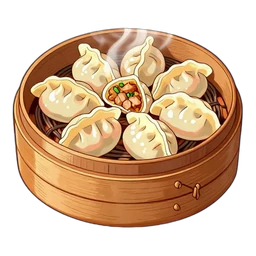
Steamed mandu
찐만두
Korean mandu filled with minced meat and vegetables, then cooked by steaming.
Before the first bite
- Spice
- Not spicy
- Texture
- Soft · Chewy
- Serving
- Individual or shared
Varies by restaurantFillings differ by shop and may include meat, chives, bean curd or kimchi. For dietary restrictions or allergies, ask the restaurant whether the food contains your trigger ingredients.
Taste and texture
Jjinmandu are dumplings filled with ingredients such as minced meat and vegetables, then cooked by steaming.
Meat filling may use ground pork alone or combine it with beef. Finely cut cabbage, zucchini, sprouts, onion or chives join soy sauce, garlic, ginger, pepper and sesame oil. Some recipes mix raw meat with prepared vegetables to cook inside the wrapper; others fry the pork first. The latter distributes separated cooked meat grains through the filling, while the former cooks meat and vegetables together inside.
Managing vegetable and tofu moisture helps the filling hold its shape. Recipes salt cabbage or zucchini and squeeze them, blanch and drain sprouts, and press tofu before crumbling it. Less loose liquid makes the filling easier to enclose and seal. An egg can bind crumbly tofu and chopped ingredients, while tofu leaves soft particles between the meat.
Boiled glass noodles are chopped short and distributed among meat and vegetables so each spoonful contains a mixture. Finely cut chives add a fresh allium aroma; sautéed onion or zucchini forms small pieces. The proportions of meat, tofu and noodles range from a meatier filling to one with more visible noodles. White tofu crumbs and translucent noodle pieces contribute different softness and spring.
A thin flour wrapper encloses the filling. Folding a round wrapper in half makes a crescent; pleating or joining its ends creates folds or a rounded body. Commercial wrappers may need a little water around the edge to seal. Overlapping edges feel thicker than the broad middle, which rests against the filling and bends softly, leaving a thickness contrast within one dumpling.
Steaming places dumplings on a rack above boiling water rather than in it. Damp cloth, parchment or cabbage leaves reduce sticking; spacing helps keep wrappers intact. Without the oil-frying stage there is no browned, crisp bottom. The exterior therefore emphasizes a warm, soft flour wrapper and aromas rising from the filling.
Steamed wrappers are soft and chewy around a moist filling. Meat, chives, tofu and other fillings change the texture and aroma. The appeal is the soft wrapper and filling together, rather than the crisp exterior of fried dumplings.
Kimchi filling may combine chopped, squeezed ripe kimchi with meat, tofu and noodles. Small cabbage pieces and fermented acidity run through the soft tofu, distributing kimchi flavour throughout the filling. Extra chili flakes add colour and heat; some recipes add perilla oil or ground perilla seeds for a nutty aroma behind the acidity. Those additions depend on the recipe.
Shrimp dumplings can combine peeled, deveined, chopped shrimp with cabbage, mushrooms and onion. Fine chopping makes a smoother filling; coarser pieces leave a distinct springy bite. Mixing shrimp with ground meat combines that spring with softer meat grains. Garlic, ginger, soy and sesame seasoning emphasizes shrimp and aromatics rather than kimchi acidity, giving the familiar wrapper a different interior texture.
Soy-vinegar dip adds acidity to saltiness. Sesame seeds, chili flakes and chopped scallion add nutty, spicy and allium notes to the wrapper. With an already seasoned filling, a little dip adds an outer layer rather than soaking the centre. Acidity stands out against mild tofu and overlaps with fermented tang in kimchi filling. Dipping one side lightly makes the filling seasoning and sauce easier to distinguish.
When it may suit the table
- A day you want a warm, freshly steamed bite
- You need something mild and easy to eat
When another path may fit better
- You want a crisp, browned outside
- You need a dish that comes with broth to spoon up
How to order it in Korea
- Mandu is a broad name for filled dumplings, so check the cooking method too. Jjin-mandu is steamed and soft; gun-mandu is pan-fried or deep-fried for a crisp surface. Dumplings can also be boiled in broth, so choose jjin-mandu if you want steamed dumplings without soup.
- Many places offer a choice of filling, such as meat or kimchi, so ask when you order.
At the restaurant
- The filling in freshly steamed dumplings is hot; let it cool a little before eating.
Show the Korean nameName and a short phrase
Use this to point out the food or say its name. Check the food-specific ordering tips above first.
찐만두
Save, share or print an image
More guides in this category
Checked sources
Reviewed 2026-09-13 · Next check 2027-03-03