hanip.me
Korean-style shabu-shabu
샤브샤브
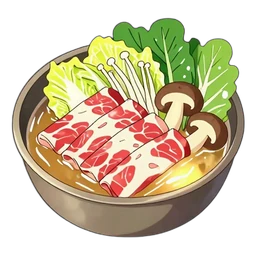
A hot pot in which thinly sliced beef, vegetables and mushrooms are briefly cooked in a light broth.
Before the first bite
- Spice
- Not spicy
- Texture
- Brothy · Tender
- Bones
- None
- Serving
- Usually shared
Varies by restaurantClams or mussels may be added to deepen the umami, depending on preference. For dietary restrictions or allergies, ask the restaurant whether the food contains your trigger ingredients.
Taste and texture
Shabu-shabu cooks thinly sliced meat and vegetables in boiling broth. Prepared ingredients go into the pot in small batches and are lifted out as the meal proceeds. Korean shabu-kalguksu can follow beef, napa cabbage, mushrooms and water parsley with knife-cut noodles in the remaining broth. The liquid used to cook the meat becomes the base for the next part of the meal.
A clear broth may begin with anchovies, kelp, onion, radish and scallions, combining vegetable flavor with seafood savoriness. Clams or mussels can also be added. Convenience recipes use anchovy-and-kelp stock products seasoned with soup soy sauce or tsuyu. The broth is flavored before the first meat goes in, so it also accompanies the vegetables when they are lifted out.
Beef is prepared in broad, thin slices. Separate sheets allow broth between them and can be picked up once cooked. Napa leaves and mushrooms are divided into manageable pieces, while water parsley may be cut into short lengths. A bite of meat with vegetables combines tender beef with the textures of leaves and mushrooms.
Cabbage-centered variations also exist. W Table removes the firm cabbage core and shreds the leaves finely to serve with scallions and thin beef belly. Its broth uses water and tsuyu, with a soy, mustard and sweetener dip. The fine cabbage strips spread through the broth rather than presenting broad napa leaves to pick up.
Dips are prepared separately in small dishes. Soy sauce with broth, lemon juice and sugar supplies salty, sweet and sour notes. Peanut butter loosened with broth and seasoned with soy and sweetener makes a thicker, nuttier sauce. A mustard-and-soy dip brings a pungent nasal sensation. How much dip clings to cooked meat or vegetables controls the strength of the flavor in a bite.
There are spicy-broth variations too. Sempio's Deungchon-style home recipe uses gochujang and a fermented soybean seasoning with water parsley, oyster mushrooms and beef. Mushrooms are torn by hand, and parsley stems and leaves add aroma to the broth. The cooking liquid itself carries chili-paste flavor, creating a spicier composition than one beginning with clear stock.
After the solids, kalguksu may be cooked in the remaining broth. Wheat noodles enter liquid flavored by meat and vegetables, then are eaten with the soup. Another finish combines rice, egg and chopped vegetables into a porridge-like or fried-rice-like dish. Noodles make long strands to lift; the rice finish is eaten with a spoon.
The amount of liquid used for the finish helps determine its form. Sempio's recipe combines rice with a portion of the remaining broth, egg and vegetables. It need not use every drop in the pot. The result may be moist rice porridge or a more concentrated mixture with less broth.
Thin cooked beef folds with broth clinging to it and feels tender. Napa or cabbage combines soft leaf sections with firmer stalk areas, while mushrooms add a different springiness. Water parsley introduces a leafy aroma to the liquid. Depending on cooking, vegetables retain some crunch or become softer and wilted.
The initial clear broth has the flavor of its stock ingredients; meat and vegetables add to it as the meal proceeds. Shellfish contributes its flavor when included. A solid ingredient dipped in sauce and a spoonful of broth have different concentrations of flavor. The small dip supplies intensity while the pot's liquid connects the meat and vegetables.
Peanut sauce brings smooth nuttiness; a soy dip with lemon or vinegar adds lighter acidity. Mustard's pungency differs from the heat of a gochujang broth. Chopped chilies add spicy notes and pieces to chew. Ingredients cooked in clear broth can carry these distinct flavors through the separate dips.
When it may suit the table
- A day you want a hot broth with plenty of vegetables
- You're sharing a single pot with other people
When another path may fit better
- You crave a fiery, spicy broth
- You need one dish that arrives ready to eat with no cooking at the table
How to order it in Korea
- Look for “shabu-shabu” on the menu and check whether it is the “shabu-kalguksu” version that finishes with noodles.
- Some meals start with meat and vegetables cooked in broth and dipped in sauce, followed by noodles in the remaining soup. Flavors from the ingredients enrich the broth by the noodle stage. Check the restaurant instructions for timing and whether noodles or rice porridge are included or ordered separately.
Show the Korean nameName and a short phrase
Use this to point out the food or say its name. Check the food-specific ordering tips above first.
샤브샤브
Save, share or print an image
More guides in this category
Checked sources
Reviewed 2026-09-13 · Next check 2027-03-24