hanip.me
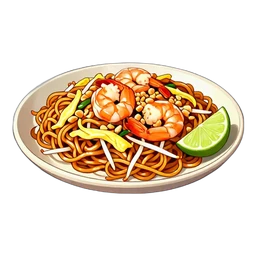
Pad Thai
팟타이
A Thai stir-fried rice noodle dish cooked with egg and seasoned with tamarind and fish sauce.
Before the first bite
- Spice
- Mild
- Texture
- Chewy · Mixed textures
- Serving
- Usually individual
Varies by restaurantShops differ in whether they use shrimp, chicken or tofu, and in which condiments such as chili and peanuts arrive on the side. For dietary restrictions or allergies, ask the restaurant whether the food contains your trigger ingredients.
Taste and texture
Pad thai is Thai rice noodles stir-fried with egg, tofu and other ingredients, flavored with tamarind and fish sauce. Lime and peanuts may be served alongside.
Dried flat rice noodles can be soaked until flexible but not fully cooked, then finished in the pan with sauce and moisture. Soaking depends on thickness and product. If the centre remains too firm after the sauce is absorbed, a little water can finish the cooking. Overcrowding traps steam and encourages clumping, so batches are useful. The aim is a supple finished noodle that still retains distinct strands.
Firm pressed tofu is cut into small pieces so it holds together during frying with minced garlic and shallot. Sweet preserved radish adds small chewy pieces and pickled flavour. Chopped dried shrimp spreads seafood aroma through the noodles separately from any large shrimp on top. A plate without visible shrimp may therefore contain dried shrimp or fish sauce, and a tofu-heavy version still depends on its sauce and minor ingredients.
Egg can be cooked in cleared space in the pan and folded through as yellow curds. Another sequence briefly lays noodles over the setting egg before turning and breaking it up. Chicken breast or thigh is thinly sliced; shrimp may be seared separately and returned later. These sequences accommodate different cooking speeds. Egg adds tender curds, chicken distinct fibres and shrimp a plump springiness.
An ingredient-accessible variation replaces tamarind with ketchup and vinegar, adjusting the other seasonings for ketchup’s own sweetness and acidity. Oyster sauce appears in that particular shortcut recipe. Soy sauce can replace fish sauce’s saltiness while reducing fermented-fish aroma, and scallion with garlic can substitute for garlic chives. These changes alter the aromatic base and potentially colour compared with a tamarind-and-dried-shrimp formulation.
A variation replaces flat rice noodles with thin, translucent glass noodles. Hot Thai Kitchen adds sriracha for heat and acidity and a prepared shrimp-tomalley paste for stronger shrimp flavour, retaining egg, tofu, sprouts and chives. It changes the strands while preserving the varied small fillings.
Tamarind acidity, sugar sweetness and the savory saltiness of fish sauce overlap. Chewy rice noodles contrast with crisp bean sprouts, with peanuts adding another texture when included. Unlike rice noodle soup, the sauce flavors the stir-fried noodles directly.
Tamarind may come from soaked, strained pulp or prepared purée. Concentration and acidity vary, so substituting a strong concentrate by equal volume changes the balance. Melting and colouring palm sugar before adding tamarind and fish sauce introduces cooked-sugar aroma; simpler versions use brown sugar. Frying reduces the liquid and seasons the strands, aiming for coated noodles rather than a pool of sauce.
Bean sprouts and garlic chives add short stems among the long noodles. Brief final tossing preserves much of their moisture, crunch and garlicky aroma; some may be served uncooked alongside. Crushed roasted peanuts give firmer, nutty bites, either mixed through or scattered over the top. ThaiTable also presents a lengthwise-cut banana blossom accompaniment, adding another distinct plant texture.
When it may suit the table
- You want sweet-and-sour stir-fried noodles
- You need a dinner that fits on one plate
When another path may fit better
- You need a dish with a hot broth
- You want to avoid peanuts or fish sauce
How to order it in Korea
- Look for “pad thai” on the menu, then check whether it comes with shrimp, chicken or tofu.
- Check whether lime, chili powder and chopped peanuts are served alongside. Lime adds acidity, chili adds heat, and peanuts add nutty flavor and crunch. Taste the noodles first and add a little at a time to adjust the sourness and heat to your liking.
- If you want a tangy sauce, ask whether tamarind is used.
Show the Korean nameName and a short phrase
Use this to point out the food or say its name. Check the food-specific ordering tips above first.
팟타이
Save, share or print an image
More guides in this category
Checked sources
Reviewed 2026-09-13 · Next check 2027-03-17