hanip.me
Bánh mì
반미
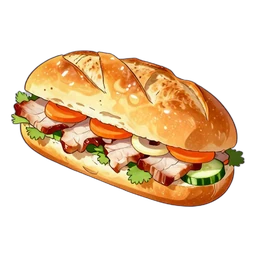
A Vietnamese sandwich made by splitting a short, thin-crusted baguette and filling it with meat and pickled vegetables.
Before the first bite
- Spice
- Mild
- Texture
- Crisp · Soft
- Serving
- Usually individual
Varies by restaurantFillings vary by shop, from Vietnamese sausage and barbecued pork to minced pork or tofu. For dietary restrictions or allergies, ask the restaurant whether the food contains your trigger ingredients.
Taste and texture
Banh mi is a Vietnamese baguette sandwich filled with meat or egg, pickled vegetables and herbs. Pickled carrot and radish, cucumber and cilantro may be included, with pâté or mayonnaise linking bread and filling. Fillings such as pork, sausage and egg vary, so the name does not specify one fixed meat sandwich.
A light, open crumb lets the bread compress around its filling as it is bitten. Its thin crust breaks around a soft interior. Some methods remove part of the crumb after splitting the loaf, creating a channel without an excessively thick bread layer. Andrea Nguyen spreads mayonnaise inside, adds soy sauce or Maggi seasoning, then layers the filling. A light baguette cuts through with the moist contents more readily than a dense loaf with a tough crust.
Banh mi with assorted cold cuts can include cha lua, a Vietnamese pork sausage. Thin slices have a smooth surface and even springiness, unlike fibrous roast meat. Pressed pork containing skin or ear includes firmer, chewy pieces. Char siu or roast pork contributes seasoned lean meat and fat. A thin smear of liver pâté gives a rich, soft layer among these slices; chicken or pork liver can be used. Sausage and pâté therefore perform distinct roles.
One grilled-pork filling marinates meat with finely chopped lemongrass, shallot and garlic. Fish sauce supplies saltiness, sugar sweetness, and dark soy deepens the surface colour. Nguyen grills moderately fatty pork shoulder, then slices it for uses including banh mi. Its fibres separate as it is chewed, with aromatic seasoning and char on the surface. Lemongrass is embedded in the meat rather than supplied solely by the final cilantro garnish, so removing herb leaves does not remove the marinade aroma.
Vietnam Tourism describes differences in preparation as well as protein. Heo quay uses thick roast pork with cucumber and pickles. Cha ca uses fried, springy fish cakes, paired with pepper, Vietnamese coriander, cucumber or garlic-chili soy sauce. Op la places fried eggs inside bread or serves them with sausage in a metal pan beside bread. In the latter format, bread can also pick up egg and sauce. These are distinct examples documented in Vietnam.
Another filling uses soft meatballs. RecipeTin’s pork meatballs are gently poached rather than browned to form a firm exterior, then pressed into the bread. Small minced-meat clumps spread against the crumb instead of forming neat cold-cut layers. Shredded chicken retains fine fibres, while Nguyen also proposes seared tofu with a soft centre and cooked surface. With the same pickles and cucumber, sausage springiness, soft meatball particles and shredded-meat fibres remain distinct.
A bite through the crisp crust reaches soft bread and moist filling. Tangy pickles and crunchy cucumber interrupt the savory meat and sauce. Cilantro aroma and fresh chili heat can stand out separately, so your preference for herbs also affects the choice.
Do chua adds crunch differently from raw vegetables. Matchsticks of daikon and carrot are first kneaded with salt and a little sugar to release water and become flexible, then rinsed, pressed and placed in sweetened vinegar water. Their firm structure remains while they bend between other fillings. More daikon adds its mild pungency; more carrot highlights its bite. The sugar-to-vinegar balance changes sweetness and acidity. These pickles interrupt rich meat and mayonnaise with contrasting flavour and texture.
Long cucumber strips create a juicy layer along the bread. Cilantro, scallion and fresh chili supply distinct herbal, onion and hot notes, while soy-based seasoning salts the surfaces. Mayonnaise adds soft richness and pâté a stronger liver flavour. Added separately, they leave layers of brittle bread, smooth sausage and wet vegetables. Areas receiving abundant wet vegetables or sauce become moist inside first, so the crust and crumb do not retain identical crispness.
When it may suit the table
- You want a light meal in one sitting
- You need something you can hold and eat on your own
When another path may fit better
- You are after a warm broth
- You would rather fill up on rice than bread
How to order it in Korea
- Look for “banh mi” on the menu and check whether it is split by filling, such as barbecued pork or sausage.
- Ask whether cilantro and chili are included and whether they can be left out or added.
At the restaurant
- Some Korean menus use the spelling “bainmi.”
Show the Korean nameName and a short phrase
Use this to point out the food or say its name. Check the food-specific ordering tips above first.
반미
Save, share or print an image
More guides in this category
Checked sources
Reviewed 2026-09-13 · Next check 2027-03-17