hanip.me
Pho
쌀국수
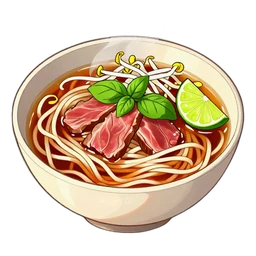
A Vietnamese noodle soup of broth, rice noodles, herbs and meat.
Before the first bite
- Spice
- Not spicy
- Texture
- Brothy · Soft
- Serving
- Usually individual
Varies by restaurantHanoi and Saigon styles differ in noodle width, sweetness of the broth, and the herbs and sauces served alongside. For dietary restrictions or allergies, ask the restaurant whether the food contains your trigger ingredients.
Taste and texture
Pho is a Vietnamese dish of rice noodles, broth, meat and herbs. Pho bo uses beef and pho ga uses chicken.
Beef pho can involve bones for stock, a larger piece such as brisket simmered then sliced, and separate thin raw beef placed over noodles before hot broth is added. Different-looking meats in one bowl may reflect these different preparation stages. Not every topping has spent the same long time simmering in the stockpot.
Clear-stock methods parboil and rinse the bones, then gently simmer them in fresh water and skim the foam. This differs from vigorous boiling intended to emulsify a cloudy broth. Small fat droplets may remain on an otherwise clear surface. Clarity is an outcome of preparation, not proof of weak meat flavour.
Recipes may toast whole spices and char onion and ginger before making stock. Star anise and cinnamon can be joined by cloves, cardamom and coriander seeds. Charring changes the aromatics' contribution. After spices are strained out, their aroma remains even without visible pieces, so toppings alone do not reveal every broth ingredient.
Chicken pho is not limited to replacing the beef topping. One method makes stock with chicken and bony parts, removes cooked meat, then continues simmering the carcass. Coriander seeds and cilantro can distinguish its aroma from beef pho. Cooked chicken is sliced onto noodles, a different preparation from pouring broth over thin raw beef.
Meat and bone broth carries roasted onion and ginger with spices such as cinnamon and star anise. Soft rice noodles absorb it, while herbs and citrus add fresh aromas. Southern styles tend to have sweeter broth and a wider selection of herbs and sauces.
Flat rice noodles, dried or fresh, are prepared and blanched separately before the bowl is assembled. They are not simmered throughout the stock-making process. The flexible noodles take up broth and feel smooth rather than strongly springy like thick wheat noodles, contrasting with the grain of the meat toppings.
Documented toppings include thin lean beef, longer-cooked meat, tendon, tripe and meatballs. Thin slices lift readily with noodles, tendon offers a softer gelatinous texture, and meatballs provide a cohesive springiness. A mixed topping can therefore vary texture as well as quantity. Pho alone does not imply that every cut is included or available.
Salt and fish sauce season the broth, while sugar or rock sugar can round it out. A clearly seasoned spoonful tastes different once combined with separately prepared noodles and meat. Even clear broth without prominent chili oil can contain fermented fish seasoning and spices. Mild heat does not imply a short ingredient list.
Comparisons often describe southern pho as sweeter with more herbs and sauces, and northern versions as relatively restrained and broth-focused. Neither is the sole form of pho, and not every bowl arrives with a large pile of sprouts and herbs. Distinguishing the base broth from its accompaniments clarifies these regional differences.
Briefly blanched sprouts can retain crunch beside soft noodles. Thin onion, scallions and cilantro add vegetal aromas; lime or lemon adds acidity. Chili sauce and hoisin change heat or sweetness, producing a different effect from herbs alone. These accompaniments contribute distinct qualities rather than serving as interchangeable toppings.
When it may suit the table
- When you want to adjust it yourself with the herbs, lime and chilli on the side
- You want a clear, warm broth
When another path may fit better
- You need to avoid meat broth; removing the meat topping does not make the broth vegetarian
- You would rather have stir-fried noodles without broth
How to order it in Korea
- Look for “pho” on the menu, then check whether it is the beef (pho bo) or chicken (pho ga) version.
- Check whether sprouts, herbs, lime and chili come separately. Taste the broth first, then add them gradually. Hoisin or chili sauce, when provided, lets you adjust sweetness and heat; smell unfamiliar coriander before deciding how much to add.
Show the Korean nameName and a short phrase
Use this to point out the food or say its name. Check the food-specific ordering tips above first.
쌀국수
Save, share or print an image
More guides in this category
Checked sources
Reviewed 2026-09-13 · Next check 2027-02-24