hanip.me
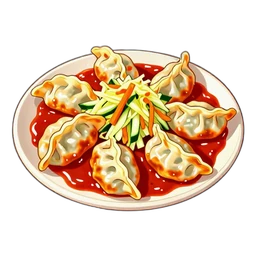
Bibimmandu
비빔만두
Mandu pan-fried until crisp, then tossed in a tangy, sweet and spicy sauce.
Before the first bite
- Spice
- Medium
- Texture
- Crisp · Mixed textures
- Serving
- Individual or shared
Varies by restaurantThe heat and sweetness of the sauce and what gets tossed in with the mandu vary by shop. For dietary restrictions or allergies, ask the restaurant whether the food contains your trigger ingredients.
Taste and texture
Bibimmandu combines crisp pan-fried dumplings with vegetables and spicy, tangy seasoning. Separate from the filling inside each dumpling, raw vegetables such as cabbage, lettuce, perilla leaves and cucumber fill the plate. Their crunch joins the wrapper and filling, while a gochujang dressing coats the ingredients. Vegetables and red sauce occupy much more of the plate than with fried dumplings and a small soy-sauce dip.
The dumplings are cooked in an oiled pan until golden. Another method browns one side, adds a little water and covers the pan to cook the filling, then crisps the surface again after the water evaporates. It joins the cooking of the inside with the crisping of the outside. Keeping the finished dumplings separate until they meet the vegetables prevents the dressing from soaking the fried surface in advance.
Vegetables are cut into thin, long pieces that can be picked up with a dumpling. Cabbage leaves are shredded, cucumber and carrot julienned, and lettuce or perilla leaves sliced into manageable strips. Firm cabbage and carrot combine with softer, folding leaves. Perilla contributes its distinctive aroma, while cucumber adds moisture as it crunches.
The dressing starts with gochujang mixed with vinegar, soy sauce and sugar. Gochujang supplies heat and a rich base, vinegar adds acidity, and sugar or honey supplies sweetness. Sesame oil and toasted sesame seeds bring nuttiness. Recipes adding chili powder and minced garlic have more pronounced chili and garlic aromas. The premixed dressing clings in a thin layer to vegetables and dumplings.
There are two useful ways to assemble the plate. Tossing dumplings and vegetables together coats the fried wrappers widely. Dressing only the vegetables, placing them in the center and arranging dumplings around the edge leaves some surfaces untouched as you eat them together. The timing of mixing changes the balance of crisp and moist portions.
A simple variation uses flat wrappers to hold the vegetables. The edges are brushed with beaten egg and the wrappers folded in half without a separate filling, then pan-cooked. Cabbage, carrot, onion, cucumber and perilla leaves dressed with gochujang and vinegar are placed on or wrapped in them. Thin folded wrappers and raw vegetables take center stage; the egg seals the edges.
Versions with somyeon place cooked, drained thin noodles beside the dumplings and vegetables. One recipe posted on Dongwon Mall serves spinach somyeon with fried dumplings and a separate salad of cabbage, onion and chicory. Reserved dressing is mixed into the noodles before eating with dumplings, or everything can be combined. Sliced chili and plum syrup are further ingredients in this example, connecting the dressed noodles and salad.
The two kinds of crunch come from different ingredients. Pan-fried wrappers break at their thin surface, while raw cabbage or cucumber crunches with moisture. A soft filling sits inside the wrapper, giving successive layers of wrapper, filling and vegetables. Tossed portions carry dressing directly, while the edges of separately arranged dumplings retain a more distinct fried flavor.
The red dressing brings more than heat. Vinegar's acidity and sweetness from sugar, honey or plum syrup overlap with gochujang. Soy sauce adds saltiness, while sesame oil and seeds leave a nutty aroma. Minced garlic contributes pungency, and sliced chilies give the salad little pieces of pepper to chew. Sweet, sour and spicy flavors arrive together.
Wrappers gradually soften as they meet the dressing and vegetable moisture. Edges that were initially crisp may become moist and chewy during the meal. Tossing just before eating accounts for this change. Taking vegetables with separately arranged dumplings lets you vary how much dressing reaches the wrapper, while softened portions carry more of its tangy flavor.
Flat wrappers fold around vegetables, combining crisp edges with the folded inner layers. Filled dumplings add the volume and flavor of their centers. A noodle variation has thin strands that carry dressing and feel soft, alongside crunchy cabbage on the same plate. Dumplings and vegetables remain the foundation, with wrappers and noodles adding distinct textures.
When it may suit the table
- A day you want a tangy, spicy sauce
- You want a light snack or something to go with a drink
When another path may fit better
- You'd rather avoid a spicy sauce
- You need a dish with a hot broth
How to order it in Korea
- Look for “bibimmandu” on the menu, and check for “muchimgunmandu,” which some places use for the same tossed dish.
- In bibimmandu, sauce softens the crisp dumpling skin over time. Choose it for dumplings together with spicy-tangy vegetables. If you prefer the crisp skin and filling on their own, check for fried dumplings served with a separate soy-and-vinegar dipping sauce.
Show the Korean nameName and a short phrase
Use this to point out the food or say its name. Check the food-specific ordering tips above first.
비빔만두
Save, share or print an image
More guides in this category
Checked sources
Reviewed 2026-09-13 · Next check 2027-03-31