hanip.me
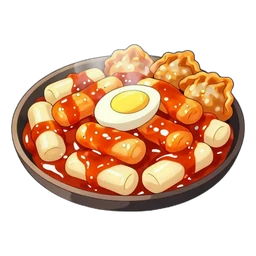
Tteokbokki set
떡볶이 세트
A popular Korean street food made by stir-frying rice cakes in a spicy-sweet gochujang sauce, often served as a set with sides like fried snacks or sundae.
Before the first bite
- Spice
- Hot
- Texture
- Chewy · Soft
- Serving
- Individual or shared
Varies by restaurantSome versions add fish cakes, egg, instant noodles or cheese for a fuller meal, and a soy-based, non-spicy gungjung tteokbokki style also exists. For dietary restrictions or allergies, ask the restaurant whether the food contains your trigger ingredients.
Taste and texture
A tteokbokki set pairs spicy rice cakes with snacks such as fried foods, sundae or gimbap. The included dishes vary by shop.
Rice-based tteokbokki often uses short cylinders from the garaetteok family. These differ in shape from the thin diagonal slices used for tteokguk, leaving more resistance through the centre. Thicker garaetteok may be cut shorter or thinner. Size and initial condition affect softening, so texture depends on the prepared rice cake as well as the sauce.
Despite the name meaning stir-fried rice cakes, red tteokbokki is commonly simmered in seasoned stock or water rather than simply seared in a dry pan. As the sauce thickens, the cakes soften and take on a glossy coating. Soupier and more closely coated versions differ in liquid quantity and cooking state; red tteokbokki has no single sauce consistency.
One method makes anchovy-and-kelp stock, removes the solids, then adds chili paste, flakes and sugar. Seafood flavour can therefore remain without visible anchovies. Other versions use water or vegetable stock, so appearance alone cannot establish the broth. Fish cake is another separate fish-based ingredient; describing rice cakes as the main ingredient does not describe the entire dish.
Rabokki cooks rice cakes and instant ramen noodles in the same spicy sauce, rather than necessarily adding a separate bowl of ramen to a set. Examples include fish cake, cabbage and boiled egg, sometimes dumplings or seaweed rolls. The cakes and curly noodles take up the sauce in different forms, creating alternating bites in one pan.
Soy-seasoned gungjung tteokbokki is a different composition, not merely red tteokbokki with less chili. A version combines beef, shiitake, carrot and onion with soy sauce, sugar and sesame oil. The cakes may be blanched and seasoned before meeting the stir-fried ingredients. It retains rice-cake chew while centring soy, meat and mushroom flavours.
Sweet-spicy sauce coats chewy rice cakes, often cooked with fish cake, cabbage and green onion. Fried sides add crunch and sundae a softer bite. A set lets you alternate those textures rather than eat rice cakes alone.
Sundae adds a different elasticity when included. It is described as pork casing filled with blood, glass noodles and ingredients such as glutinous rice and vegetables, then steamed or boiled and sliced. Fillings vary, but its stuffed cross-section differs from a smooth, solid rice cake. It is a separately prepared filled food, not a dark variety of tteok.
Gimbap contrasts individual rice grains with rice-cake chew. Seaweed wraps rice around fillings such as pickled radish, egg strips, carrot and spinach, creating layers in each slice. Unlike cakes simmered in sauce, its filling is enclosed by rice and seaweed. Crunchy radish and distinct grains add another texture to the set.
Thin fish-cake sheets fold more readily than rice cakes and carry sauce across a broad surface. Cabbage softens and scallions add aroma. Boiled egg introduces springy white and a softly crumbling yolk. These ingredients retain distinct textures within the same red sauce and can change the mouthfeel of a bite.
Fried sides or dumplings create a contrast between dry surfaces and areas touched by sauce. A crisp coating gradually softens, offering both fried and sauce-soaked textures. Added cheese layers a melted stretch over the rice cakes. These accompaniments can substantially change the texture of dishes sold under the same tteokbokki-set label.
When it may suit the table
- You crave a spicy-sweet street food snack
- You want to enjoy fried snacks or sundae alongside it
When another path may fit better
- You need a mild, non-spicy dish
- You'd rather have one simple dish than a set with sides
How to order it in Korea
- Look for “tteokbokki,” then check which sides—fried snacks, sundae or gimbap—the set includes.
- Check which add-ons, such as cheese, noodles or egg, are extra and which are included. Adding cheese does not remove the chili-based sauce. If you want to avoid that sauce, ask whether a mild soy-seasoned version is available.
Show the Korean nameName and a short phrase
Use this to point out the food or say its name. Check the food-specific ordering tips above first.
떡볶이 세트
Save, share or print an image
More guides in this category
Checked sources
Reviewed 2026-09-13 · Next check 2027-02-24