hanip.me
Kimbap
김밥
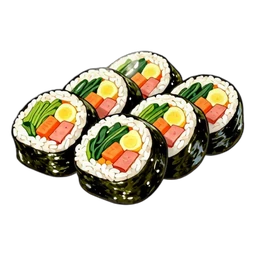
Kimbap is rice and assorted fillings rolled up in seaweed and sliced into bite-sized pieces, an easy Korean food to eat on the go.
Before the first bite
- Spice
- Not spicy
- Texture
- Soft · Chewy
- Serving
- Usually individual
Varies by restaurantFillings such as vegetables, egg, tuna and bulgogi vary freely by restaurant. For dietary restrictions or allergies, ask the restaurant whether the food contains your trigger ingredients.
Taste and texture
Gimbap is rice and fillings such as pickled radish, egg and vegetables rolled in seaweed and sliced.
A broad sheet of seaweed holds the rice and fillings together. Recipes using lightly toasted gim place its smooth, shiny face downward and spread rice on the rougher side. Short-grain rice is cooked firm enough to spread thinly while remaining cohesive. An uncovered edge and lengthwise fillings help form a roll whose sliced centre shows several colours.
Seasoning rice with sesame oil and salt gives the grains flavour before filling. Warm rice is gently folded to distribute seasoning and allowed to lose its steam before rolling. Pickled radish, ham and soy-seasoned meat also contribute salt, so the rice seasoning stays restrained. Rice is both a binding layer and a flavour; oil brushed outside adds aroma and shine to the seaweed.
Fillings are often cooked and seasoned separately. Spinach is blanched, squeezed and dressed with salt and sesame oil; julienned carrot is lightly fried; egg becomes thin omelette or thicker strips. Their separate preparation preserves green, orange and yellow sections in the roll. Removing excess moisture also limits wetting of rice and seaweed.
Beef fillings may use strips or mince cooked with soy, garlic, sugar and sesame oil. Fish-cake strips can be fried with soy and a sweetener. Ham-and-crab-stick combinations differ from beef-focused rolls: beef separates into fibres or small crumbles, while fish cake and ham stay springy. Brown or pink bands in the centre may therefore represent different ingredients.
Mini gimbap uses small seaweed sections and only a few fillings, such as radish, carrot and spinach. Its slender cross-section is simpler than a large roll. An accompanying mustard dip can combine vinegar, soy, sugar and ground sesame, adding tang and sharpness outside the roll. The variation combines small size, fewer fillings and a separate dip.
Rolling first encloses the fillings with rice and seaweed, then applies even pressure along the roll by hand or mat. Over-thick rice or uneven filling makes sealing harder. Resting seam-side down helps it close; wiping starch from the knife keeps cuts clean. Consistent rice thickness and filling placement keep sliced pieces together.
Seaweed wraps rice and several fillings so each bite combines them. Crunchy pickled radish and carrot contrast with soft egg and rice. Additions such as kimchi or cheese change the balance of spiciness and richness.
Long pickled-radish strips bring a crisp, sweet-tart bite. Braised burdock adds slender, firmer root texture and sweet-salty soy flavour. Both stand out against soft egg and spinach. Some recipes use white rather than yellow pickled radish, retaining the acidic, crisp contrast among the softer fillings.
Tuna versions may mix well-drained canned tuna with mayonnaise. A recipe adding celery, lemon and mustard introduces small crisp pieces and acidity. Lettuce or perilla leaves separate moist tuna from the rice and add leaf aroma. Soft flakes bound together differ from a firm ham strip, making cucumber and pickled radish feel especially crisp.
Seasoned fried-tofu skin adds sweet-salty flavour and a light chew alongside egg, carrot, spinach, perilla and radish. Cheese creates a soft, rich layer; kimchi adds cabbage texture and fermented acidity. These fillings retain the seaweed-and-rice structure while changing the balance at the centre of tang, salt and richness.
When it may suit the table
- You want an easy, light meal
- You want something portable for a picnic or a trip
When another path may fit better
- You need a dish with a hot broth
- You're craving a spicy-seasoned dish
How to order it in Korea
- Look for “kimbap,” then check varieties named after their filling, such as “tuna kimbap” or “bulgogi kimbap.”
- Even a basic gimbap may contain egg, fish cake, pickled radish, carrot and spinach. A name such as cheese gimbap highlights one ingredient, rather than listing every filling. If you avoid an ingredient, check the full filling list and whether it can be left out before ordering.
Show the Korean nameName and a short phrase
Use this to point out the food or say its name. Check the food-specific ordering tips above first.
김밥
Save, share or print an image
More guides in this category
Checked sources
Reviewed 2026-09-13 · Next check 2027-03-03