hanip.me
Dwaeji gukbap
돼지국밥
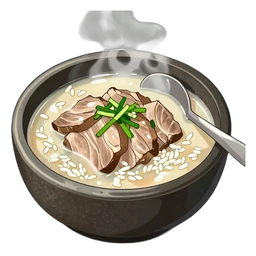
A rice-and-soup dish made with broth simmered from pork bones and meat for a long time, a signature local dish of Busan.
Before the first bite
- Spice
- Not spicy
- Texture
- Brothy · Tender
- Serving
- Usually individual
Varies by restaurantThe cut of pork and seasoning mix in the broth vary by restaurant. If you have allergies, ask the restaurant whether the dish contains your trigger ingredients.
Taste and texture
Dwaeji gukbap combines pork or pork-bone broth, boiled pork and rice. Known as a Busan specialty, it has no single fixed broth or cut. Rice may be in the earthenware bowl or served separately. Pork broth, meat and rice form the core, with side dishes and condiments added around them.
Stock may use both bones and meat or mainly meat. Kitchens may boil them separately or in the same stock. Broth is prepared in a large pot and boiled pork sliced before individual bowls are assembled. A bowl arriving quickly therefore does not mean its stock was made quickly: preparing the broth and serving a portion are separate stages.
The warming method also varies. Toryeom repeatedly pours hot broth over rice or meat and drains it. Another method heats the earthenware bowl directly over a flame. Some kitchens perform toryeom on the meat while serving rice separately, so rice in the soup does not automatically mean toryeom, nor separate rice direct heating. Rice service and the warming method are different distinctions.
Changing the fillings can change the menu name. Alongside pork-centered bowls are sundae soup, offal soup and mixed seokkeo gukbap. Mixed may mean pork with sundae or pork with offal, rather than every ingredient together. Suyuk baekban puts boiled pork on a separate plate, with rice and broth alongside; its meal format differs from a standalone plate of suyuk.
Long-simmered bone broth tends to be milky and savory; stock centered on meat is generally clear and light. The boundary is not absolute. The ratio of bones to meat and the order and duration of cooking can change color and consistency. Rather than expecting every bowl labeled Busan-style to have the same richness, read its broth description.
Cuts include shoulder, neck and head meat, while some kitchens use belly or jowl. The cut affects the amount of fat and the meat’s bite. Head meat is not one uniform piece of lean muscle; some restaurants even list lean-meat and fatty-meat options separately. Different fillings can therefore give a different impression even with the same broth.
Chives add a vegetable bite between the meat and broth. They may arrive raw, dressed or as chive kimchi, so accompaniments are not fixed either. Chili seasoning is also more than plain pepper powder: it can include aromatic ingredients such as scallions or garlic. Salted shrimp, the chive dressing and the chili seasoning combine to change the final flavor of the soup.
When it may suit the table
- It suits a meal of warm pork broth, rice and meat. Choose rice on the side if you want to add it gradually.
- It suits exploring Busan’s local food through different broths and cuts, from clear soup to richer versions.
When another path may fit better
- Consider galbitang if you want beef rather than pork flavor. If clarity alone matters, clear dwaeji gukbap is also an option.
- Check the cuts if fat or offal textures bother you. If pork aroma itself is the issue, a broth made from another ingredient may suit you better.
How to order it in Korea
- Choose dwaeji gukbap for meat in soup, or suyuk baekban for separate pork. For standalone suyuk, check whether rice and broth are included.
- For mixed seokkeo gukbap, ask what is included. To avoid offal, ask whether a meat-only bowl is possible.
- Ask about ttaro gukbap to add rice gradually. Request rice separately when ordering rather than after receiving a bowl with rice already in it.
At the restaurant
- Taste the broth, then add salted shrimp, chili seasoning and chives gradually. Chili may already be added, so request it separately when ordering for less heat. Any noodles provided can be eaten in the broth.
- Salted shrimp and chili seasoning are not compulsory. In its review of Busan restaurant Anmok, the MICHELIN Guide recommends tasting the soup as served. If the kitchen’s seasoning already suits you, you can leave it as it is. Let the first taste of your own bowl guide you rather than copying another diner’s quantities.
Show the Korean nameName and a short phrase
Use this to point out the food or say its name. Check the food-specific ordering tips above first.
돼지국밥
Save, share or print an image
More guides in this category
Checked sources
Reviewed 2026-09-13 · Next check 2027-03-24