hanip.me
Galbi naengmyeon
갈비냉면
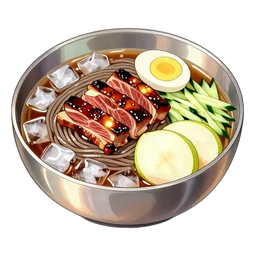
Chilled buckwheat naengmyeon noodles served together with marinated, grilled short ribs.
Before the first bite
- Spice
- Varies with sauce
- Texture
- Chewy · Tender
- Bones
- Depends on the style
- Serving
- Usually individual
Varies by restaurantWhether the ribs come with mul naengmyeon or bibim naengmyeon, and how much rib meat is served and how it is trimmed, differ by restaurant. For dietary restrictions or allergies, ask the restaurant whether the food contains your trigger ingredients.
Taste and texture
Galbi naengmyeon pairs grilled ribs with cold naengmyeon. The noodles may be mul naengmyeon in chilled broth or bibim naengmyeon in red sauce. Thinly opened rib meat is seasoned and grilled. KTO's Suwon wanggalbi article explicitly describes both noodle styles as accompaniments, bringing a hot grill and cold noodle bowl into one meal.
A traditional rib preparation opens the thick meat into a long, thin strip while keeping it attached to the bone. Maangchi repeatedly unfolds the meat, seasons it and rolls it back around the rib before unrolling it on the grill. Cooked meat can then be divided into pieces to eat with noodles. This creates a broad grilling surface from bone-in ribs.
Galbi can be soy-marinated or salt-seasoned. KTO contrasts the usual soy-and-sugar marinade with Suwon wanggalbi's salt, sugar, pepper, sesame oil and garlic. Maangchi's salt-seasoned version also includes sugar, sesame oil, garlic and scallion. Pale-colored seasoning can therefore still include sweetness and aromatics before the surface browns.
Naengmyeon noodles vary in composition. Korean Bapsang describes thin, elastic noodles made with buckwheat and potato or sweet-potato starch. Buckwheat-heavy Pyongyang-style noodles differ in thickness and chew from starch-heavy Hamhung-style noodles. With tender rib meat, the noodle's resistance and the meat's bite are experienced together.
Mul naengmyeon combines cooked, chilled noodles with cold broth. KTO describes beef brisket or shank broth; Korean Bapsang uses beef broth alone or mixed with dongchimi brine. The water kimchi adds fermented acidity. Alongside seasoned ribs, mul naengmyeon provides its own separate chilled liquid.
A home preparation can add fruit and pickle brine to prepared stock. Maangchi dilutes packaged broth concentrate, then adds pear juice and the liquid from sweet-and-sour cucumber pickles. Part of the pear becomes juice and part is sliced for garnish. Cucumber likewise supplies both crunchy pieces and tangy pickling liquid.
Bibim naengmyeon centers on a coating sauce. My Korean Kitchen blends pear, onion, beef broth or water, chili flakes, gochujang, soy sauce, vinegar, sugar, garlic and sesame oil. This is mixed into chilled noodles. Chili heat, acidity and sweetness cling to the strands alongside the grilled ribs.
Chilling the noodles is a separate step from preparing cold broth. Boiled noodles are drained, rinsed and drained again. Maangchi rinses away slipperiness under cold water and gives them a final ice-water rinse. A mound of cold noodles then receives broth or sauce, rather than going into the bowl while still hot.
Garnishes can include cucumber, pear, pickled radish and boiled egg. Korean Bapsang uses sweet-and-sour radish in both styles and thinly slices the brisket used for broth as a topping. This simmered beef differs from the separately grilled galbi: one cooks in stock, while the other develops a grilled surface.
Cold noodles are chewy, while seasoned grilled rib meat is sweet-savory and tender. Mul naengmyeon's chilled broth and acidity follow the meat's richness; bibim naengmyeon's spicy-tangy coating overlaps with the rib seasoning. Even when eaten in separate bites, the contrast in temperature and seasoning remains clear.
Broth varies with the beef stock, dongchimi, vinegar or pear juice used. Cucumber and radish pickles crunch between long strands, pear adds juice and sweetness, and boiled egg contributes tender white and yolk. Grilled meat, elastic noodles and fresh or pickled vegetables supply several textures.
Bibim naengmyeon's sauce clings directly to the noodles. A little beef broth loosens it and adds moisture. Mustard gives a sharp aroma distinct from chili heat, while vinegar adds acidity. Since the ribs already carry sweetness and salt, cold temperature, tartness and chili contribute additional dimensions through the noodles.
When it may suit the table
- You want a cold bowl on a hot day
- You want meat and noodles in one meal
When another path may fit better
- You need a warm broth
- You'd rather have just noodles without meat
How to order it in Korea
- Check on the menu whether it is “mul naengmyeon” in broth or “bibim naengmyeon” tossed in sauce.
- The galbi may still be attached to the rib bone, so ask how it is served when you order.
At the restaurant
- Seasoned, marinated grilled meat like galbi is said to pair well with mul naengmyeon (broth-style), while unseasoned grilled meat pairs better with bibim naengmyeon (sauce-tossed). Worth keeping in mind when you choose between the two.
Show the Korean nameName and a short phrase
Use this to point out the food or say its name. Check the food-specific ordering tips above first.
갈비냉면
Save, share or print an image
More guides in this category
Checked sources
Reviewed 2026-08-25 · Next check 2027-04-07