hanip.me
Oyster Dumplings
굴만두
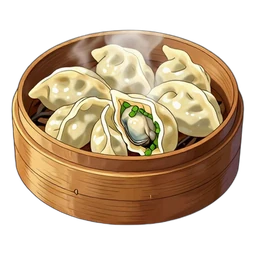
Dumplings with oysters in the filling, combining a marine aroma with a moist centre.
Before the first bite
- Spice
- Not spicy
- Texture
- Soft · Crisp
- Bones
- None
- Serving
- Individual or shared
Varies by restaurantFillings may also contain pork, squid or vegetables, and jjamppong-seasoned products can be spicy. The name alone does not identify every ingredient or the heat level.
Hanip treats oyster dumplings as a challenge food. Reading this guide does not make them appear in ordinary recommendations.
Taste and texture
The oyster dumplings described here enclose oysters in a dumpling wrapper. Some recipes use a simple oyster, chive and soy-sauce filling; packaged versions may include meats and vegetables. The common feature is oyster flavor and texture inside the dumpling, not one fixed oyster-only recipe. This differs from ordinary meat dumplings served in an oyster broth.
One pan-fried version drains prepared oysters, mixes them with chopped chives and soy sauce, and encloses the filling by sealing the wrapper edges. Oyster flesh remains noticeable rather than being treated as a finely minced meat paste. Chives add small bites and a vegetable aroma between the oysters, while soy sauce seasons the filling.
A packaged example also lists pork, squid, onion, mushrooms and glass noodles. These can combine soft oysters with a denser meat filling and vegetable pieces. The name does not promise whole oysters throughout or an exclusively seafood filling: compositions can overlap those of seafood and meat dumplings.
The wrapper contributes its own texture. It can be made from flour, water and salt, while manufactured wrappers may include starch. A hand-rolled wrapper recipe makes the edge thinner than the centre because the edges are later pinched together. The sealed rim can therefore feel thicker than the layer surrounding the filling.
Pan-frying creates a browned base. In one documented preparation, frying is followed by adding a little water and covering the pan to cook the interior. The oil-contact surface and moist centre cook differently. Oyster describes the filling, while pan-fried describes the method, so check the cooking style when a menu simply says oyster dumplings.
Historical seokhwa-mandu should be distinguished from this wrapper-based food. A modern reconstruction of material credited to the Rural Development Administration stuffs oysters themselves with chicken, pheasant and mushrooms. The account explicitly identifies a mung-bean-starch coating as an addition absent from the original text. A shared oyster-dumpling name does not prove that the present flour-wrapper recipe was passed down unchanged.
The flavor starts with the oysters’ marine aroma and soft flesh. A wrapper adds a dough texture absent when eating oysters alone. A browned pan-fried surface contrasts with the moist filling, which releases liquid when bitten. That moist centre is appealing if you enjoy oysters, but a wrapper does not completely hide their characteristic aroma.
Seasoning changes how prominently the oysters feature. An oyster-and-chive filling seasoned with soy sauce highlights those ingredients; jjamppong sauce and chili oil add heat in a packaged variation. Spicy versions therefore exist despite the mild basic profile. Separating the oyster aroma, filling seasoning and dipping sauce helps explain the differences.
The oyster bite and exterior crispness are separate qualities. Larger pieces reveal soft oyster flesh, while mixed meat and vegetable fillings offer several textures together. Wrapper thickness also changes each bite. Looking for a crisp pan-fried dumpling and looking for distinctly noticeable oyster flesh are two different preferences.
When it may suit the table
- It suits someone who enjoys oyster flavor and the bite of a wrapper. Choose between an oyster-and-chive emphasis and a filling mixed with meats and vegetables.
When another path may fit better
- Consider another filling if oyster aroma is unwelcome. The name is also insufficient if you avoid pork or squid, because ingredients differ between products.
How to order it in Korea
- Distinguish regular from jjamppong-seasoned oyster dumplings and read the filling ingredients. Follow the package cooking instructions. At a restaurant, asking whether they are pan-fried and whether sauce comes separately can help match your preferred texture.
At the restaurant
- Start with a small bite at one edge to check the moist filling. If a dipping sauce is provided, try a little at first. An oyster-and-chive filling that is already seasoned can also be tasted without extra sauce.
Show the Korean nameName and a short phrase
Use this to point out the food or say its name. Check the food-specific ordering tips above first.
굴만두
Save, share or print an image
More guides in this category
Checked sources
Reviewed 2026-09-13 · Next check 2027-04-21