hanip.me
Haemul-jeon
해물전
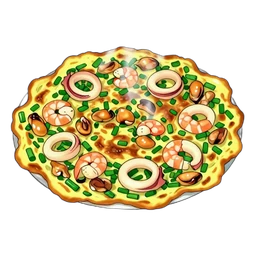
Haemul-jeon is a Korean fritter of seafood—fish, shellfish, shrimp or octopus—coated in wheat flour and egg wash and fried in oil.
Before the first bite
- Spice
- Not spicy
- Texture
- Crisp · Tender
- Serving
- Usually shared
Varies by restaurantWhich seafood is used—fish, shellfish, shrimp or octopus—varies by restaurant. For dietary restrictions or allergies, ask the restaurant whether the food contains your trigger ingredients.
Hanip treats haemul-jeon as a challenge food. Reading this guide does not make it appear in ordinary recommendations.
Taste and texture
Haemul jeon is seafood such as fish, shellfish or shrimp coated in flour and egg and pan-fried. Seafood may be left whole or cut, yielding several small pieces. Chopped seafood can also be mixed into batter and spooned into the pan. Thinly coated fish slices and rounded mixed-seafood fritters both center on seafood.
To retain a fish fillet's form, coatings are applied in sequence. KTO's dongtaejeon dries pollack slices, seasons them with salt and pepper, then coats both sides in flour and beaten egg before pan-frying. A split piece shows white fish beneath a thin yellow egg layer.
Wtable's oyster jeon seasons drained oysters with cooking wine, sesame oil and pepper, and uses pancake flour and eggs. Chives and finely shredded cabbage accompany it, with a separate dressing of soy sauce, vinegar, sugar, oligosaccharide syrup and minced garlic. The plate combines egg-coated oysters with raw vegetables.
Maangchi's mixed version chops cleaned shrimp, clam meat and squid and combines them with scallion, carrot and green chili. Flour, potato starch, egg and water form the batter, seasoned with fish sauce, salt, pepper and sesame oil. Several seafood and vegetable pieces share each fritter.
The mixture is spooned into small disks with space between them and browned on both sides. Maangchi also suggests oysters, mussels or scallops. Retaining the original shape of a thin fillet or gathering chopped seafood into rounds produces visibly different pieces.
Gouni's seafood patties combine chopped cod, shrimp and squid with chives, onion, carrot and Cheongyang chili, plus squeezed tofu. Soy sauce, garlic, rice wine, ginger powder, sesame oil, sugar and maesil plum syrup provide seasoning before pancake flour and egg are mixed in. Spoonfuls are flattened and fried, with crumbled tofu among the seafood.
Dalkom Sweet Mom adds abundant chopped chives and perilla leaves, onion, chili and mixed seafood to pancake flour, egg and water, with fish sauce. Seafood is drained before being added, and its remaining moisture is considered when adjusting the water. Green leaves and stems add their aromas throughout the fritter.
A Dongwon Mall contributor uses seaweed: desalted, cut kkosiraegi is mixed with assorted seafood, shredded carrot and rice pancake flour, then fried in small portions. Its slender strands add a firm chew among visible seafood pieces.
Seasoning in the batter and dipping sauce can both contribute salt. Mixed-seafood fritters may already contain fish sauce or salt, while tofu versions can contain soy seasoning. A vinegar-based soy dressing adds acidity. Small fritters can be served alongside rice or portioned onto individual plates to taste the different seafood textures.
The savory coating encloses seafood that may be tender or chewy. Fish slices separate along their flakes beneath the egg; shrimp or squid pieces provide springy bites in mixed fritters. Chopped seafood can still retain perceptible pieces, combining its flavor with the browned coating.
Small fritters brown around their edges and faces while containing moist seafood and vegetables. Chives and perilla add aroma, while crumbled tofu adds softness. Egg-coated oysters retain their curved contours and fish fillets their flatter shape; ingredient choice and cutting determine the bite.
Green or Cheongyang chili pieces can add heat even without chili powder in the batter. Vinegar in a soy dressing adds tang beside the oil's richness. Separately served cabbage or chives offer a raw crunch unlike vegetables cooked into the fritter.
When it may suit the table
- When a group wants to pick at one plate with chopsticks
- You want seafood in a simple pan-fried form
When another path may fit better
- You need to avoid seafood
- You want something spicy
How to order it in Korea
- The name alone does not tell you whether fish, shellfish, shrimp or octopus is used. Decide whether you want tender fish or chewier seafood, then ask which seafood is used and whether several kinds are mixed.
- Check whether cho ganjang comes with it so you can adjust the seasoning.
Show the Korean nameName and a short phrase
Use this to point out the food or say its name. Check the food-specific ordering tips above first.
해물전
Save, share or print an image
More guides in this category
Checked sources
Reviewed 2026-08-25 · Next check 2027-04-07
- Wikipedia Opens in a new tab.
- Namu.wiki Opens in a new tab.
- VISITKOREA Opens in a new tab.
- Korean Food Promotion Institute (Hansik.or.kr) Opens in a new tab.
- Food Safety Korea Opens in a new tab.
- Maangchi Opens in a new tab.
- 10000 Recipe Opens in a new tab.
- Dongwon Mall · lov*** Opens in a new tab.
- Wtable Opens in a new tab.