hanip.me
Pizza seolgi
피자설기
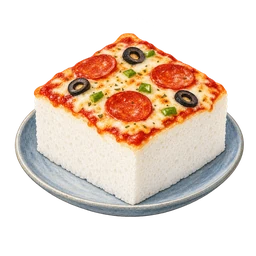
Steamed rice cake with pizza toppings.
Before the first bite
- Spice
- Varies with sauce
- Texture
- Soft
Varies by restaurantHeat varies with sauce and toppings.
Taste and texture
Pizza seolgi is a rice-cake snack combining seolgi with pizza sauce, cheese and toppings. Steamed rice cake replaces bread dough underneath. Pizza points to the familiar sauce-and-cheese pairing; seolgi identifies the base and its texture. Despite a small-pizza appearance, expecting a crisp baked bread rim can lead to a different experience from the actual bite.
Seolgi is made by moistening rice flour, sifting it into a mold and cooking it with steam. The Korea Tourism Organization describes baekseolgi as a basic steamed rice-flour cake with a mild sweetness. Some recipes use salt and sugar, so white seolgi is not necessarily entirely unseasoned. Pizza toppings add savory and cheesy flavor to that base.
Non-glutinous rice flour differs from the glutinous flour used for chapssaltteok. Maangchi’s ingredient guide describes its use in fluffy rice cakes and notes frozen sale to retain moisture. Wet rice flour already contains water, so the amount of added water may vary even for the same flour weight. Its condition is important to understanding the seolgi texture.
The reviewed Monggle Cook example places pizza sauce between wet-rice-flour layers and steams it with mozzarella, pepperoni, olives, green pepper and corn. This example has sauce inside, rather than only on top. It is not a fixed formula for every product. Separating the seolgi, sauce, cheese and other toppings helps describe an individual version.
Seolgi provides a tender, slightly crumbly base that still takes chewing as rice cake. Maangchi’s baekseolgi method distributes moisture, breaks up lumps and sifts the flour. That structure is made differently from glutinous dough stretched around a filling. Even if pizza seolgi is described as chewy, it need not stretch like the skin of fruit chapssaltteok.
A conventional bread pizza can use wheat dough raised with yeast and baked in an oven. King Arthur’s crust example rises the dough and browns its base and edges. The steamed base of pizza seolgi differs from that baked bread crust. Similar sauce and cheese therefore meet a different structure as you bite, combining pizza flavor with a rice-cake texture.
Mozzarella can melt softly and stretch when heated. A cheese producer describes mild milky flavor and an elastic texture in its product guide. On pizza seolgi, cheese adds a separate textural layer rather than transforming the rice cake’s own crumb. You can notice cheese connecting as a fork divides it and the rice cake breaking apart in the mouth as different sensations.
Rice cake alone tastes different from a bite including sauce and toppings. In the reviewed recipe, sauce and pepperoni contribute familiar pizza flavor and cheese adds richness. Mildly sweet baekseolgi can meet savory toppings, so simply calling this an unsweet rice cake is incomplete. A thicker seolgi base also means a greater rice-cake share in each bite.
When it may suit the table
- It fits a craving for a rice-cake snack with savory flavor. If you enjoy seolgi’s crumb and also like sauce and cheese, their combination is a reasonable candidate.
- Consider it when you want something different from a sweet-filled rice-cake dessert. Willingness to enjoy the rice-cake base is more useful than choosing solely because it contains cheese.
When another path may fit better
- If you need to avoid meat toppings or cheese, check ingredients first. Removing pepperoni does not remove cheese, and changes may not be possible in a finished product.
- Bread pizza may fit better if its crisp base and baked rim are what you enjoy most. Plain baekseolgi is closer if you want mild rice-cake flavor without sauce.
How to order it in Korea
- Check the sauce’s heat and whether meat such as pepperoni is included. Use the current product’s ingredient description rather than assuming it matches a published recipe example.
- If a cross-section is available, look for sauce inside as well as on top. If you want to adjust sauce separately, check whether it is built into the cake; the surface alone may not reveal the amount.
- For the base’s texture, ask whether it has glutinous-mochi elasticity or a seolgi-like crumb. Cheese stretch and the rice cake’s own chewiness are separate questions.
At the restaurant
- Divide the cake on a plate through its base. Including seolgi, sauce and cheese in one piece, rather than removing toppings first, helps you taste the combination. A fork or spoon can collect loose rice-cake crumbs.
- Seolgi recipes may let the steamed cake stand briefly before removing the mold. For a newly served warm product, divide a small piece and check that it is comfortable to eat rather than biting a large chunk immediately. You are handling both a cheese layer and a thick rice-cake base.
- For takeaway, follow directions for the topped product rather than automatically using plain-baekseolgi storage and reheating methods. Check the seller’s instructions and intended eating time; avoid extending heating merely to reproduce a cheese-pull photo.
Show the Korean nameName and a short phrase
Use this to point out the food or say its name. Check the food-specific ordering tips above first.
피자설기
Save, share or print an image
More guides in this category
Checked sources
Reviewed 2026-09-13 · Next check 2027-03-13