hanip.me
Aehobak-jeon
애호박전
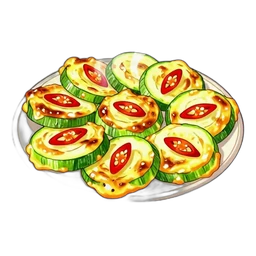
Aehobak-jeon is thinly sliced Korean zucchini coated in flour and egg, then pan-fried.
Before the first bite
- Spice
- Not spicy
- Texture
- Tender · Soft
- Serving
- Usually shared
Varies by restaurantPlating varies a little, since the dish is often garnished with crown daisy and red and green chili pepper. For dietary restrictions or allergies, ask the restaurant whether the food contains your trigger ingredients.
Aehobak-jeon has been folded into hobak-jeon. You can still read this guide, but it does not appear in Hanip's recommendations.
Taste and texture
Aehobakjeon consists of zucchini rounds lightly salted, dusted with flour or pancake mix, dipped in beaten egg and pan-fried. Each slice forms one small jeon, showing a green rim and yellow egg coating. Instead of chopped vegetables mixed into a pourable batter, the individual pieces receive flour and egg in sequence. It appears in holiday assortments and everyday home meals.
Aehobak is a young squash with thin yellow-green skin and pale yellow flesh. It becomes tender and gently sweet when pan-fried. Korean aehobak is the usual ingredient, while overseas recipes also use other slender, tender zucchini. The vegetable's diameter determines each round's size, and its skin remains as the colored edge.
The rounds are lightly salted, then excess surface moisture is removed. This seasons the vegetable and controls moisture before flouring. Sempio's thick-cut version uses substantial slices to help them hold their shape. Leaving a definite piece of zucchini, rather than paper-thin slices, preserves the texture of the cooked flesh.
Flour creates a base for the egg coating. It absorbs surface moisture before the egg is applied. Sempio's method dusts the slices, shakes off excess flour and then coats them in egg. Flour and egg are not mixed into a thick batter and poured over the vegetable; they are applied separately in thin layers.
The floured slices are dipped one at a time in beaten egg. A thin layer of oil is heated in a pan, and the slices are placed without overlapping. Both sides are cooked to a light golden color without deeply browning the egg. The finished coating is thin and soft around the zucchini rather than a hard, thick fried shell.
Small pieces of red chili or crown daisy leaves can decorate the surface. Some recipes use water-parsley leaves or parsley. Applied before the egg fully sets, they leave red and green shapes on the yellow coating. Plain versions use the same flour-and-egg method. These toppings decorate the round face rather than being chopped into the batter.
Aehobak donggeurangttaeng is a stuffed variation. Wtable removes the centers of zucchini rounds and combines minced pork, drained tofu, onion, carrot, scallion and garlic for the filling. The removed zucchini centers are also chopped into it. The filled rounds are coated in pancake mix and egg, then pan-fried, leaving a zucchini ring around meat-and-tofu filling.
A separate version tops the slices with beef. Minced beef is seasoned with soy sauce, sugar, sesame oil, scallion and garlic and fried first. Egg-coated zucchini goes into the pan, then the beef is placed on top. Unlike hollowed-out rounds, the zucchini slice stays whole. The meat garnish cooks attached to the egg, adding seasoned beef flavor to the basic zucchini-and-egg combination.
Aehobakchaejeon begins with julienned zucchini, carrot and onion mixed with pancake mix, water, egg and salt. Spoonfuls are spread into rounds, with slender vegetable strips throughout. It uses the same main vegetable but assembles shredded vegetables into batter instead of coating an intact round slice.
The main flavors are gentle zucchini sweetness and savory egg. The interior stays moist, with a soft egg coating and a lightly fried aroma where it has turned golden. Substantial slices leave a definite layer of vegetable inside, so both egg and zucchini are felt in the bite.
The basic version is mild and lightly salted. Small crown daisy leaves or red chili pieces add local touches of aroma and color. Stuffed versions include tofu and chopped vegetables with meat, while beef-topped versions have soy-and-sesame-seasoned meat attached to the egg. Filling the center and adding a topping produce different ingredient combinations.
Soy-vinegar dipping sauce adds saltiness and acidity to the soft jeon. Some mixtures include water, a little sugar or pepper; others add chili powder. The sauce is served separately in a small dish rather than tossed through the jeon. A slice can be tasted plain and then lightly dipped.
When it may suit the table
- You want a gentle side dish with no heat
- You feel like a plate of holiday-style jeon
When another path may fit better
- You want something spicy
- You want something heartier with meat or seafood
How to order it in Korea
- Look for “aehobakjeon” on the menu; some places simply write it as “hobakjeon.”
- Asking whether it comes garnished with crown daisy or chili pepper tells you how it will be plated.
At the restaurant
- If the menu only says hobakjeon, check whether it uses zucchini or mature pumpkin.
Show the Korean nameName and a short phrase
Use this to point out the food or say its name. Check the food-specific ordering tips above first.
애호박전
Save, share or print an image
More guides in this category
Checked sources
Reviewed 2026-08-25 · Next check 2027-03-31