hanip.me
Hobak-jeon
호박전
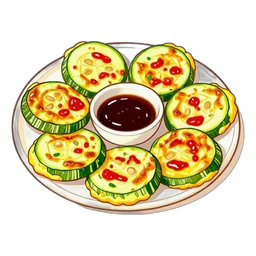
Hobak-jeon is Korean zucchini sliced thinly in its round shape, coated in flour and egg, and pan-fried until golden.
Before the first bite
- Spice
- Not spicy
- Texture
- Soft · Tender
- Serving
- Usually shared
Varies by restaurantPlating varies a little, since the dish is often garnished with crown daisy and red and green chili pepper. For dietary restrictions or allergies, ask the restaurant whether the food contains your trigger ingredients.
Hobak-jeon is a side dish that rounds out a meal, so Hanip does not offer it as today's main pick. You can still read this guide.
Taste and texture
Hobakjeon is sliced Korean zucchini coated in flour and egg, then pan-fried. Round slices retain pale flesh inside a light-green rim under a yellow egg coating. Crown daisy or red chili may add color. Each small piece combines moist squash with a thin cooked coating.
Aehobak is young squash with thin skin and tender flesh. Korean Bapsang describes yellow-green skin and pale-yellow flesh and also allows other slender, tender zucchinis. The skin forms a rim around the flesh; darker zucchini gives a darker rim while retaining the same individual flour-and-egg coating.
Thickness changes how much squash is present in a bite. Sempio's thick-cut version retains its shape, and Korean Bapsang also advises against very thin slices. The vegetable cooks inside its coating, leaving moist squash visible between the egg-covered faces when cut.
Round slices are salted, excess moisture removed and flour applied. Sempio shakes off surplus flour before dipping in egg. Flour takes up surface moisture and helps the egg coating adhere. Each face is covered separately to preserve the circular slice.
Garnishes form small patterns on the egg surface. KTO describes crown daisy and red and green chili. Korean Bapsang places a small leaf or pepper piece while the egg is still wet, before turning. Green leaves and red accents remain against the yellow surface.
Maangchi also makes a broad pancake from julienned zucchini mixed with flour, salt and water. The batter is spread thinly, then sesame oil is introduced around the edge once the base sets. Overlapping zucchini strips form one large pancake rather than individual rounds.
Semie Kitchen uses a waffle pan for a grid pattern. Shredded zucchini is seasoned with its Yondu Mild soybean-based seasoning; the released liquid is kept and mixed with egg and flour. The batter cooks on both sides in an oiled waffle pan, taking the shape of its grooves.
Semie's stuffed half-moons use elongated diagonal slices salted until flexible. Ground pork is mixed with onion, scallion, ginger and seasoning. Floured zucchini is folded around the filling, coated again in pancake flour and egg and pan-fried. Meat sits between the squash layers.
Jjunimom Kkongi makes mature-pumpkin jeon by scraping the orange flesh and mixing it with salt and sugar. Released liquid combines with flour, with a little water added if needed. Orange flesh colors the pancake throughout, and sugar adds sweetness to the pumpkin.
Maangchi's butternut variation removes seeds and skin, juliennes the flesh, salts it and uses its released liquid with flour without added water. It is her adaptation using squash encountered in the United States. Scraped mature pumpkin and julienned butternut differ in composition from egg-coated round zucchini.
Zucchini is moist and subtly sweet, and the egg coating savory. Soy sauce or a soy-vinegar dip may accompany it. The tender center and thin skin differ slightly in bite. Thick slices contain more soft flesh, with the vegetable's moisture close beneath the thin coating.
Julienned pancakes contain interwoven strips, combining browned edges with tender squash; sesame oil adds aroma. Mature pumpkin and butternut versions center on sweet orange flesh. A pork filling contributes its own chew and seasoning inside the squash.
Korean Bapsang mixes soy sauce, water and vinegar, with optional sugar or pepper. Maangchi serves julienned pancakes with a soy-vinegar sauce containing onion, garlic and green chili. Chili adds heat to mild squash, and vinegar contributes acidity alongside the egg and oil.
When it may suit the table
- You want a gentle side dish with no heat
- You feel like a simple, home-style plate
When another path may fit better
- You want something spicy
- You want something heartier with meat or seafood
How to order it in Korea
- Look for “hobakjeon” on the menu; places that write “aehobakjeon” fry it the same way.
- Asking whether it comes garnished with crown daisy or chili pepper tells you how it will be plated.
Show the Korean nameName and a short phrase
Use this to point out the food or say its name. Check the food-specific ordering tips above first.
호박전
Save, share or print an image
More guides in this category
Checked sources
Reviewed 2026-08-25 · Next check 2027-04-07