hanip.me
Bibim guksu
비빔국수
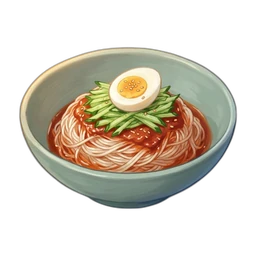
Fine noodles served cold, mixed with spicy sauce and accompanied by vegetables and toppings.
Before the first bite
- Spice
- Medium
- Texture
- Soft · Mixed textures
- Serving
- Usually individual
Varies by restaurantHeat, sweetness, acidity, noodle type and the use of kimchi or egg change the dish.
How to order it in Korea
- Read qualifiers such as kimchi or fresh noodles. Guksunamu describes fresh noodles with a pear-containing sauce. Such details help distinguish a fruit-sweetened direction from a kimchi-led one.
- With separate sauce, mix in some first and retain a few lightly coated strands for comparison. With a premixed bowl, vary the topping-to-noodle ratio; you can ask whether separate sauce is available when ordering.
When it may suit the table
- Choose it when you want cold noodles and enjoy chilli. Sauce accompanies the chewing rather than arriving as a separate sip of broth, in a simple bowl of mixed noodles and vegetables.
- It also suits a preference for soft noodles with crisp raw vegetables. A bowl with visible, separate toppings lets you change the ratio from bite to bite.
When another path may fit better
- If spoonfuls of warm soup are essential, compare janchi guksu. Both satisfy a noodle preference, but temperature and the role of liquid differ.
- For savoury beef and rice rather than spicy tang, consider beef and vegetable porridge. It also changes the action from lifting strands to scooping rice and small pieces.
At the restaurant
- Guksunamu pairs fresh noodles with a spicy-sweet sauce containing ground pear. If sauce gathers at the bottom, lift the lower strands upward and loosen them gently. Noodles already dressed evenly can be eaten as served. If your bowl has an egg topping and you want it in pieces, set it aside before mixing further.
- Gather small portions of the differently shaped noodles and vegetables. Compare noodle-led bites with vegetable-heavy ones, and work through toppings during the meal rather than leaving all of them until the end.
Taste and texture
About the dish
Bibim guksu mixes cooked, cooled noodles with seasoning. Instead of broth surrounding the strands, sauce travels into each bite on their surface. A little dressing may collect at the bottom, but the meal centres on mixed noodles and toppings rather than spoonfuls of soup.
Thin wheat somyeon is one familiar form; Guksunamu also offers fresh noodles. Look beyond the red colour to strand thickness and the balance of toppings. Similar-looking sauce can accompany a soft fine noodle or a springier bite.
Gochujang seasoning gains a tangy-sweet direction from added sweet and sour ingredients. Vinegar is one option, fermented kimchi can also supply acidity, and some versions use both. Consider your liking for acidity separately from your liking for chilli.
Kimchi-led and fresh-vegetable versions feel different. One approach mixes chopped kimchi into somyeon; another arranges an assortment of raw vegetables alongside. Kimchi comes with the seasoning; sliced vegetables interrupt the strands with a different bite. Kimchi is not required in every version.
Cucumber and egg offer further variation. Eat a topping separately or alongside a few strands. Keeping egg to the side for gradual bites gives a different experience from breaking it into the mixture. If ingredients arrive neatly arranged, start with combinations you want to try.
Taste and texture
Cold noodles meet the mouth first, followed by heat, sweetness and acidity. Cool temperature and chilli heat can occur together: this may suit a wish for food that is not hot in temperature, but not a wish to avoid chilli.
Cucumber contrasts crisp bites with smooth strands. Kimchi adds leaf and stem textures, while egg breaks softly alongside them.
Sesame oil and seeds contribute roasted aroma where included. Mixing spreads them through the noodles; leaving some as toppings concentrates the aroma in selected bites. Mix more or less according to whether you want uniform flavour or changing combinations.
More guides in this category
Checked sources
Reviewed 2026-10-24 · Next check 2027-04-24