hanip.me
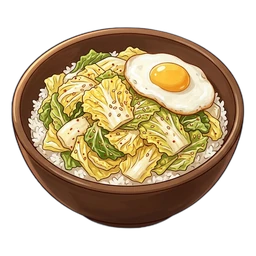
Bomdong bibimbap
봄동비빔밥
Rice mixed with seasoned bomdong cabbage and sesame oil.
Before the first bite
- Spice
- Varies with sauce
- Texture
- Mixed textures
Varies by restaurantSeasoning and egg inclusion vary.
Taste and texture
Bomdong bibimbap mixes rice with geotjeori, a freshly seasoned raw cabbage salad. A single leafy vegetable stands out more than in bibimbap topped with several cooked vegetables. It also differs from rice cooked together with greens: seasoned leaves are added to already cooked rice, bringing warm grains and fresh crunch into one spoonful.
Bomdong is cabbage whose leaves spread outward rather than forming a tightly packed round head. Enjoyed from late winter into early spring, it has broad outer leaves and small yellow inner leaves. Foodnuri describes its tender, crisp structure and sweetness when chewed. Its shape explains the broad pieces of leaf among the rice grains.
Preparation begins by separating and washing the leaves. After removing the base, cut large leaves into manageable pieces; small inner leaves can be left whole. Semie Kitchen likewise prepares the outer and inner leaves differently. Draining before seasoning helps coat the surface evenly. Unlike whole leaves used for wraps, these are cut so they can be lifted with the rice.
Geotjeori emphasizes freshly dressed vegetables. Korean Bapsang describes cabbage geotjeori as kimchi eaten without waiting for fermentation. Bomdong bibimbap similarly centers fresh leaves and newly added seasoning rather than the strong sourness of aged kimchi. Vinegar can add a tang, but that acidity is created differently from the sourness developed through fermentation.
Seasonings can combine chili flakes, soy sauce, fish sauce, sesame oil and sesame seeds. Gochujang is not essential. Seungseungmom’s bowl uses soy sauce, tuna seasoning and plum syrup, while Semie Kitchen’s cabbage salad includes scallions and vinegar. Sesame oil and a fried egg bring rice, leaves and egg together in one bowl.
The thin leaf edges and thicker white sections feel different when chewed. Edges fold easily with the rice, while thicker parts retain a crisp resistance. Fresh moisture and crunch stand out more than the uniformly softened texture of cooked greens. To judge whether you enjoy bomdong, try both parts of the leaf as well as the seasoning.
Chili flakes add heat and red color; soy sauce or fish sauce contributes saltiness and savory depth. Fish sauce may also bring the aroma of fermented seafood. Semie Kitchen separately suggests replacing part of its base seasoning with anchovy fish sauce. Similar-looking red salads can therefore leave different aromas depending on their seasoning.
Sesame oil and seeds add nuttiness among the leaves. Oil spreads over the rice and leaves, while seeds add tiny bites. Sweet ingredients such as sugar, plum syrup or starch syrup round out salty seasoning and chili. Leaf sweetness and added sweetness overlap, so taste before adding more seasoning if you prefer a less sweet salad.
A fried egg contributes softness distinct from raw greens. The white gives tender bites, while a soft yolk can blend through the rice. A firmly cooked yolk instead breaks into small pieces. Even when both bowls contain a fried egg, its doneness changes how it combines with the rice.
The salad can taste more intensely seasoned before it is mixed with rice, because rice increases its share of each spoonful. Start by mixing in some of the salad and tasting before adding more. Gently distribute the leaves and rice rather than pressing the grains into a mash to enjoy both crisp and soft textures.
When it may suit the table
- It suits a day when you want warm rice with the crunch of raw greens. If you enjoy sesame aroma and freshly dressed cabbage, consider it alongside bibimbap based on cooked vegetables. It is also a fitting dish to make when bomdong is in season.
When another path may fit better
- Check the preparation and dressing if you prefer soft cooked vegetables or want to avoid fish-sauce aroma. The cabbage may contain fish seasoning even without an egg topping. If heat is a concern, check the chili used and whether extra dressing comes separately.
How to order it in Korea
- Bomdong geotjeori may mean only the vegetable side dish, so check whether the menu is a rice meal. For bibimbap, look at how rice, egg and sesame oil are included. Because bomdong is seasonal, also check whether that menu is currently offered.
Show the Korean nameName and a short phrase
Use this to point out the food or say its name. Check the food-specific ordering tips above first.
봄동비빔밥
Save, share or print an image
More guides in this category
Checked sources
Reviewed 2026-09-06 · Next check 2027-03-06