hanip.me
Cheonggukjang
청국장
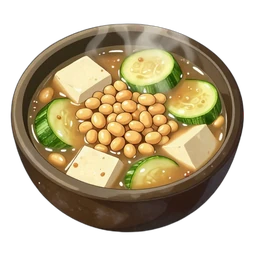
A stew built on rich fermented soybean paste, simmered with bean curd and plenty of solid ingredients.
Before the first bite
- Spice
- Not spicy
- Texture
- Brothy · Soft
- Serving
- Individual or shared
Varies by restaurantWhat goes into the pot — bean curd, onions, kimchi — differs a little from place to place. For dietary restrictions or allergies, ask the restaurant whether the food contains your trigger ingredients.
Taste and texture
Cheonggukjang names both a fermented soybean paste and a stew made with it. A restaurant order generally means the stew with solids such as tofu, kimchi and onion. Paste that is not ground completely smooth leaves bean pieces in the broth. Eating spoonfuls of beans and tofu with rice is therefore central to the meal.
The paste starts with thoroughly cooked soybeans that are fermented. Maangchi's preparation cooks soaked beans until soft, ferments them, then pounds them while retaining some whole pieces and divides the paste into portions. Softly crushed beans and intact pieces coexist. In stew, the lump is broken up with a spoon and mixed through the broth, while remaining beans become solids to eat.
Broth bases vary. Anchovies may be enclosed in a pouch and simmered with vegetables, or prepared anchovy-kelp stock can be used. A Gangnam single-person-household recipe uses rice-rinsing water. These methods incorporate anchovy and kelp flavor or rice-rinsing water into the stew base. Some home recipes use packaged stock bags or solid stock portions.
Kimchi adds cabbage fibers and ripe acidity. Maangchi simmers chopped kimchi, zucchini, onion and garlic before adding paste and tofu, with kimchi brine as an option. Mura Eonni instead rinses seasoning off sour kimchi and simmers it in doenjang broth. Leaving red seasoning on or rinsing it off changes how much chili seasoning enters the pot.
Some versions combine cheonggukjang with doenjang. Dietitian Kim Min-ji's Wtable recipe dissolves both pastes in anchovy-kelp stock before adding tofu and zucchini, followed by onion, Cheongyang chili and minced garlic. Its ingredients also include chili powder. Doenjang seasons the bean-textured cheonggukjang base, creating a blend of two pastes.
Tofu provides larger, softer solids than the beans. It may be cubed or sliced thin and broad. Zucchini can be cut into half-moons or small pieces, and onion into strips or chunks. The Gangnam recipe adds garlic and chili powder after kimchi and onion begin simmering, then finishes with tofu, chili and scallion. Soup soy sauce supplies the final seasoning.
One meat variation uses thin beef brisket. Smile Rose simmers kimchi and cut brisket in water with cheonggukjang and solid stock, then adds tofu and garlic and finishes with scallion and green and red chilies. Thin beef pieces provide meat fibers among the beans and tofu. The Korea Tourism Organization also mentions additions of beef and mushrooms.
The timing of the paste varies. Smile Rose reserves some paste and adds it after the tofu has simmered. Mura Eonni cooks rinsed kimchi and doenjang in stock, then cooks the tofu before dissolving cheonggukjang. The first approach splits the paste between two additions; the second prepares the kimchi-and-tofu base before adding it.
The distinctive fermented-bean aroma and savory flavor are central. Crushed beans disperse in the broth while larger pieces remain on the spoon. Tofu breaks into soft pieces larger than the beans. Zucchini and onion add tender cooked vegetables. A solids-rich version feels like spooning beans and vegetables rather than drinking a thin soup.
Kimchi preparation also shapes the solids. Thoroughly simmered rinsed kimchi becomes soft, while versions with red seasoning and kimchi brine bring more kimchi acidity and seasoning. A tofu-and-zucchini version without kimchi lacks that component. Cheongyang chilies or chili powder can add heat alongside the fermented aroma.
Spoon the beans, broth and tofu alongside rice. Reduced-broth versions are also described as being spooned over and mixed into rice. Brisket adds thin meat pieces, and doenjang combines two soybean pastes. Bean texture, tofu size and the inclusion of kimchi or meat determine what each spoonful contains.
When it may suit the table
- When you want more solids than broth
- You want a warm stew with steamed rice
When another path may fit better
- The strong fermented smell is more than you want today
- You're after a hot, spicy broth
How to order it in Korea
- Order cheonggukjang or cheonggukjang jjigae. Ask how it is prepared if the aroma or spiciness concerns you.
- Checking for kimchi helps you anticipate acidity and heat. The distinctive aroma comes from fermented beans, so reducing chili seasoning is different from reducing that aroma. If it concerns you, ask whether a milder-smelling paste is used and also check the kimchi and chili seasoning.
Show the Korean nameName and a short phrase
Use this to point out the food or say its name. Check the food-specific ordering tips above first.
청국장
Save, share or print an image
More guides in this category
Checked sources
Reviewed 2026-09-13 · Next check 2027-03-31
- VISITKOREA Opens in a new tab.
- Namu.wiki Opens in a new tab.
- Food Safety Korea Opens in a new tab.
- Maangchi Opens in a new tab.
- Wtable / Dietitian Kim Min-ji Opens in a new tab.
- 10000recipe / Smile Rose Opens in a new tab.
- Mura Eonni Recipes Opens in a new tab.
- Gangnam Single-Person Household Community Center Opens in a new tab.