hanip.me
Kimchi-jjim
김치찜
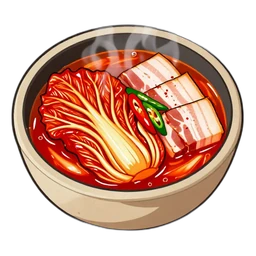
A Korean dish of tangy kimchi and pork simmered slowly and served hot.
Before the first bite
- Spice
- Medium
- Texture
- Tender · Soft
- Serving
- Usually shared
Varies by restaurantCuts with a moderate amount of fat, such as pork belly or neck, are used, and which cut goes in varies by restaurant. For dietary restrictions or allergies, ask the restaurant whether the food contains your trigger ingredients.
Hanip treats kimchi-jjim as a challenge food. Reading this guide does not make it appear in ordinary recommendations.
Taste and texture
Kimchi-jjim slowly braises fermented napa cabbage kimchi and pork in a modest amount of liquid. Whole cabbage sections and large pieces of meat form the meal, with enough sauce to keep them moist. Rather than primarily drinking broth as with kimchi-jjigae, diners unfold or tear the cabbage and eat it with pork and rice. Both cabbage and meat soften together.
Well-fermented, sour kimchi provides the base. Its tang and developed flavor take the place of the fresh seasoning character of newly made kimchi. Many recipes use aged mukeunji, although the dish does not require a fixed number of months of aging. The kimchi already contributes salt and acidity, so its juice and additional seasonings are considered together.
Cabbage preparation shapes the finished dish. Wtable removes loose filling and divides the cabbage lengthwise while keeping the root attached. A rib recipe instead removes the root and cuts the cabbage into large pieces before frying it. Long leaves can wrap the cooked pork, while precut cabbage is easy to serve alongside individual meat pieces.
Pork belly and neck or shoulder, containing both lean meat and fat, are common choices. Belly has visible layers of fat; neck offers substantial pieces of lean meat. Long cooking does not remove all the fat inherent in the cut. The cabbage takes on the pork's flavor, and red kimchi seasoning coats the meat.
Pork-rib kimchi-jjim uses bone-in ribs. In Semie's Kitchen's version, ribs first simmer with onion, green onion and garlic. The kimchi is separately fried with oil and chili powder before the cooked ribs and water are added and the liquid reduced. This separates cooking the meat from frying the cabbage, unlike starting raw pork and kimchi together.
The braising liquid may be water, rice-rinse water or anchovy-kelp stock. Kimchi juice carries the cabbage's seasoning and fermented flavor into the sauce. Chili powder, garlic, ginger and green onion appear in different combinations. Covered, gentle cooking softens the solids; more liquid is added if it reduces too far before they are tender.
Rolled versions also exist. Maangchi places long strips of pork belly inside large kimchi leaves, folds in their sides and rolls them up. These sit on a bed of sliced onion. Her gochujang and rice-syrup seasoning produces a thicker, sweeter coating than versions seasoned mainly with chili powder.
The same rolling technique can enclose soaked shiitake and chopped onion. Seasoned with ingredients such as soy sauce and sesame oil, chopped mushrooms replace the long strip of pork. Even without meat, the kimchi may contain fish sauce or seafood. Anyone requiring an entirely vegetable-based meal needs to check the kimchi as well as the filling.
Perilla-oil kimchi-jjim emphasizes cabbage and nutty oil rather than large meat pieces. Songimom reduces aged kimchi with rice-rinse water, perilla oil and plum syrup; Ppung Sisters also uses kelp, onion, chilies and scallions. How much loose filling is removed and how much kimchi juice is added affect the sauce's consistency and seasoning. This is a vegetable-centered variation alongside pork kimchi-jjim.
The cooked leaves droop softly and the stems separate easily. Rather than the firm crunch of raw kimchi, there is tender leaf with some remaining bite in the stalk. Kimchi wrapped around belly gives tangy, spicy seasoning first, followed by rich pork fat. Tender lean meat separates along its grain while the fat feels smoother.
Long cooking mellows rather than entirely removes the sourness. Sugar or plum syrup adds sweetness and can round off particularly sharp kimchi. Cheongyang chilies may bring extra chili heat and aroma beyond chili powder alone. Rolls made with gochujang and rice syrup have a more clinging sweet-spicy coating.
The shallow sauce combines cabbage juices, pork flavor and seasoned kimchi liquid. A little spooned over rice coats the grains; long leaves can also wrap meat and rice together. Mushroom-filled rolls offer pieces of shiitake to chew, while versions with generous perilla oil foreground that oil's nutty aroma in place of pork fat.
When it may suit the table
- You want a hearty meal with freshly steamed rice
- You crave the deep savory flavor of well-fermented kimchi
When another path may fit better
- You want something cold and refreshing instead
How to order it in Korea
- Look for “kimchi-jjim” on the menu — it's the dish where kimchi and meat are braised at length and served as the main event.
- Cuts with some fat, such as pork belly or neck, may be used. If fatty pieces are not your preference, ask about the balance of fat and lean meat as well as the cut. Slow-cooked tenderness does not mean the meat is lean.
Show the Korean nameName and a short phrase
Use this to point out the food or say its name. Check the food-specific ordering tips above first.
김치찜
Save, share or print an image
More guides in this category
Checked sources
Reviewed 2026-08-25 · Next check 2027-04-07