hanip.me
Dak-hanmari
닭한마리
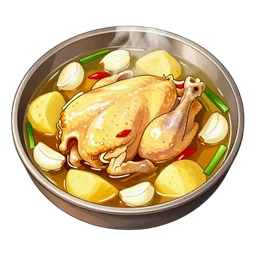
A whole cleaned chicken simmered with potatoes and rice cakes in a clear broth.
Before the first bite
- Spice
- Mild
- Texture
- Brothy · Tender
- Bones
- Usually bone-in
- Serving
- Usually shared
Varies by restaurantYou can order extra rice cakes, green onions, potatoes or noodles, and the dip is mixed to taste from soy sauce, red pepper powder, mustard and vinegar, so the heat is up to you. For dietary restrictions or allergies, ask the restaurant whether the food contains your trigger ingredients.
Taste and texture
Dak-hanmari is a shared hot pot of a whole chicken with potato, rice cakes and scallions in clear broth. Cooked meat is removed from the bones and dipped in sauce; noodles may follow in the remaining soup. The large pot keeps simmering at the table, carrying the meal from chicken to noodles.
Some preparations separate vegetables used for stock from those served as pieces in the pot. MK Health simmers chicken with onion, scallion and ginger, removes those aromatics and transfers the chicken and broth. Sliced potato, fresh scallion and minced garlic then go in. The stock is developed before the vegetables intended for eating are added.
Home recipes may trim excess chicken fat or blanch the bird before simmering in fresh water. Chung's K Food halves a trimmed chicken, blanches it with ginger and simmers it in fresh water with onion, scallion and garlic. Stock vegetables and floating fat are removed before potato and scallion are added.
Another home preparation builds a vegetable stock with kelp and mushrooms. Reviolla uses onion, scallion, shiitake, jujube, garlic, ginger and kelp before adding the prepared chicken. The kelp is removed during cooking, followed later by the onion, scallion and jujube. Potato and rice cakes go in toward the end, leaving chicken and edible additions in the finished pot.
Restaurants also use different stock ingredients. Seoul Sarang's report describes Baekbujangjip using chicken-foot broth with chicken, rice cakes, potato and scallion, alongside a sweet-and-sour sauce. The article also describes generous garlic and scallion or added mushrooms. Stock, aromatics and dipping sauce each contribute to the flavor beneath a clear appearance.
The dip is mixed separately on a small plate. Soy sauce, vinegar, mustard and spicy chopped seasoning are a commonly described combination. Home versions may soak chili powder in warm water before adding soy sauce and vinegar, or loosen the mixture with chicken broth. This seasons the lifted chicken with heat and acidity while leaving the shared broth clear.
Chives, thinly sliced onion and shredded cabbage may accompany the dip. Chung's K Food prepares these vegetables alongside the sauce. Eaten with tender chicken, raw vegetables contribute crunch and chive aroma. They are mixed on the individual plate rather than simmered for a long time as stock aromatics.
Kalguksu noodles cook in the remaining broth after the chicken is eaten. Koreana describes dipping cooked noodles in sauce or adding kimchi and seasoning to the pot for a spicy noodle finish. The same chicken stock can become either clear noodle soup or a red, kimchi-seasoned version, extending the meal in the original pot.
A home version finishes with rice instead. Chung's K Food adds soaked glutinous rice or cooked rice to the remaining broth for porridge. Unlike long noodles lifted from the pot, rice grains and soup are spooned together. The meal progresses from chicken with potato and rice cakes to noodles or porridge.
The mild chicken and broth gain heat and acidity from the dip. Soy sauce supplies saltiness, vinegar brings tang and mustard adds a sharp aroma. The amount of spicy seasoning determines how strongly the sauce coats the meat. Clear soup can be spooned separately while chicken is dipped, giving the broth and solids different levels of seasoning.
Soft cooked potato breaks apart beside the chicken, while rice cakes retain chew. Long pieces of cooked scallion soften and can be lifted with the meat. Raw chives or onion add crunch among the simmered ingredients. Chicken, potato and rice cakes supply a mix of tenderness and elasticity.
Moisture from repeatedly dipped chicken can thin the sauce. Seoul Sarang describes diners adjusting the seasoning during the meal. If kimchi and seasoning are later added to the pot, acidity and heat enter the broth itself as well as the vinegar-based dip. The clear-broth stage can lead into a kimchi-seasoned noodle finish.
When it may suit the table
- You want a hot broth to warm up with
- You want to share one pot with others
When another path may fit better
- You need a simple single-serving bowl
- You want a boldly seasoned flavor from the first bite
How to order it in Korea
- Look for “dak-hanmari” on the menu and check how many chickens to order for your group.
- Ask whether you can add rice cakes, potatoes or noodles, and whether kalguksu or fried rice can be made in the leftover broth.
Show the Korean nameName and a short phrase
Use this to point out the food or say its name. Check the food-specific ordering tips above first.
닭한마리
Save, share or print an image
More guides in this category
Checked sources
Reviewed 2026-09-13 · Next check 2027-03-31
- Seoul Metropolitan Government · Seoul Sarang Magazine Opens in a new tab.
- VISITKOREA Opens in a new tab.
- Food Safety Korea Opens in a new tab.
- Chung's K Food Opens in a new tab.
- MK Health · Kim Bo-ram Opens in a new tab.
- 10000 Recipe Opens in a new tab.
- Korea Foundation · Koreana · Park Chan-il Opens in a new tab.