hanip.me
Dakgalbi
닭갈비
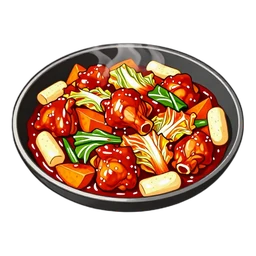
Dakgalbi is chicken marinated in gochujang, stir-fried on a griddle with vegetables and rice cakes.
Before the first bite
- Spice
- Hot
- Texture
- Tender · Chewy
- Serving
- Usually shared
Varies by restaurantThe vegetables and rice cake added, along with the spice level, can vary by restaurant. For dietary restrictions or allergies, ask the restaurant whether the food contains your trigger ingredients.
Taste and texture
Dakgalbi combines red-seasoned chicken with cabbage, sweet potato and rice cakes on a broad griddle. Despite the word galbi, the griddle version may use boneless thigh rather than meat attached to ribs. Chicken, vegetables and optional rice cakes or noodles share one pan and sauce.
Chicken is cut into bite-size pieces or divided during cooking. Thigh-based recipes emphasize tender but substantial meat; breast is another option. Boneless dakgalbi is therefore a normal description, although bone-in and charcoal menus also exist and need their own cut description.
The seasoning may combine gochujang, gochugaru, soy sauce, garlic, ginger and sugar or syrup. Some recipes rely on pepper flakes rather than paste; others add a little curry powder. Red color does not imply identical aroma or sweetness, and no single ratio defines every version.
Cabbage and onion form sweet, moist bites among the meat. Thinly sliced sweet potato and soft, chewy rice cakes add distinct textures. Perilla and scallions can also be included; adding perilla late leaves its aroma noticeable within the red sauce.
On the griddle, ingredients are spread out and stirred as vegetable moisture and seasoning mingle with chicken and rice cakes. Some methods add a little water or briefly cover the pan. The result differs from broth-rich dakbokkeumtang: picking up mixed griddle ingredients creates a different meal from lifting chicken pieces out of a stew.
Chuncheon also has charcoal-grilled dakgalbi. While the griddle version combines meat, vegetables and rice cakes, the charcoal version focuses on grilled chicken and its surface seasoning. Salt, soy and gochujang versions exist. The words griddle and charcoal therefore indicate differences in composition and eating style as well as equipment.
Sweet heat comes first, followed by chicken and cooked vegetable sweetness. Each bite changes with the proportion of meat, cabbage and rice cake. Tender chicken, softened cabbage and springy rice cakes give the griddle version its varied texture.
Sweet potato breaks into a fluffy, distinctly sweet bite, unlike the stretchy chew of rice cakes or the grain of chicken. Perilla and scallion can add different aromatic finishes. Even when everything has softened, the ingredients retain separate textures.
Cheese dakgalbi adds melted cheese near the end. Stretchy mozzarella contributes dairy richness and softness alongside the red seasoning; the dish still contains that spicy sauce. Cheese may occupy a separate channel in the pan or be placed over the ingredients.
Finishing fried rice mixes cooked rice into the remaining seasoning, giving a texture different from the chicken and rice cakes. Versions add gim, sesame oil and seeds, or kimchi. Sauce coats the rice grains while those additions contribute richness or kimchi flavor. Extras and fried rice are separate menu components unless explicitly included.
When it may suit the table
- You're craving a spicy stir-fried chicken dish
- It suits a shared griddle meal. Each person can take chicken and vegetables, while choosing rice cakes, cheese or finishing fried rice together makes the pan a shared selection.
When another path may fit better
- You need a dish without spicy seasoning
- You need a portion sized for eating alone
How to order it in Korea
- First distinguish iron-plate dakgalbi with vegetables and rice cakes from charcoal-grilled chicken. Iron-plate versions may offer cheese, rice cakes or noodles as additions, and fried rice in the remaining sauce. Checking these options helps you decide how much to order initially.
- Portions are usually meant for sharing, so ask if the size fits your group.
Show the Korean nameName and a short phrase
Use this to point out the food or say its name. Check the food-specific ordering tips above first.
닭갈비
Save, share or print an image
More guides in this category
Checked sources
Reviewed 2026-09-13 · Next check 2027-03-17