hanip.me
Dongchimi
동치미
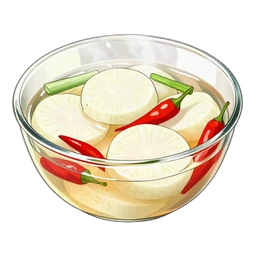
A water kimchi made with radish, eaten chilled together with its clear brine.
Before the first bite
- Spice
- Not spicy
- Texture
- Brothy
- Serving
- Usually shared
Varies by restaurantThe brine is also used as a noodle broth, so dongchimi can arrive as a side dish or as the liquid in a cold noodle dish. For dietary restrictions or allergies, ask the restaurant whether the food contains your trigger ingredients.
Hanip treats dongchimi as a challenge food. Reading this guide does not make it appear in ordinary recommendations.
Taste and texture
Dongchimi is water kimchi made by salting radish and fermenting it with aromatics and brine. It is not coated with red chili powder, and both the radish and liquid are served cold. White radish, scallions and peppers appear in a clear liquid. KTO describes its refreshing fermented flavor and use alongside rice: it is both a crunchy side dish and a broth to spoon.
Radishes may be fermented whole or cut first. Maangchi rolls small whole radishes in salt, then adds aromatics and water. At serving, a radish is removed and cut into half-moons or batons, then covered with brine. Its shape in the fermentation jar differs from the pieces in the serving bowl.
W Table starts with finger-thick radish batons salted with sugar, reserving their released liquid. Scallions are tied into bundles, pear is cored and cut into large pieces, and onion and large scallion are also cut broadly. The radish is prepared in eating-size pieces while the aromatics remain larger.
Garlic and ginger may be enclosed in a cloth bag rather than scattered in the liquid. Menupan wraps thin slices in gauze, alternates salted radishes with fermented peppers and adds bundled thin scallions before pouring in brine. Gathering the small aromatics keeps their pieces together rather than dispersed throughout the serving liquid.
A Korea.net recipe from the Institute of Traditional Korean Food also includes cheonggak seaweed and green mustard leaves, with thin scallions, garlic, ginger, fermented peppers and pear. Garlic and ginger are bagged with soaked cheonggak. Radish salting liquid and brine are boiled and cooled before use. Seaweed and mustard leaves add to the radish-and-brine composition.
The Gangwon Agricultural Research and Extension Services recipe uses kelp stock and fruit. Small firm radishes are joined by scallions, mustard leaves, fermented peppers, pear, apple and jujubes. Sliced garlic and ginger go into a bag. Kelp-infused liquid and several fruits form this particular preparation's broth base and aroma.
A quicker home preparation blends the aromatics. Korean Bapsang salts radish sticks and purées pear or apple with garlic, ginger and optional onion. The purée may be strained, then combined with separately cooked and cooled thin glutinous-rice paste. This disperses blended aromatics and paste through the brine instead of leaving all the fruit and aromatics in large pieces.
Napa cabbage is another optional addition. Korean Bapsang cuts and separately salts tender inner leaves before combining them with radish, scallion, sliced peppers and brine. The bowl then contains both crisp radish sections and flexible cabbage leaves. The author also describes a version with large radish and pear chunks and unblended aromatics.
The brine can become a noodle broth. Both KTO and Korea.net describe serving noodles in dongchimi liquid. A side-dish bowl holds radish pieces and brine, while adding noodles makes the liquid a base for a meal. Cold fermented radish and its broth can then be eaten together with the noodles.
The radish is crunchy and the brine cool and tangy. Salting and fermentation add seasoning to its firm bite. Thin half-moons feel lighter to chew, while thick batons show more of the radish's fibers. Eating a piece and then sipping the liquid gives both the seasoning held in the vegetable and the aromatics dispersed in the brine.
Fermentation can develop acidity and a slight fizz. Maangchi describes the liquid becoming a little cloudy, with sour flavor, aroma and bubbles. The initial salty water develops into tangy radish-and-aromatic brine. Pear or apple and more assertive mustard leaves contribute different aromas alongside that fermented flavor.
Although there is no red chili-powder coating, recipes can include whole or fermented peppers. Maangchi uses fresh green and red peppers, while Korea.net and Gangwon use fermented peppers. These may appear whole or cut in the liquid. Garlic, ginger and scallion also contribute aroma within the pale broth.
When it may suit the table
- You want a clean, refreshing broth to reset your palate
- Spicy kimchi feels like too much today
When another path may fit better
- You want kimchi with real heat
- You need a dish that works as a full meal
How to order it in Korea
- Look for “dongchimi” on the menu or in the side dish list — it's the clear water kimchi made without red chili powder.
- Some places use dongchimi brine as the broth for cold buckwheat noodles, so ask which broth a noodle dish uses.
Show the Korean nameName and a short phrase
Use this to point out the food or say its name. Check the food-specific ordering tips above first.
동치미
Save, share or print an image
More guides in this category
Checked sources
Reviewed 2026-08-25 · Next check 2027-04-07
- VISITKOREA Opens in a new tab.
- Namu.wiki Opens in a new tab.
- Food Safety Korea Opens in a new tab.
- Maangchi Opens in a new tab.
- W Table Opens in a new tab.
- Menupan Opens in a new tab.
- Korea.net · Institute of Traditional Korean Food Opens in a new tab.
- Gangwon Agricultural Research and Extension Services Opens in a new tab.
- Korean Bapsang Opens in a new tab.