hanip.me
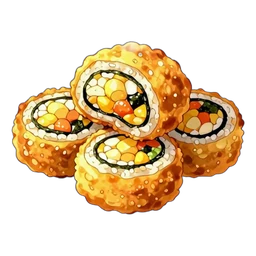
Fried gimbap
김밥튀김
Gimbap rice rolls coated in batter and deep-fried as a street snack.
Before the first bite
- Spice
- Not spicy
- Texture
- Crisp · Soft
- Serving
- Individual or shared
Varies by restaurantThe fillings inside the gimbap and the batter used for frying differ from shop to shop. For dietary restrictions or allergies, ask the restaurant whether the food contains your trigger ingredients.
Hanip treats fried gimbap as a challenge food. Reading this guide does not make it appear in ordinary recommendations.
Taste and texture
Fried gimbap coats a rice-and-filling roll wrapped in laver with batter and fries it in oil. The inside retains the structure of gimbap while a crisp layer forms outside. Coatings may use flour and egg, frying mix stirred with water, or breadcrumbs. Both sliced rounds and long miniature rolls can be fried.
Typical gimbap fillings include egg strips, fish cake, carrot, spinach and pickled radish. Because the roll is assembled before frying, its cross-section retains the colors of those ingredients. Dark laver surrounds the rice, with golden coating outside it. If slices are fried individually, batter also covers their cut faces and partly obscures the filling.
The rice itself may be seasoned. Rice mixed with salt, sesame oil and sesame seeds remains savory and nutty beneath the crust. 10000 Recipe's miniature-roll version mixes gimbap sauce, stir-fried vegetables, sesame and minced Cheongyang chili into the rice. Heat then comes from inside the roll as well as any dipping sauce. Rice, coating and dip are prepared separately.
Small rolls use smaller pieces of laver with less rice and filling. 10000 Recipe fills long miniature rolls with burdock, carrot and pickled radish. Soeunmom halves a sheet of laver and adds egg strips, ham, carrot and pickled radish jangajji. These produce narrow cylinders whose small cross-sections reveal the rice and filling when cut after frying.
Some methods dust the roll with dry flour before battering. 10000 Recipe first applies dry frying mix, then a separate batter made from frying mix and water. The dry and wet layers enclose the laver. This coating differs from gimbap-jeon, which is dipped in egg before pan-frying.
Rafine fries sliced cheese-gimbap one piece at a time. Each slice is dipped in frying mix blended with cold water and fried until golden. A rack or paper towel drains excess oil afterward. Because the gimbap already carries seasoning, the author presents it as something that can be eaten without extra sauce.
Breadcrumb coatings have a rougher, more visible grain. Yangsonbap coats gimbap in flour, beaten egg and breadcrumbs in sequence, lightly presses on the crumbs and fries both sides in a generously oiled pan. The small breadcrumb projections remain visible around the roll, unlike a smoother batter-only coating.
Another variation uses rice-flour batter beneath breadcrumbs. Soeunmom coats whole rolls in rice flour mixed with water, adds breadcrumbs and turns them while frying in a shallow amount of oil. Pickled radish jangajji replaces danmuji for a savory crunch. Rice flour alone does not make the dish wheat-free because breadcrumbs or other ingredients may contain wheat.
Cheese makes the interior feel softer after frying. Ham adds savory meat flavor, and carrot contributes vegetable sweetness. Egg strips form a thin, tender layer, while danmuji or other pickled radish provides crunch. Distinct filling textures continue after the initial crispness of the outside.
Glass-noodle gimmari can look similar but has a different center. Maangchi's gimmari wraps cooked glass noodles and vegetables in laver before frying, producing a chewy noodle filling. Fried gimbap centers on rice grains and gimbap ingredients. A whole fried miniature roll can hide its filling, while a cut face reveals rice or noodles.
The crust breaks first, followed by softly packed rice. Laver remains a thin layer between crust and rice and contributes its seaweed aroma. Unlike a snack fried hard all the way through, the center retains moist gimbap texture. Biting a long miniature roll from one end reveals rice and vegetables in sequence.
Breadcrumbs break into rough, audible particles, while a water-based batter gives a thinner snapping crust. Soft cheese and egg, firm pickled-radish crunch and fried-oil richness overlap. Cheongyang chili mixed into rice supplies heat inside the roll; vegetable-centered versions more clearly show carrot and pickled-radish flavors.
Already-seasoned fillings can make the fritter savory enough on its own. Soy sauce adds salt; Yangsonbap's suggested sweet-chili dip adds sweetness and acidity. Sauce softens the area it wets, so lightly dipping one end keeps some crust crisp. Freshly fried coating pairs well with warm, soft rice.
When it may suit the table
- You want crisp fried food and rice in the same bite
- You want a substantial Korean snack
When another path may fit better
- You'd rather avoid deep-fried food
- You'd rather eat gimbap plain, without the fried coating
How to order it in Korea
- Look for fried gimbap and check whether it comes as sliced rounds or long miniature rolls.
- Fillings differ by shop, so ask what goes inside the roll.
At the restaurant
- You can dip it in soy sauce or tteokbokki sauce, and some shops also offer chogochujang (vinegar-chili sauce).
- Check whether the laver-wrapped fritter contains rice or the glass noodles used in gimmari.
Show the Korean nameName and a short phrase
Use this to point out the food or say its name. Check the food-specific ordering tips above first.
김밥튀김
Save, share or print an image
More guides in this category
Checked sources
Reviewed 2026-08-25 · Next check 2027-04-21