hanip.me
Gamja-jeon
감자전
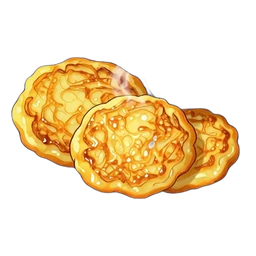
Gamjajeon is a Korean potato pancake made by mixing ground potato with starch and frying it on a lightly oiled pan.
Before the first bite
- Spice
- Not spicy
- Texture
- Chewy · Soft
- Serving
- Usually shared
Varies by restaurantChives, carrots and mushrooms can be added depending on preference, so ingredients vary by restaurant. For dietary restrictions or allergies, ask the restaurant whether the food contains your trigger ingredients.
Hanip treats gamjajeon as a challenge food. Reading this guide does not make it appear in ordinary recommendations.
Taste and texture
Gamjajeon is a flat pancake made from grated or ground raw potato mixed with starch and pan-fried in oil. Potato forms the body of the batter, giving it a mild flavor and chewy interior. Chives, carrot or mushrooms may be added, but a simple version uses only potato, salt and oil. The raw potato batter cooks directly in the pan rather than beginning with boiled, mashed potatoes.
A grater leaves some coarse potato particles, while a blender or food processor produces a smoother batter. One blended version processes chopped potato with water and chives. The chives are finely blended into the potato, making the batter green rather than leaving only separate pieces.
Grated potato contains considerable moisture, so recipes separate pulp and liquid in a strainer. A bowl underneath catches the liquid. As it stands, a white starch layer settles at the bottom. The water above is carefully poured off, and the starch is mixed back into the strained potato pulp.
This recovered starch allows some recipes to work without added flour or powdered starch. Others add a little powdered starch even after recovering the potato's own starch. Another method mixes pancake or frying mix directly into grated potato. Since these versions do contain added mixes, the main ingredient alone does not establish that the dish is free of wheat flour.
Some recipes grate a little onion first and mix the grated potato into it, or blend both together. This is described as a way to reduce discoloration of the grated potato. The onion is incorporated into the batter rather than placed on top in large pieces, so distinct onion chunks are not prominent in the finished pancake.
Garlic chives bring a gentle aroma to the potato. Chopped chives can be mixed into drained potato, or blended with it from the start. Small additions of scallion, chili or zucchini also appear. A green pancake made with blended chives and one dotted with chopped chives differ in preparation and mixing order.
An enoki version combines hand-grated potato with trimmed, shortened enoki mushrooms, frying or pancake mix, and salt. The batter is spread thinly and pan-fried. The mushrooms keep their slender stems rather than being ground like the potato, leaving visible strands through the batter.
The batter can make one large pancake or several small rounds. It is spread evenly in an oiled, heated pan, then turned when the bottom colors. One small-pancake recipe presses red and yellow bell-pepper strips onto the surface. Mixing vegetables into the batter and adding a surface garnish produce different appearances.
Variations place Cheongyang chili on the pancake or sliced chili in the dipping sauce. One recipe combines neutral cooking oil and perilla oil for frying. Rather than mixing a strong sauce into the batter, these versions salt the potato and add aroma through chili or oil. The dipping sauce is prepared separately.
A well-fried gamjajeon has golden, crisp pan-facing surfaces and edges, with a soft, chewy interior. Hand-grated potato retains some coarse texture, while finely blended batter is more uniform. The savory fried exterior contrasts with mild potato inside. When additions are limited, the potato remains the main flavor.
Chives contribute a gentle garlic-like aroma, and Cheongyang chili brings heat where it is placed. Perilla oil adds its nutty aroma in versions fried with it. Enoki contributes slender mushroom strands to the bite. These variations add aroma or texture to the mild potato base.
The dipping sauce adds more than saltiness. Some mixtures combine soy sauce with vinegar, water and sugar. Others add toasted sesame, or chili powder, pepper and oligosaccharide syrup. Onion can also accompany the soy sauce. Keeping sauce and chili separate lets each piece receive a little seasoning while retaining its potato flavor.
When it may suit the table
- You want something mild with no heat
- You're in the mood for a chewy dish to go with drinks
When another path may fit better
- If you need to avoid wheat flour, ask whether it is mixed into the batter before ordering.
- You want something with a spicy kick
- You need a dish with a hot broth
How to order it in Korea
- Look for “gamjajeon” on the menu; where several kinds of jeon are listed, they are told apart by the main ingredient.
- Ask when you order whether chives, carrots or mushrooms are mixed in.
Show the Korean nameName and a short phrase
Use this to point out the food or say its name. Check the food-specific ordering tips above first.
감자전
Save, share or print an image
More guides in this category
Checked sources
Reviewed 2026-09-13 · Next check 2027-03-31