hanip.me
Kkotgetang
꽃게탕
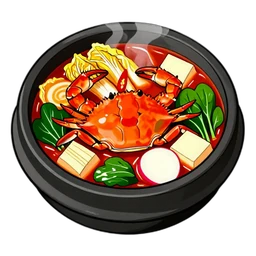
Kkotgetang is a spicy stew of trimmed blue crab simmered with vegetables in a broth seasoned with soybean paste and red chili powder.
Before the first bite
- Spice
- Hot
- Texture
- Brothy · Tender
- Serving
- Usually shared
Varies by restaurantIn the Jeolla region it is often made richer and spicier with perilla seed powder and chopped chili peppers. For dietary restrictions or allergies, ask the restaurant whether the food contains your trigger ingredients.
Taste and texture
Kkotgetang is a stew of cleaned flower crab and vegetables seasoned with doenjang and chili powder. Both the crab meat and the broth it flavors are central to the meal. Radish, zucchini, scallions, garlic and crown daisy surround shell-on crab pieces in the spicy liquid. Unlike steamed crab eaten mainly for its flesh, this dish combines spoonfuls of broth and vegetables with the meat.
The top shell and gills are removed, and the crab is scrubbed clean and cut into manageable pieces. Some recipes also trim the pointed ends of the claws and legs. Divided body pieces go into the pot with shell and meat still together. A cleaned top shell may be used separately to make stock, so a large carapace and a meaty body section have different uses and edible portions.
Dried anchovies and kelp can form the stock. One method simmers crab carapaces with anchovies, kelp, dried shrimp, garlic and scallion roots, then strains them out, combining crab and dried-seafood flavors in one liquid. With pre-cut crabs that lack the carapaces, prepared anchovy-kelp stock can be used. Recipes use frozen crabs as well as cleaned fresh ones.
Seasoning may add gochujang, minced garlic and ginger juice to the basic doenjang and chili powder. The savory soybean paste and chili heat overlap with the crab's sweetness. Some mixtures add soup soy sauce or fish sauce for saltiness, and others use rice wine or cooking wine. Premixing the seasoning and dissolving it in the stock lets radish, crab and vegetables take on the same seasoned liquid.
One method first cooks thick, flat slices of radish in the broth, then adds crab, followed by zucchini, scallions and chilies. The radish absorbs broth and softens, while zucchini and scallions become cooked vegetable pieces alongside the crab. Crown daisy added near the end, or water parsley used in its place, brings a leafy aroma to the surface.
Some versions add oyster and enoki mushrooms. Their bases are removed and their strands separated, placing slender mushrooms between the larger crab pieces. Wtable's recipe also includes mideodeok or omandungi, two edible sea squirts. Other recipes suggest adding shrimp or shellfish with the crab, building additional seafood flavors into the broth.
A Jeolla-region version is described as richer and hotter through the addition of ground perilla seeds and chopped chilies. Perilla powder contributes nuttiness and disperses fine particles through the broth, layering its flavor over doenjang and chili powder. Chopped chilies add aroma and heat, accompanying the sweet meat with a richer liquid.
Another method starts with plain water or rice-rinsing water and cooks anchovies, radish, doenjang and gochujang in it. A variation adds soybean sprouts when the radish goes in, introducing their stems among the softer radish and zucchini. The stew keeps its substantial crab pieces while different stock ingredients and vegetables change the flavors and solids around them.
Crab meat comes apart softly after being removed from the shell and has a sweet taste. The red, spicy broth layers that sweetness with savory doenjang and chili heat. Meat eaten separately puts crab flavor first; a bite with broth also carries the fermented seasoning and garlic. Even a spoonful of liquid contains crab flavor, connecting the meal while you pick the meat.
Radish softens and absorbs the broth. Tender zucchini, softened scallion fibers and springy mushrooms add textures different from the delicate crab meat. Crown daisy or water parsley supplies leafy aroma, while sliced chilies add pungency. These vegetables and mushrooms remain among the crab pieces as solids to eat with the broth.
Ground perilla makes nuttiness more prominent, while a broth based chiefly on doenjang and chili seasoning emphasizes savory fermented flavor and heat. Mideodeok, shrimp or shellfish add their seafood flavors where used. With rice alongside, each spoonful combines the seasoning of the crab broth with the softness of the vegetables.
When it may suit the table
- You want a spicy broth to warm you up at dinner
- You enjoy picking crab meat out of the shell
When another path may fit better
- Cracking shells feels like too much work
- You need a broth without heat
How to order it in Korea
- Look for “kkotgetang” on the menu and tell it apart from gejang, the raw marinated crab often sold nearby.
- For a shared pot, check the size for your group and whether rice is included. Take out shell-on crab pieces to remove the flesh, then enjoy broth and vegetables alongside. Even though it is a soup, eating the crab still requires separating the flesh from the shell.
Show the Korean nameName and a short phrase
Use this to point out the food or say its name. Check the food-specific ordering tips above first.
꽃게탕
Save, share or print an image
More guides in this category
Checked sources
Reviewed 2026-09-13 · Next check 2027-03-31