hanip.me
Gamja-tang
감자탕
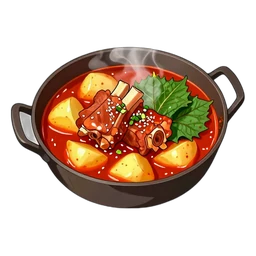
Gamjatang is a spicy stew of pork backbone simmered with plenty of potatoes, cabbage greens and ground perilla seeds.
Before the first bite
- Spice
- Medium
- Texture
- Brothy · Tender
- Bones
- Usually bone-in
- Serving
- Usually shared
Varies by restaurantThe amount of potato, cabbage greens and perilla powder varies by restaurant, so the broth can be thicker or lighter. For dietary restrictions or allergies, ask the restaurant whether the food contains your trigger ingredients.
Taste and texture
Gamjatang is a spicy pork-backbone soup with ingredients such as potatoes, cabbage greens and ground perilla seeds.
Large pork spine or neck bones carry meat in their irregular gaps. They provide stock and meat to pick off and eat, so recipes choose well-covered bones. Potatoes form separate large solids, while pork and cabbage bring other shapes and sizes into the same pot.
Recipes soak and parboil the bones, discard that water and wash away foam and small bone fragments. Fresh water with onion, garlic, ginger and scallion then builds the stock. Some methods strain out the spent aromatics after simmering and reunite the bones and broth before adding the remaining ingredients.
Red seasoning can combine chili flakes with doenjang, garlic and fish sauce, sometimes adding gochujang. Doenjang contributes fermented-soy savouriness; chili supplies colour and heat. Mixing the seasoning first makes it easy to dissolve, while some can coat blanched cabbage before it enters the pot, flavouring both leaves and broth.
Blanched cabbage torn lengthwise drapes between bones and potatoes, with thick stems and thin leaves offering different bites. KTO also describes versions using dried radish greens or aged kimchi instead. Dried greens retain leafy fibres; aged kimchi adds fermented seasoning and acidity to the long vegetable pieces eaten with the broth.
Potatoes may enter after the stock develops, or be nearly cooked separately before joining it. This controls their tenderness without leaving them in for the entire long stock simmer. Cut large potatoes expose their faces to seasoning; small whole ones retain a round shape. Finished potatoes are soft enough to divide with a spoon, with floury interiors.
Pork backbone meat and cabbage become tender through long simmering. Perilla seed powder adds a nutty flavor to the spicy, fairly thick broth. Pick the meat off the bones and eat it with the potatoes and cabbage that have absorbed the seasoning.
Ground perilla adds nuttiness and seed texture. Finely ground hulled powder is pale and smoother, while coarse unhulled powder can leave darker, rougher particles. Some recipes mix coarse grounds with water and strain out the solids, using the liquid. Freshly grinding toasted seeds adds aroma; grind fineness also affects the broth's feel.
Perilla leaves and ground seeds can appear together, offering leafy aroma and seed nuttiness respectively. Shredded leaves, crown daisy or fresh chili added near the end bring fresh aromas over long-cooked meat and cabbage. Late-added mung sprouts contribute slender stems among soft leaves, creating several vegetable textures in the rich broth.
Meat picked from bone gaps separates into small fibres, with fattier areas feeling softer. A large bone can hold meat in several separate pockets rather than one equally large piece. Broad cabbage leaves carry broth and meat together, while potato breaks softly. The hard bones remain, contrasting with the tender edible parts around them.
A shallow-pot preparation tops the soup with enoki, perilla leaves and scallions to cook in the finished stock. Another recipe finish uses a little remaining broth with rice, chopped kimchi, seaweed and sesame oil. The spicy soup seasoning then coats rice grains, while seaweed and oil add aromas to a distinct fried-rice texture.
When it may suit the table
- You want to share one pot at dinner
- You want a filling meal of meat and broth
When another path may fit better
- Picking meat off the bones feels like too much work
- You need a broth without heat
How to order it in Korea
- Gamjatang is a pork-backbone soup, rather than simply potato soup, and may also be labeled ppyeodagwi-tang. Some versions use dried radish greens or aged kimchi in place of cabbage. If you particularly enjoy simmered vegetables, check which kind the restaurant uses.
- It is usually ordered by pot size for the number of diners, so ask how many people each size serves.
At the restaurant
- If eating alone, look for “ppyeo haejangguk,” a pork-backbone soup served in an individual pot.
Show the Korean nameName and a short phrase
Use this to point out the food or say its name. Check the food-specific ordering tips above first.
감자탕
Save, share or print an image
More guides in this category
Checked sources
Reviewed 2026-09-13 · Next check 2027-03-03