hanip.me
Ppyeo-haejangguk
뼈해장국
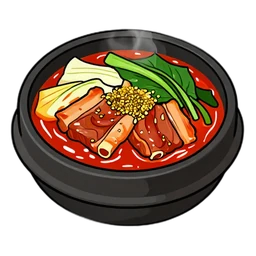
Ppyeo-haejangguk is a hangover soup of large pork backbone chunks and dried radish leaves boiled in pork broth and eaten with rice.
Before the first bite
- Spice
- Medium
- Texture
- Brothy · Tender
- Bones
- Usually bone-in
- Serving
- Usually individual
Varies by restaurantHaejangguk comes in many kinds depending on the ingredients, such as versions made with beef blood, and the heat differs by restaurant. For dietary restrictions or allergies, ask the restaurant whether the food contains your trigger ingredients.
Taste and texture
Ppyeo-haejangguk is soup made by simmering large, meaty pork backbone pieces and adding dried radish greens and seasoning. Pork broth seasoned with doenjang and soy sauce may also contain chili powder and other spicy ingredients. Bones and meat occupy a substantial part of the bowl. Diners pick meat from between the bones and eat the softened vegetables with the broth.
It shares pork-bone broth, leafy vegetables and spicy seasoning with gamjatang. This family of soups can be served in individual bowls or ladled from a larger pot. Some home recipes use both names. Even when choosing an individual ppyeo-haejangguk, the listed greens, cabbage and potatoes indicate what fills the bowl.
The edible part is the meat attached around the backbone. Some preparation methods soak the bones, briefly boil them, discard that water and wash them. Maangchi specifically removes attached foam, excess fat and small bone fragments. The cleaned bones then go into fresh water in a clean pot to make the broth.
Onion, scallion, garlic and ginger can flavor the stock. Korean Bapsang cooks the bones with these aromatics, removes them and adds vegetables and seasoning to the reserved broth. Ppangsigi also begins by simmering backbone with onion. Pork flavor extracted into the broth combines with the fermented-paste seasoning added later.
Siraegi is dried radish greens prepared by soaking and cooking; precooked greens are also used. Bongja Eomeoi adds tender prepared greens later and cooks tougher ones earlier, adjusting the sequence to their condition. The long stems and leaves absorb broth and remain fibrous vegetables among the meat.
Other versions use napa cabbage. Korean Bapsang's gamjatang separately blanches cabbage, drains and squeezes it, cuts it into large pieces and coats it with some seasoning before adding it to the pork broth. This preparation differs from adding raw cabbage directly. Broad leaves fold around the broth, while thicker stalks provide a substantial bite.
Doenjang, soy sauce, garlic and chili powder can be supplemented with gochujang or fish sauce. Bongja Eomeoi uses tuna extract and onion syrup; Ppangsigi combines fish sauce with perilla powder. Gochujang sweetness, fermented-soybean savoriness and fish-sauce saltiness vary with the mixture. Fish ingredients may therefore appear even in a pork soup.
Perilla powder adds nutty aroma and a thicker texture. Ppangsigi includes it in the seasoning and adds more at the end. Gamjatang recipes using fresh perilla leaves add them near the finish for aroma. Although related ingredients, finely ground seeds contribute body while leaves bring a fresher herbal character.
Versions with potatoes provide another soft, substantial piece to eat. Bongja Eomeoi adds potatoes and onion; Maangchi's gamjatang also includes cabbage, soybean sprouts and shiitake. Sprout stems offer a thin-stranded bite distinct from meat, while shiitake remains in small pieces. These are variations rather than mandatory additions; some bowls center on siraegi.
Aged-kimchi versions also exist. Haetsal Meogeumeun Jip cooks blanched and washed backbone with mukeunji, potato, doenjang, gochujang and chili powder. Fermented kimchi contributes tang and its own seasoning in place of plain cabbage or radish greens. Long-cooked leaves eaten with pork distinguish it from the less acidic siraegi form.
The rich pork broth layers doenjang savoriness with chili heat. Perilla powder gives it more body and a lingering nutty aroma; chewing fresh perilla leaves makes their fragrance clearer. Chili powder and gochujang proportions affect heat and sweetness, while aged kimchi adds tang.
Well-cooked meat separates from the bones along its grain. Lean portions are tender, and fatty parts feel smoother. Small pieces may remain in the bones' curves, so chopsticks help extract them rather than biting into a large bone-in piece. The apparent volume of the bowl includes substantial inedible bone.
Siraegi combines soft leaves with longer, fibrous stems; napa cabbage carries broth in broad leaves. Potatoes split into soft, floury pieces. Rice can be eaten separately with meat, greens and broth, or spooned together after the meat is removed. Set aside meat from hot bones and divide it into manageable pieces.
When it may suit the table
- You need a hot broth late at night or the morning after
- You want a single-pot meal on your own
When another path may fit better
- Picking meat off the bones feels like too much work
- You would rather share one big pot with others
How to order it in Korea
- Look for “ppyeohaejangguk” on the menu and tell it apart from other haejangguk, such as the version made with beef blood.
- Ask whether the rice comes on the side or already in the soup.
Show the Korean nameName and a short phrase
Use this to point out the food or say its name. Check the food-specific ordering tips above first.
뼈해장국
Save, share or print an image
More guides in this category
Checked sources
Reviewed 2026-08-25 · Next check 2027-04-07