hanip.me
Kongguksu
콩국수
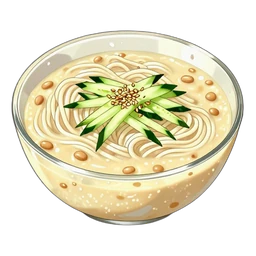
A summer specialty of noodles served in a thick, chilled soybean broth made from ground boiled soybeans.
Before the first bite
- Spice
- Not spicy
- Texture
- Brothy · Chewy
- Serving
- Usually individual
Varies by restaurantVariations include kongguksu made with black soybeans (seoritae), and many restaurants offer it as a seasonal menu from June to August. For dietary restrictions or allergies, ask the restaurant whether the food contains your trigger ingredients.
Taste and texture
Kongguksu is noodles in a cold broth of ground cooked soybeans. The color varies with the beans, such as white or black soybeans.
The broth starts with soaked, cooked soybeans blended with liquid. Dried beans swell during soaking and are cooled after cooking. Some methods retain part of the cooking liquid, while others add cold water. Blended bean particles form the soup itself, so its nutty flavour remains in the liquid after noodles are lifted out.
Cooked beans may be rubbed to loosen skins, which are then removed from the water. This reduces skin fragments before blending. Recipes use yellow or black soybeans; bean choice and retained skins affect colour and particles. Black-soybean broth can look darker, but colour and thickness are separate characteristics.
Thorough blending distributes bean particles more evenly. A fine sieve can remove coarser solids, while an unstrained version retains them. Strained soup leaves fewer small lumps; unstrained soup may have a soft, powdery feel alongside its nutty taste. Blending and straining, after cooking, shape the broth's texture.
Home shortcuts include blending tofu with unsweetened soy milk or dissolving kongguksu soybean powder in water or dairy milk. These alter the soaking-and-cooking preparation. Tofu contributes an already-soft soybean ingredient; dairy milk adds dairy flavour. These are examples of alternative ingredient combinations within home versions of kongguksu.
Noodles sit in a cold, nutty soybean soup. How finely the beans are ground changes it from smooth to more textured, and the liquid is thicker than a clear noodle broth. Try the soybean soup between bites of noodles to taste the beans.
Ground sesame or nuts add roasted aromas to soybean flavour. Examples include pine nuts with sesame, walnuts or peanuts. Blended nuts become part of the broth's aroma and body rather than remaining whole garnishes. Ingredients ground into the soup can therefore contribute nuttiness beyond the visible sesame seeds and the choice of soybean.
Thin wheat somyeon is used in many recipes. After boiling, noodles are rinsed cold to cool them and remove surface slipperiness, then drained before adding broth. They enter the soup already chilled. Thick soybean liquid clings to several slender strands at once, combining the noodles' resilience with soft bean particles in each bite.
Added water changes how strongly the soup coats noodles: thick broth clings more, while thinner broth runs back into the bowl. Solids can settle in chilled soup, so recipes stir it before serving. In an iced bowl, melting ice adds water and can gradually alter the initial concentration as the meal progresses.
Julienned cucumber gives crunch, and tomato supplies juicy flesh distinct from the bean broth. A boiled egg adds springy white and a crumbly yolk. Some recipes use salt alone, while others add a little sugar. Against the soft, nutty base, cucumber, tomato and egg each retain a clearly different bite.
When it may suit the table
- You want a cold, nutty bowl on a hot day
- You want a light summer meal to eat solo
When another path may fit better
- When you have a soy allergy or need to avoid soy — kongguksu broth is made from soybeans. Ask the restaurant about soy ingredients and possible cross-contact before ordering.
- You need a hot broth instead
- You crave something spicy
How to order it in Korea
- It's often a seasonal menu from June to August, so check whether it's currently available.
- Check whether the soup uses black soybeans or another soybean variety. Garnishes can include cucumber or pine nuts, so ask about toppings if avoiding nuts. The texture of the ground beans matters to preference as well as their variety.
At the restaurant
- It may be seasoned with salt or sugar. Taste first, then add your preferred seasoning a little at a time.
Show the Korean nameName and a short phrase
Use this to point out the food or say its name. Check the food-specific ordering tips above first.
콩국수
Save, share or print an image
More guides in this category
Checked sources
Reviewed 2026-09-13 · Next check 2027-03-03
- Rural Development Administration, National Institute of Crop Science Opens in a new tab.
- Namu.wiki Opens in a new tab.
- VISITKOREA Opens in a new tab.
- Food Safety Korea Opens in a new tab.
- Korean Bapsang Opens in a new tab.
- Maangchi Opens in a new tab.
- Sue Pressey / My Korean Kitchen Opens in a new tab.
- Hyegyoung K. Ford / Beyond Kimchee Opens in a new tab.