hanip.me
Naengmyeon
냉면
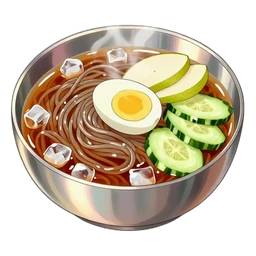
A cold Korean noodle dish of buckwheat noodles in a chilled broth, with a spicier bibim (mixed) version dressed in gochujang.
Before the first bite
- Spice
- Varies with sauce
- Texture
- Chewy
- Serving
- Usually individual
Varies by restaurantMul (broth) naengmyeon is mild and unspiced, while bibim (mixed) naengmyeon is dressed in gochujang without broth, so spiciness varies a lot by style. Pyongyang style leans on buckwheat with a subtle flavor, and Hamhung style uses potato-starch noodles for extra chewiness. For dietary restrictions or allergies, ask the restaurant whether the food contains your trigger ingredients.
Taste and texture
Naengmyeon is a cold noodle dish. Mul naengmyeon comes in chilled broth, while bibim naengmyeon is mixed with spicy seasoning.
Naengmyeon noodles can combine buckwheat with potato or sweet-potato starch. Pyongyang-style noodles are described as having a higher buckwheat proportion, while Hamhung-style noodles are often finer and more starch-centred, with a firmer chew. Buckwheat flavour and elasticity matter alongside broth or sauce. Dried, refrigerated and frozen noodles also differ in preparation.
Beef such as brisket can provide mul-naengmyeon stock. Radish, onion, scallion and garlic add vegetable aromas in one preparation. The cooked beef is removed, cooled and sliced for garnish, while the stock is chilled separately. Broth preparation and noodle cooking are separate stages before the cold bowl is assembled.
Dongchimi brine adds radish-water-kimchi acidity and fermented aroma to beef stock. Home adaptations may use pickled-radish liquid or vinegar and sugar when dongchimi is unavailable. Those additions supply sweetness and tang rather than reproducing fermented brine exactly. Salty, sweet and sour notes can therefore coexist in the chilled broth.
A shortcut method dilutes packaged broth concentrate, then adds pear juice and sweet-sour cucumber-pickle liquid. Another makes a chilled stock from anchovy, shiitake and kelp. These produce different aromatic foundations from beef-only stock. A clear mul-naengmyeon broth can thus draw on meat, kimchi brine or seafood-and-mushroom stock.
Bibim sauce may combine chili flakes, soy sauce, garlic, sweeteners and water or stock. Gochujang adds paste-like body, while grated pear or apple supplies moisture and sweetness. Onion and vinegar can add aroma and acidity. Proportions of chili flakes, paste, fruit and liquid change both flavour and consistency.
Mul naengmyeon combines cold noodles with a delicate meat broth. Bibim naengmyeon mixes the noodles with spicy sauce instead of a bowl of broth, so the seasoning is more prominent. Both are cold, but sipping broth feels different from eating sauce-coated noodles.
Thin radish slices may be pickled with salt, sugar and vinegar. They become pliable while retaining crunch distinct from noodles. Cucumber adds moisture and freshness; sliced pear adds sweetness and a grainy crispness. These short, firmer toppings punctuate long noodles, retaining their own sour or sweet notes even when mixed with sauce.
Noodles can be boiled, rinsed cold and given a final ice-water rinse. Washing off slipperiness and draining keeps residual cooking water out of the prepared broth or sauce. Properly cooked resilience differs from a hard, undercooked centre. Well-cooked cold noodles feel slender and smooth with a firm chew; overcooking weakens that texture.
Partly frozen stock adds small ice crystals to mul-naengmyeon. A little liquid or frozen stock can also loosen bibim sauce. Sesame oil and toasted sesame add nutty aromas alongside chili heat. Noodles immersed in ample broth and noodles coated in sauce carry different amounts of liquid and seasoning on the chopsticks.
Thin boiled beef contributes meat fibres; a halved egg adds springy white and soft yolk. Mustard supplies a nose-tingling sharpness different from chili heat, while vinegar directly adds acidity. Meat, egg, radish and pear retain contrasting textures linked by broth or sauce, even in the cold bowl.
When it may suit the table
- When you want something to clear the palate after grilled meat
- You want a cold, refreshing bowl on a hot day
When another path may fit better
- You need a hot broth instead
- You need a mild broth without any spice
How to order it in Korea
- Start with mul naengmyeon if you want cold broth, or bibim naengmyeon for noodles mixed with spicy sauce. They differ in broth format, not simply in heat level. Check the noodle ingredients and broth style at the restaurant.
- Ask the restaurant which style—Pyongyang or Hamhung—the noodles follow if you're curious.
Show the Korean nameName and a short phrase
Use this to point out the food or say its name. Check the food-specific ordering tips above first.
냉면
Save, share or print an image
More guides in this category
Checked sources
Reviewed 2026-09-13 · Next check 2027-03-03